POLIN Museum
A museum of a thousand years of Jewish life in Poland, told through eight galleries and a rebuilt painted synagogue ceiling, in Warsaw.
Updated 22 October 2026
AI illustration
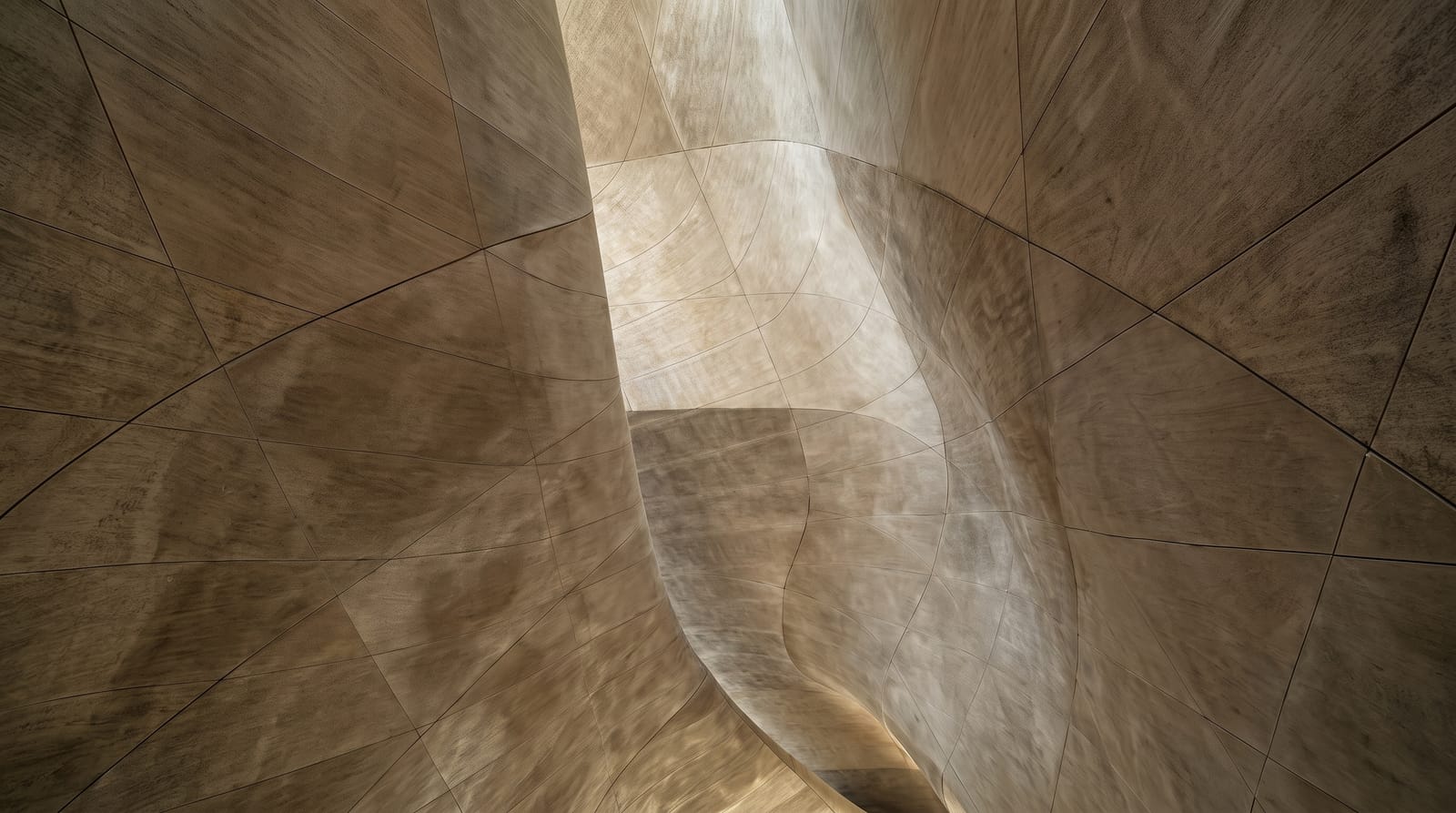
For most of a millennium Poland held the largest Jewish community in the world, and POLIN was built to tell that whole span rather than its ending. The core exhibition runs through eight galleries, from the first medieval merchants to the interwar cities, and its centrepiece is a full reconstruction of the painted timber ceiling and bimah of the seventeenth-century wooden synagogue at Gwozdziec, rebuilt by hand with period tools and pigments. The building itself, finished in 2013 by Finnish architects Lahdelma and Mahlamaki, is a plain glass box split by a curving canyon of a hall.
History
The idea of the museum came from the Association of the Jewish Historical Institute of Poland in 1995, when the city allocated land in Muranów, Warsaw's prewar Jewish quarter. The Finnish architects Rainer Mahlamäki and Ilmari Lahdelma won the design competition on 30 June 2005, construction began on 30 June 2009, the building opened on 19 April 2013 and the core exhibition on 28 October 2014, and in 2016 it won the European Museum of the Year Award (Wikipedia, POLIN Museum of the History of Polish Jews).
What's there
- The Gwozdziec ceiling - a wooden synagogue ceiling rebuilt by hand, painted in period pigments.
- The eight core galleries - a thousand years, from medieval merchants to the twentieth century.
- The Jewish Town gallery - a reconstructed street and market of the seventeenth century.
- The building - a glass block cut through by a curved, canyon-like hall.
When to go
Year-round; it is entirely indoors and works as a rainy-day anchor. Allow at least two hours, three if you read rather than skim. Book online in summer and at weekends, when timed slots sell out. Thursday evenings are usually the quietest hours.
Before you go
The core exhibition is very large and text-heavy, and visitors regularly run out of stamina before the last galleries - start at whichever end matters most to you. The audio guide is close to essential. Later sections deal with painful history and are not suitable for young children. The surrounding district is post-war housing and has little to look at.
Nearby
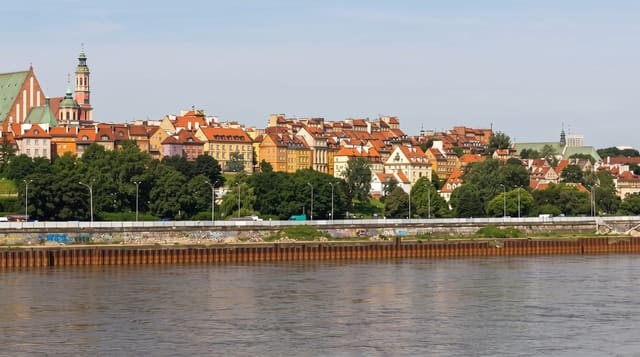
The Warsaw old town is fifteen minutes by tram; the Vistula boulevards are beyond it.
Key facts
Source: Wikidata, item Q429069, read on 18 October 2026.
What to pack for POLIN Museum
Chosen from what this place is for. Tap a kit for the full checklist.
- Comfortable walking shoes - Sightseeing means kilometres of pavement and cobbles daily. Find on Amazon
- A slim anti-theft daypack - Zips that close properly; keep it in front in crowds and on transit. Find on Amazon
- A refillable water bottle - Many cities have public fountains; save money and plastic. Find on Amazon
- A light layer + compact umbrella - For museum air-con and a sudden shower. Find on Amazon
Some links on this page are Amazon affiliate links - if you buy through them we may earn a small commission at no extra cost to you.
All packing kitsPlan your trip
Where to start if POLIN Museum is going on the list.
Booking links on this page are affiliate links - if you book through them we may earn a small commission at no extra cost to you. It never changes what we write about a place.
Opening times, ticket prices and seasonal closures change - check the official source before you go: official site.