Nagacadan Rice Terraces
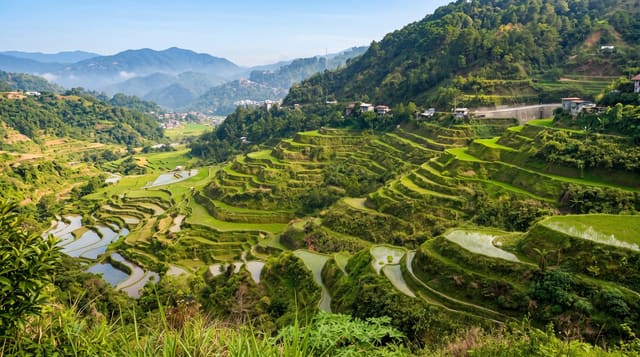
A UNESCO terrace cluster at Kiangan split by two river courses, running up both sides of the valley in long parallel bands.
Updated 1 September 2026

AI illustration
UNESCO World Heritage
Nagacadan is the southernmost of the five inscribed terrace clusters, in Kiangan rather than around Banaue, and its distinguishing feature is the split: two river courses run down the valley and the terraces climb both flanks in long parallel bands, so the cluster reads as two facing systems rather than one bowl. Kiangan is the oldest settled part of Ifugao and carries its own weight of history - the Ifugao Museum is here, and the Kiangan War Memorial Shrine marks the place where General Yamashita surrendered in September 1945, an event the town treats seriously and which brings visitors who have no interest in terraces at all. The terraces are reached by a walk from the barangay road, and they are less visited than Batad or Bangaan, which means fewer guides and fewer facilities but also almost nobody else on the paths.
The main sights
- The split valley - terraces climbing both sides of two watercourses.
- The parallel bands - long straight runs rather than curves.
- The Ifugao Museum - the collection in Kiangan town.
- The war memorial - the 1945 surrender site above the town.
When to go
April to June for green; December to February for the flooded fields. Kiangan is lower and warmer than Banaue, so the dry months are comfortable.
Practical notes
There is little infrastructure at the terraces themselves - no viewing platforms or signage. Guides are arranged in town and are not always available. The walk in is on farm paths.
Nearby
Lagawe is the provincial capital nearby; Banaue and its terrace clusters are an hour and a half north.
Key facts
Source: Wikidata, item Q29908614, read on 18 October 2026.
What to pack for Nagacadan Rice Terraces
Chosen from what this place is for. Tap a kit for the full checklist.
- Comfortable walking shoes - Sightseeing means kilometres of pavement and cobbles daily. Find on Amazon
- Modest clothing - Shoulders and knees covered - the single most common requirement. Find on Amazon
- A slim anti-theft daypack - Zips that close properly; keep it in front in crowds and on transit. Find on Amazon
- A scarf or shawl - To cover the head or shoulders on entry; women especially at mosques. Find on Amazon
Some links on this page are Amazon affiliate links - if you buy through them we may earn a small commission at no extra cost to you.
All packing kitsPlan your trip
Where to start if Nagacadan Rice Terraces is going on the list.
Booking links on this page are affiliate links - if you book through them we may earn a small commission at no extra cost to you. It never changes what we write about a place.
Opening times, ticket prices and seasonal closures change - check the official source before you go: official site.