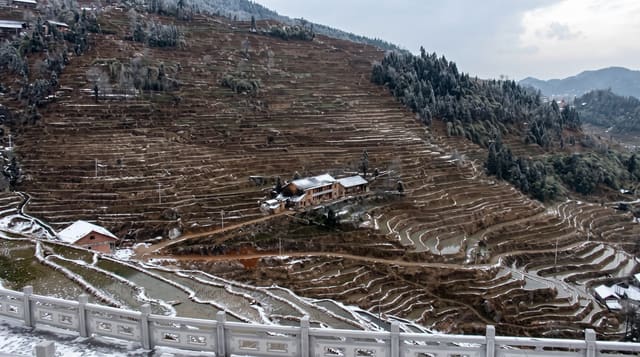
Hoshitoge Rice Terraces
Two hundred small paddies stepping down a landslide slope, which at dawn in a wet spring mirror the sky whole.
Updated 29 August 2026
The slope here is a stabilised landslide, and the terraces - around two hundred small irregular paddies - were cut into it because that was the only way to farm ground that would not hold a straight field. The shape is the result: no two are the same size, and the outlines curve to follow the contour. The image that made them known is spring, between flooding and the rice growing tall, when each paddy holds still water and the whole slope becomes a set of separate mirrors reflecting the dawn sky - best in the half hour around sunrise on a windless morning. In autumn the Tokamachi basin fills with cloud below the terraces on cold clear mornings. A viewing deck and parking were built after visitor numbers grew; the terraces themselves are working farmland and are not to be walked into.
What you'll find
- Two hundred irregular paddies - cut to follow a landslide contour, no two alike.
- Mirror season - flooded terraces reflecting the dawn sky in late spring.
- The cloud sea - the basin below filling with cloud on cold autumn mornings.
- Working farmland - a viewing deck provided, the terraces themselves off limits.
When to go
Late April to early June at dawn for the mirrors; autumn dawns for the cloud sea. Two hours.
Practical notes
The effect needs still water and clear dawn light - wind or cloud removes it. The mirror window is a few weeks and ends once the rice grows. Parking is small and fills before sunrise in season. Winter closes the road entirely.
Nearby
Tokamachi is south; Kiyotsu Gorge is south-east.
Key facts
Source: Wikidata, item Q140596413, read on 18 October 2026.
What to pack for Hoshitoge Rice Terraces
Chosen from what this place is for. Tap a kit for the full checklist.
- Broken-in walking shoes or boots - Grip and ankle support matter more than looks; never hike in brand-new boots. Find on Amazon
- Layers + a waterproof shell - Mountain weather turns fast; a packable rain jacket saves the day. Find on Amazon
- Daypack with rain cover - 20-30 litres holds water, snacks, layers and a first-aid kit. Find on Amazon
- Offline maps + a power bank - Download the trail before you lose signal; carry backup charge. Find on Amazon
Some links on this page are Amazon affiliate links - if you buy through them we may earn a small commission at no extra cost to you.
All packing kitsPlan your trip
Where to start if Hoshitoge Rice Terraces is going on the list.
Booking links on this page are affiliate links - if you book through them we may earn a small commission at no extra cost to you. It never changes what we write about a place.
Opening times, ticket prices and seasonal closures change - check the official source before you go: official site.