Museo Sugbo
Cebu's provincial museum in the old coral-stone provincial jail, with galleries running from prehistory to the American period.
Updated 22 October 2026
AI illustration
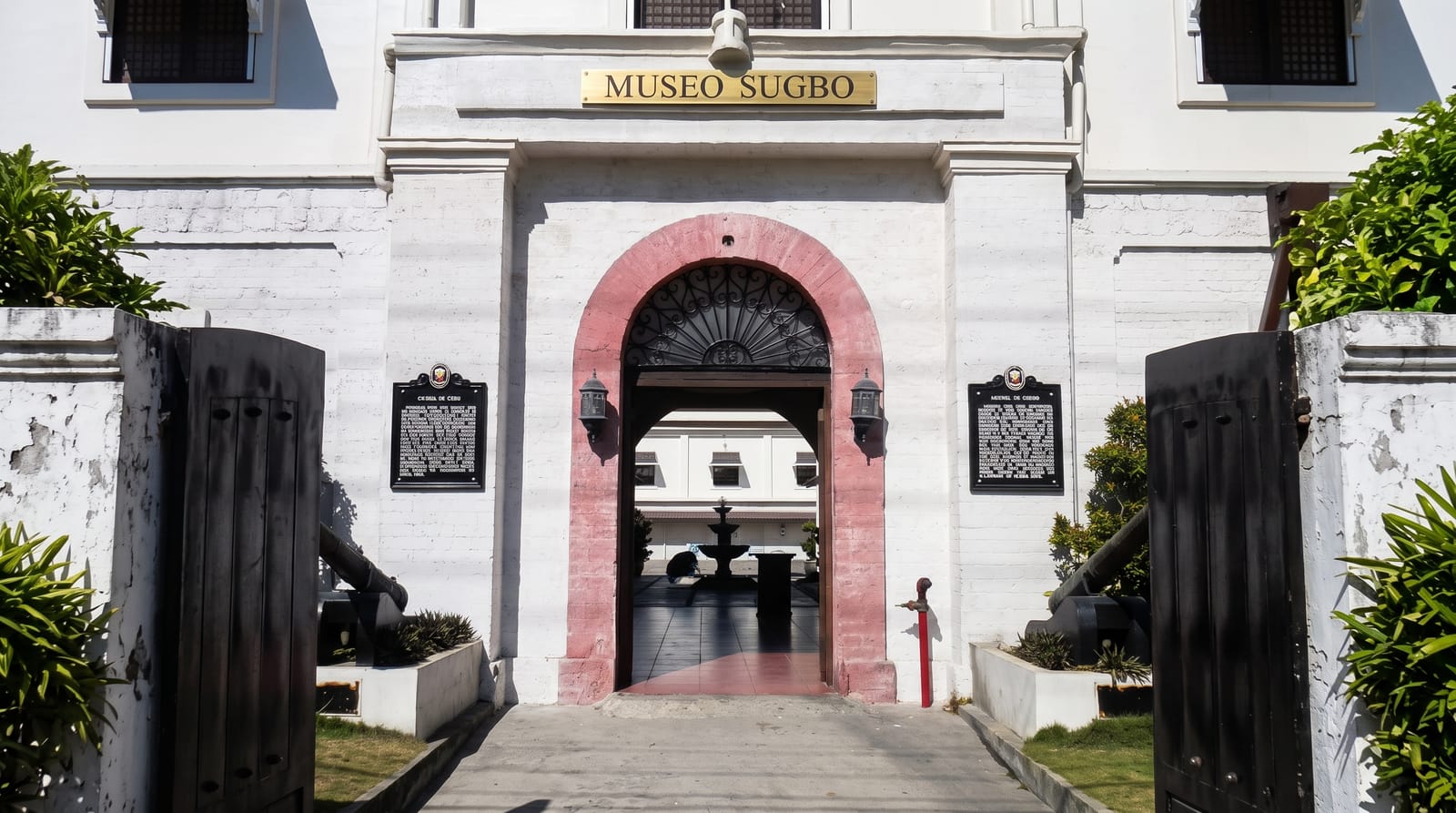
Museo Sugbo occupies the Carcel de Cebu, the provincial jail built of coral stone in the 1870s and used as a prison for well over a century - by the Spanish, then the Americans, then the Japanese during the occupation, then the Republic, until the inmates were moved out in the 2000s and the complex was converted. The cell blocks are now galleries arranged chronologically: pre-colonial archaeology, the Spanish period, the revolution, the American colonial administration, the Second World War and the Japanese occupation, with a gallery on Cebuano culture and rotating exhibitions, plus a National Museum wing. The building itself is part of the exhibit - the barred windows and thick walls are unaltered, and the courtyard between the blocks is where prisoners exercised. It is the most substantial museum in the Visayas and worth two hours, and it sits a short ride from the Parian heritage houses.
History
The Cárcel de Cebú was designed in 1869 by Domingo de Escondrillas, then the only architect in Cebu, as the main prison of the Visayas district, and building began around 1871, probably with coral stone from the old Parian church. It later became the Cebu Provincial Jail and in the 1980s the Cebu Provincial Detention and Rehabilitation Center; after the prison moved out in December 2004, the first four galleries of Museo Sugbo opened on 5 August 2008 (Wikipedia, Museo Sugbo).
What's there
- The old jail blocks - galleries inside the former cells.
- The chronological displays - prehistory to the twentieth century.
- The war gallery - occupation and liberation material.
- The courtyard - the prison yard between the blocks.
When to go
Year-round; weekday mornings are quiet. It closes on Sundays and public holidays - check hours before going.
What to expect
Presentation varies by gallery, and some are stronger than others. There is no air conditioning in parts of the old blocks. Entry is charged and photography rules vary.
Nearby
Casa Gorordo, the Jesuit House and the Yap-Sandiego house are in Parian; Fort San Pedro is on the waterfront.
Key facts
Source: Wikidata, item Q2110972, read on 18 October 2026.
What to pack for Museo Sugbo
Chosen from what this place is for. Tap a kit for the full checklist.
- Comfortable walking shoes - Sightseeing means kilometres of pavement and cobbles daily. Find on Amazon
- A slim anti-theft daypack - Zips that close properly; keep it in front in crowds and on transit. Find on Amazon
- A refillable water bottle - Many cities have public fountains; save money and plastic. Find on Amazon
- A light layer + compact umbrella - For museum air-con and a sudden shower. Find on Amazon
Some links on this page are Amazon affiliate links - if you buy through them we may earn a small commission at no extra cost to you.
All packing kitsPlan your trip
Where to start if Museo Sugbo is going on the list.
Booking links on this page are affiliate links - if you book through them we may earn a small commission at no extra cost to you. It never changes what we write about a place.
Opening times, ticket prices and seasonal closures change - check the official source before you go: official site.