Morija
The kingdom's cradle of letters - the 1833 mission station whose museum, archives and arts festival keep Lesotho's written and creative memory.
Updated 3 September 2026
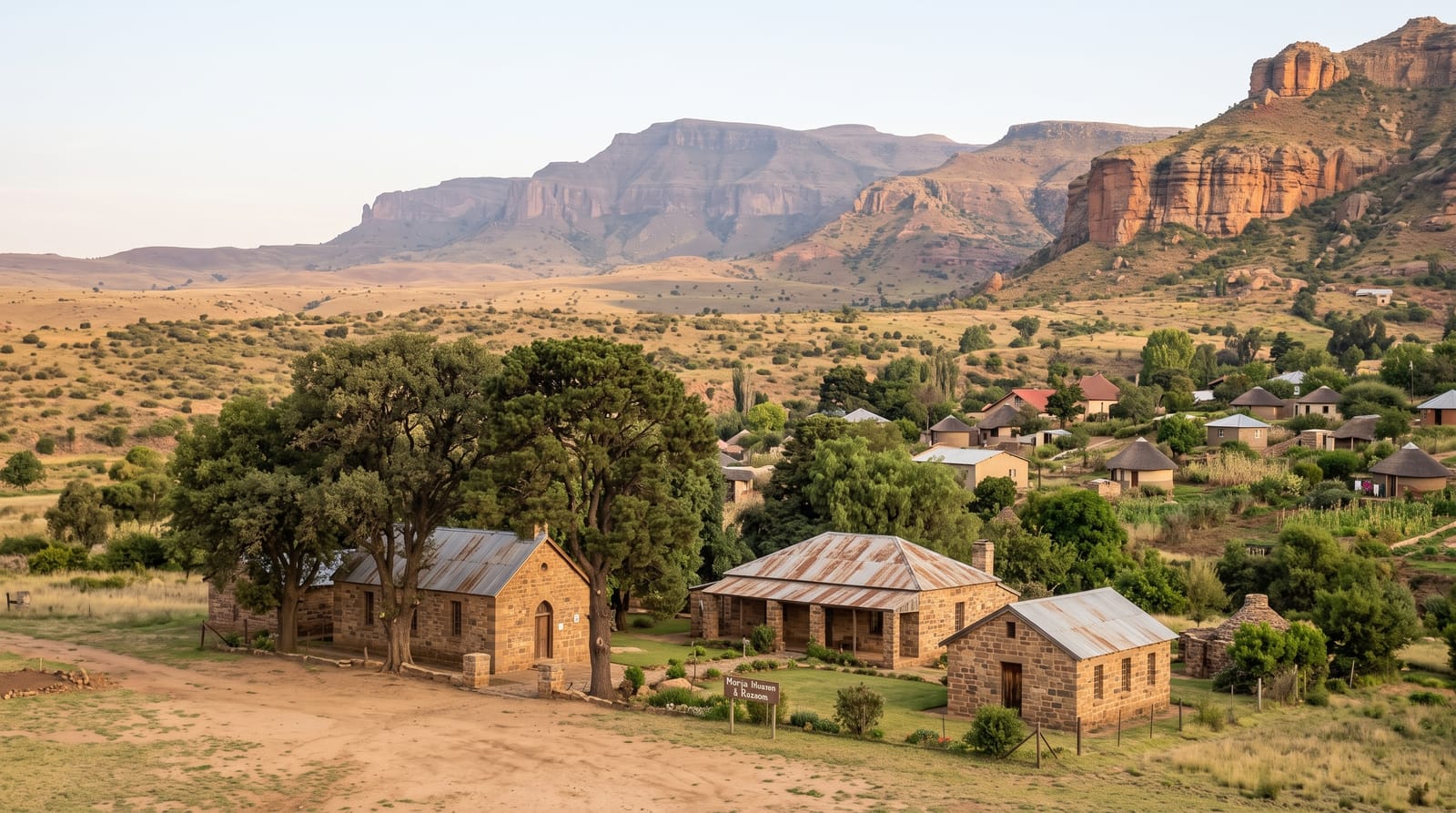
AI illustration
Morija is where written Sesotho began: French missionaries settled here in 1833 under Moshoeshoe I's protection, and their station grew the country's first printing works, whose presses put the language on paper and still print today. The Morija Museum and Archives - the national collection in all but name - holds manuscripts, ethnographic treasures and dinosaur bones from the surrounding red sandstone, which also preserves fossil footprints a guided walk reaches above the village. The Morija Arts and Cultural Festival, when it runs, gathers the nation's music and horsemanship here, and the leafy mission quarter keeps a scholarly calm rare in the lowlands.
The main sights
- The Museum and Archives - manuscripts, ethnography and fossils under one roof.
- The printing works - the press tradition running since the 1860s.
- The dinosaur footprints - trackways in the sandstone above the village.
- The mission quarter - stone churches and schools under old trees.
When to go
Year round; the museum keeps regular hours with Sundays quiet. The festival's timing has moved around the calendar - check locally rather than assuming a date. Summer afternoons bring storms that make the sandstone glow after.
Practical notes
Morija is a scholarly village, not a spectacle - the reward is depth, best unlocked by the museum staff and a guide to the footprints, which are a genuine scramble to reach. Facilities are guesthouse-simple. Paired with Thaba Bosiu it makes the definitive Basotho history day.
Nearby
Thaba Bosiu, Maseru and the Makhaleng valley routes south.
What to pack for Morija
Chosen from what this place is for. Tap a kit for the full checklist.
- Comfortable walking shoes - Sightseeing means kilometres of pavement and cobbles daily. Find on Amazon
- A slim anti-theft daypack - Zips that close properly; keep it in front in crowds and on transit. Find on Amazon
- A refillable water bottle - Many cities have public fountains; save money and plastic. Find on Amazon
- A light layer + compact umbrella - For museum air-con and a sudden shower. Find on Amazon
Some links on this page are Amazon affiliate links - if you buy through them we may earn a small commission at no extra cost to you.
All packing kitsPlan your trip
Where to start if Morija is going on the list.
Booking links on this page are affiliate links - if you book through them we may earn a small commission at no extra cost to you. It never changes what we write about a place.
Opening times, ticket prices and seasonal closures change - check the official source before you go: official site.