Taxila
A crossroads city of Greek, Persian, Buddhist and Kushan layers, where the Gandhara sculpture style was made.
Updated 18 October 2026

AI illustration
UNESCO World Heritage
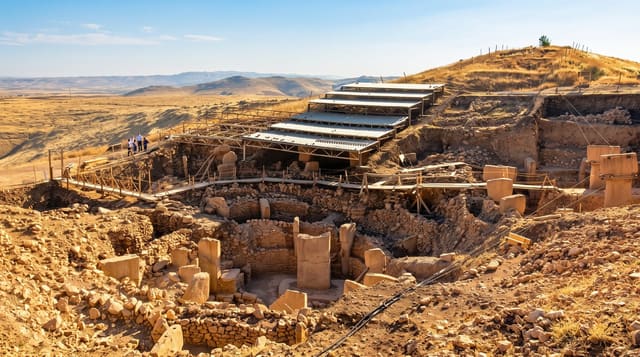
Taxila is not one site but a valley of them, occupied for more than a thousand years by successive powers who all left something behind: Achaemenid Persians, the Greeks who arrived with Alexander and stayed, Mauryan Buddhists, Indo-Greeks, Scythians and the Kushans. Sirkap is a laid-out Greek-plan city with a street grid you can walk. Jaulian and Mohra Muradu are hillside monasteries with stupas ringed by stucco figures still in their niches. It was here that Gandhara sculpture developed, fusing Hellenistic drapery and proportion with Buddhist subject matter to produce the first widespread images of the Buddha in human form, and the site museum holds one of the best collections of it anywhere.
History
The earliest settled occupation in the valley, at Sarai Khola, dates to the late 4th or early 3rd millennium BC, and the first major settlement at Taxila, on the Hathial mound, was founded around 1000 BC and traded with Pushkalavati by 900 BC; it was a capital of Gandhara, and the Bhir Mound city followed from around the 6th century BC. The city grew by the time the Achaemenid Persians arrived in the 6th century BC, its king, called Taxiles by the Greeks, submitted to Alexander the Great without a fight in 326 BC, the Mauryans followed, and Buddhist texts say Ashoka was its governor. Greco-Bactrian kings built Sirkap in the 2nd century BC and the Kushans built Sirsukh, and the Sanskrit name Takshashila, often read as city of cut stone, became Taxila through the Greek of Ptolemy. Alexander Cunningham identified the lost city only in 1863-64, after errors in Pliny's distances had misled earlier searchers, and in 1980 it became a World Heritage Site (Wikipedia, Taxila).
What to look for
- Sirkap - the Greek-plan city with its main street and apsidal temple.
- Jaulian monastery - hillside stupas with stucco figures surviving in their niches.
- Dharmarajika stupa - the earliest and largest of the stupa complexes.
- Taxila Museum - a major Gandhara sculpture collection.
When to go
October to March; the Punjab plain is extremely hot from April to September. Mornings are best, and the museum makes a good midday stop between the outdoor sites.
Things to know
The sites are spread across a valley and need a car or hired driver to link them; walking between them is not practical. Interpretation on the ground is thin, and the museum is where the material makes sense, so visit it early rather than last. Several stucco figures are protected under shelters that make them hard to see clearly.
Nearby
Islamabad is under an hour east; the Grand Trunk Road runs west towards Peshawar.
Key facts
Source: Wikidata, item Q156093, read on 18 October 2026.
What to pack for Taxila
Chosen from what this place is for. Tap a kit for the full checklist.
- Comfortable walking shoes - Sightseeing means kilometres of pavement and cobbles daily. Find on Amazon
- Modest clothing - Shoulders and knees covered - the single most common requirement. Find on Amazon
- A slim anti-theft daypack - Zips that close properly; keep it in front in crowds and on transit. Find on Amazon
- A scarf or shawl - To cover the head or shoulders on entry; women especially at mosques. Find on Amazon
Some links on this page are Amazon affiliate links - if you buy through them we may earn a small commission at no extra cost to you.
All packing kitsPlan your trip
Where to start if Taxila is going on the list.
Booking links on this page are affiliate links - if you book through them we may earn a small commission at no extra cost to you. It never changes what we write about a place.
Opening times, ticket prices and seasonal closures change - check the official source before you go: official site.