Omani Cuisine
Rice and slow-cooked meat with Indian, Persian and Zanzibari influence, plus dates and cardamom coffee at every visit.
Updated 1 September 2026
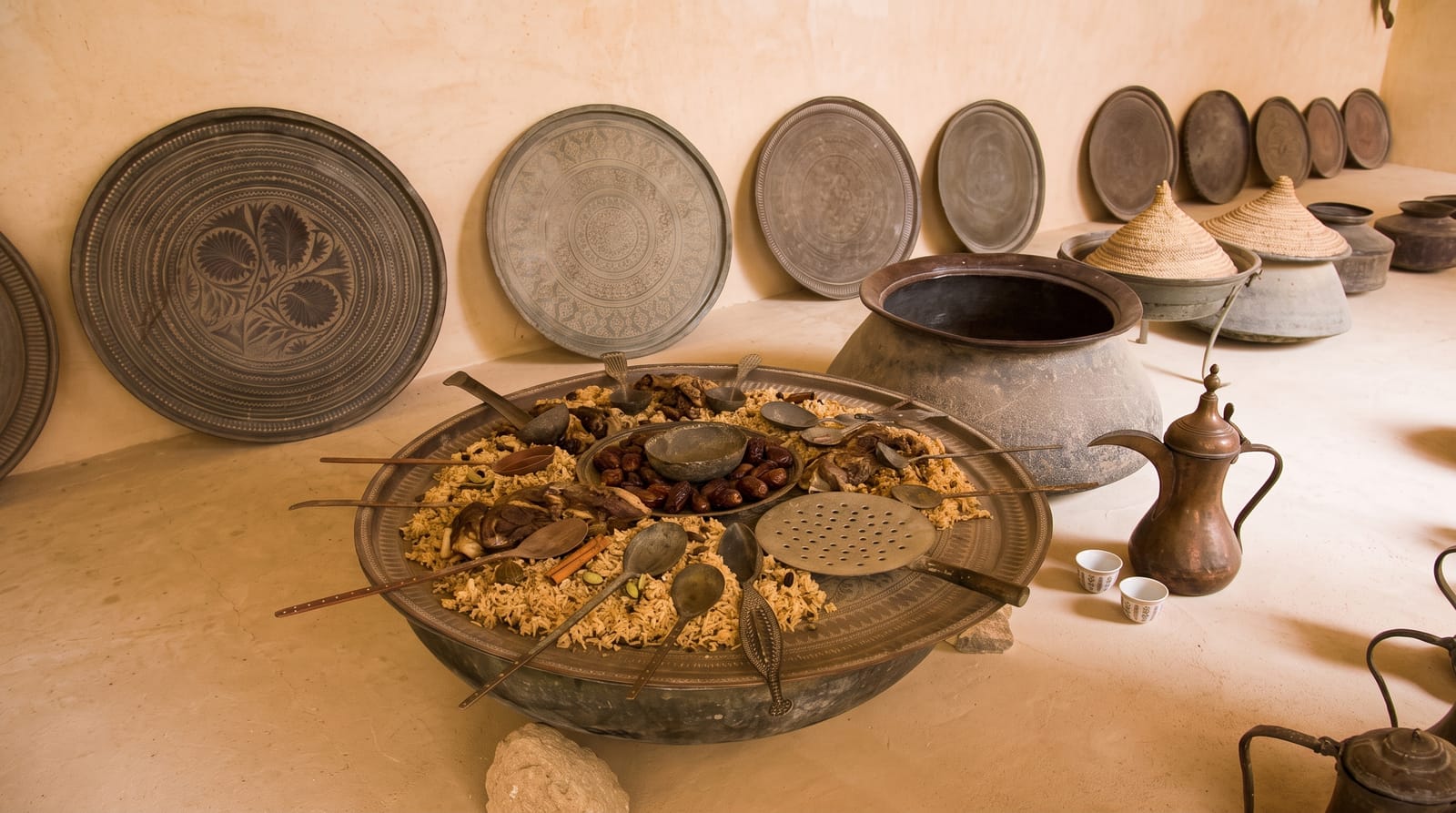
AI illustration
Omani cooking carries the marks of a long trading history: Indian spice, Persian rice technique and Zanzibari coconut and cassava sit alongside Arabian meat and dates. Shuwa is the dish of celebration, meat rubbed with a spice paste, wrapped in banana or palm leaf and buried in a pit oven with embers for a day or two, made for Eid. Majboos is spiced rice with meat, related to the Gulf kabsa. Mashuai is kingfish grilled whole and served with lemon rice on the coast. Harees is wheat and meat pounded to a paste, eaten in Ramadan. Dates and kahwa, coffee with cardamom, are offered to any visitor, and halwa, a dense date and rosewater sweet, comes with them.
What to look for
- Shuwa - meat buried in a pit oven for a day or more at Eid.
- Majboos - the spiced rice and meat plate of everyday meals.
- Dates and kahwa - the coffee and dates offered at every visit.
- Omani halwa - the dense rosewater and date sweet.
When to go
Year round. Shuwa is made at Eid al Adha rather than to order. Harees appears in Ramadan, when daytime eating is restricted for everyone including visitors in public. Fish is best on the coast in the cooler months.
Things to know
Restaurant food in Oman is largely Indian, Lebanese or Turkish; genuinely Omani cooking is domestic and hard to find commercially. Shuwa is a festival dish, not a menu item. During Ramadan eating and drinking in public in daylight is prohibited. Spicing is mild rather than hot.
Nearby
Mutrah souq in Muscat for halwa and dates; the coast for grilled fish.
What to pack for Omani Cuisine
Chosen from what this place is for. Tap a kit for the full checklist.
- A reusable bag or container - For market produce and cutting down on packaging. Find on Amazon
- Wet wipes + hand sanitiser - Street food and washbasins do not always go together. Find on Amazon
Some links on this page are Amazon affiliate links - if you buy through them we may earn a small commission at no extra cost to you.
All packing kitsPlan your trip
Where to start if Omani Cuisine is going on the list.
Booking links on this page are affiliate links - if you book through them we may earn a small commission at no extra cost to you. It never changes what we write about a place.
Opening times, ticket prices and seasonal closures change - check the official source before you go: official site.