Kazakh Cuisine
Meat and dough from the steppe: beshbarmak eaten by hand, horsemeat sausage, fermented mare's milk and Uyghur noodles.
Updated 1 September 2026
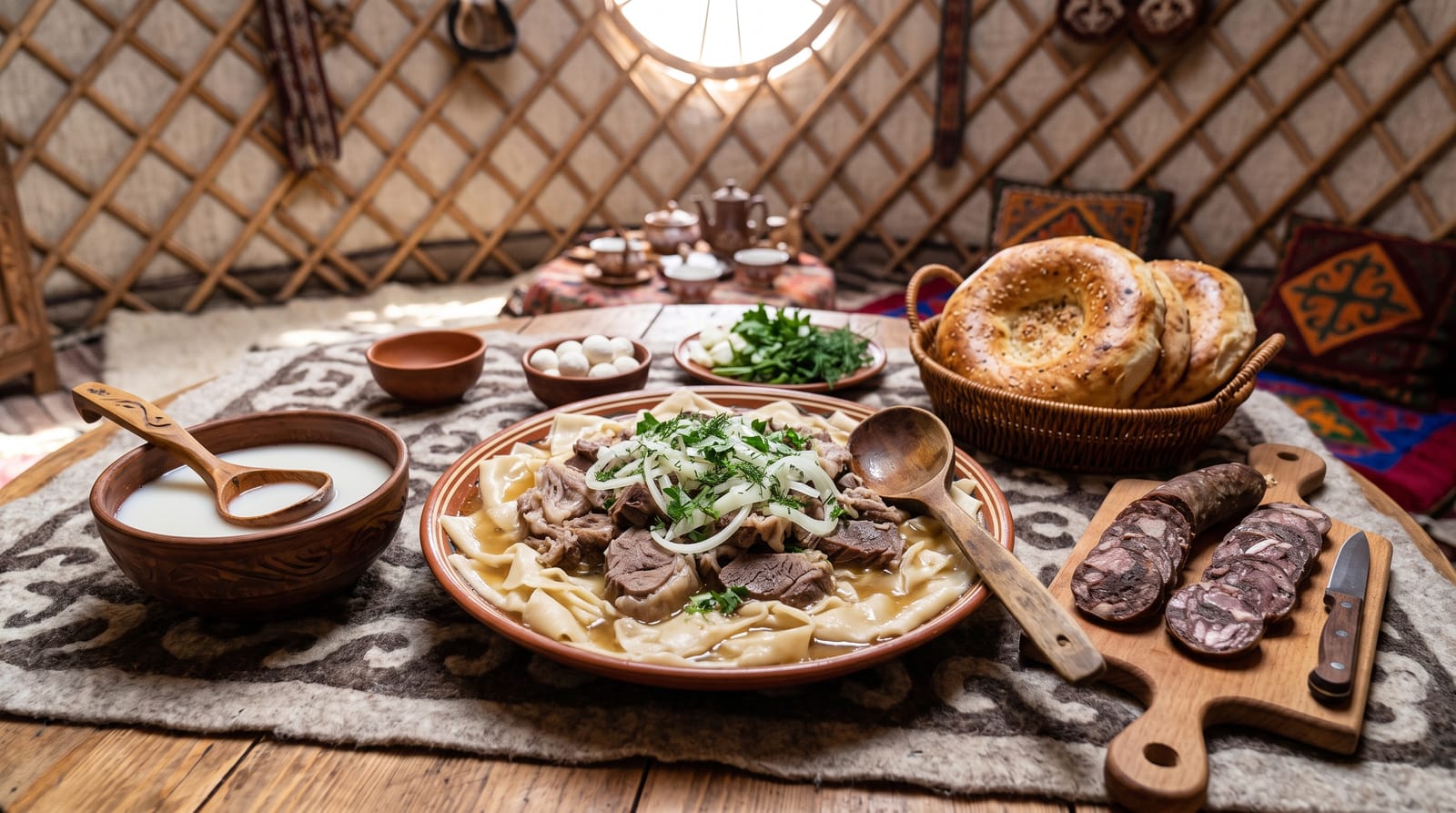
AI illustration
The traditional food is what a herding people could produce: meat, milk and grain, with vegetables marginal. Beshbarmak, five fingers, is the centrepiece, boiled horse or mutton served over wide sheets of dough with onion broth, eaten by hand from a shared dish, with the head of the sheep presented to the senior guest at a formal meal. Kazy is horsemeat sausage from the rib, sliced thin. Kuyrdak is offal fried with onion and potato. Baursak, fried dough balls, come with tea, which is drunk with milk in half-filled bowls refilled constantly. Kumis, fermented mare's milk, and shubat from camel's milk are sour and mildly alcoholic. Uyghur laghman and Korean-Kazakh salads are equally part of everyday eating.
The main sights
- Beshbarmak - boiled meat over dough sheets, eaten by hand.
- Kazy - the horsemeat rib sausage sliced for the table.
- Kumis and shubat - the fermented mare's and camel's milk.
- Laghman and salads - the Uyghur and Korean-Kazakh everyday dishes.
When to go
Year round. Kumis and shubat are seasonal, best in late spring and summer when the mares are milked. Nauryz in March brings nauryz kozhe, a seven-ingredient soup. Bazaars are the place to buy kazy and dairy.
Practical notes
Horsemeat is standard and unavoidable in traditional dishes. Vegetables are scarce in the traditional repertoire, and vegetarian eating means relying on Uyghur, Korean or international food. Kumis and shubat are sour and not to most first-time tastes. Portions at formal meals are very large and refusal is awkward.
Nearby
The Green Bazaar in Almaty; bazaars in every town.
What to pack for Kazakh Cuisine
Chosen from what this place is for. Tap a kit for the full checklist.
- A reusable bag or container - For market produce and cutting down on packaging. Find on Amazon
- Wet wipes + hand sanitiser - Street food and washbasins do not always go together. Find on Amazon
Some links on this page are Amazon affiliate links - if you buy through them we may earn a small commission at no extra cost to you.
All packing kitsPlan your trip
Where to start if Kazakh Cuisine is going on the list.
Booking links on this page are affiliate links - if you book through them we may earn a small commission at no extra cost to you. It never changes what we write about a place.
Opening times, ticket prices and seasonal closures change - check the official source before you go: official site.