Mardalsfossen
A 705-metre waterfall with a single 297-metre free fall, released for the summer months and switched off for hydropower.
Updated 21 October 2026

AI illustration
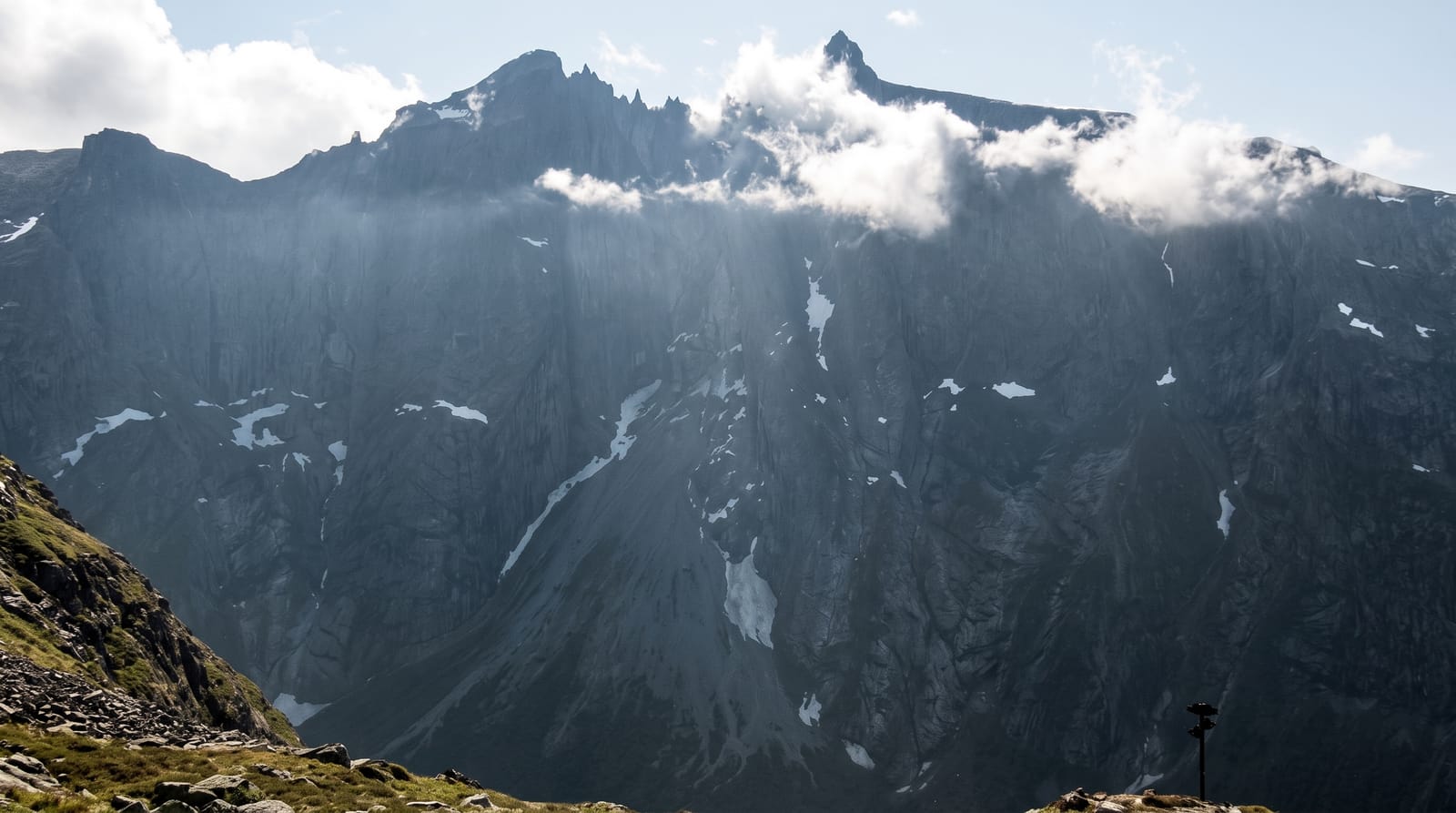
Mardalsfossen drops 705 metres in total with an unbroken free fall of 297 metres, which puts it among the tallest waterfalls in Europe, and it lands in the Eikesdalen valley in a cloud of spray. Its water is used for hydropower, and the falls run at full volume only for the summer tourist season, usually from around 20 June to 20 August, and are shut off for the rest of the year. A path of about thirty minutes climbs to the foot.
The landscape
- The free fall - an unbroken drop of nearly three hundred metres.
- The spray basin - mist and noise where the water lands.
- The valley setting - Eikesdalen's steep walls and the lake below.
- The approach path - a half-hour climb from the parking area.
When to go
Between roughly 20 June and 20 August, when the water is released; outside that window the cliff is dry and there is essentially nothing to see. Dates vary slightly by year and should be checked before driving in.
Practical notes
The waterfall is switched off for ten months of the year, which catches out visitors who arrive in May or September. The road into Eikesdalen is long, narrow and remote. The path to the base is steep and soaked by spray near the top.
Nearby
Eikesdalsvatnet lake fills the valley; Sunndalsora and the Trollheimen range lie east.
Key facts
Source: Wikidata, item Q1471951, read on 18 October 2026.
What to pack for Mardalsfossen
Chosen from what this place is for. Tap a kit for the full checklist.
- Broken-in walking shoes or boots - Grip and ankle support matter more than looks; never hike in brand-new boots. Find on Amazon
- Layers + a waterproof shell - Mountain weather turns fast; a packable rain jacket saves the day. Find on Amazon
- Daypack with rain cover - 20-30 litres holds water, snacks, layers and a first-aid kit. Find on Amazon
- Offline maps + a power bank - Download the trail before you lose signal; carry backup charge. Find on Amazon
Some links on this page are Amazon affiliate links - if you buy through them we may earn a small commission at no extra cost to you.
All packing kitsPlan your trip
Where to start if Mardalsfossen is going on the list.
Booking links on this page are affiliate links - if you book through them we may earn a small commission at no extra cost to you. It never changes what we write about a place.
Opening times, ticket prices and seasonal closures change - check the official source before you go: official site.