Trollveggen
Europe's tallest vertical rock face, more than a kilometre of overhanging gneiss above the Romsdalen valley.
Updated 21 October 2026
AI illustration
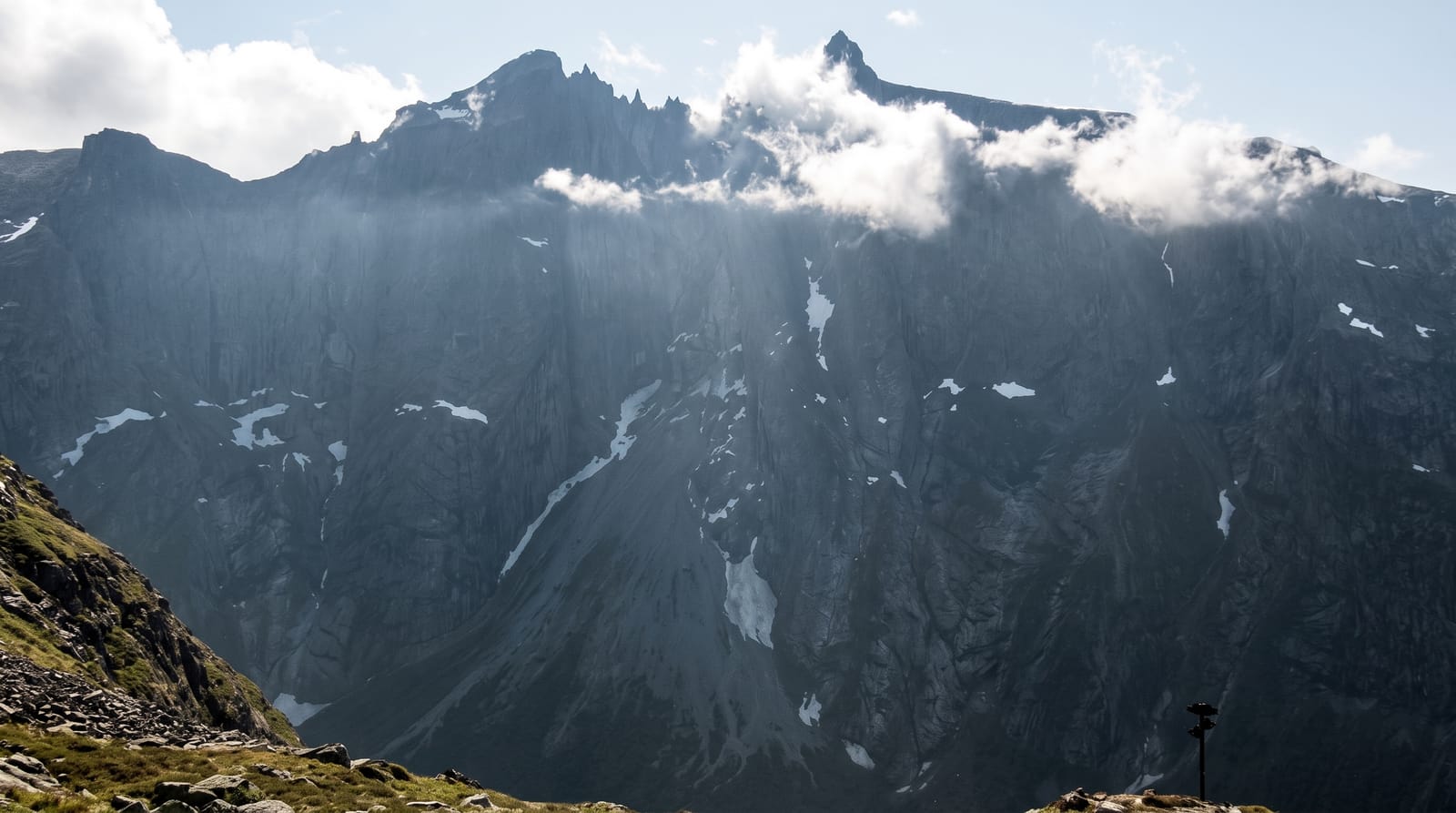
Trollveggen rises about 1,700 metres from the valley floor to the summit ridge, with the upper 1,100 metres vertical and in places overhanging by fifty metres, which makes it the tallest vertical rock face in Europe. First climbed in 1965 by Norwegian and English teams within days of each other, it became one of the serious big walls in the world, with routes that take days and a reputation for loose rock and bad weather. It was also a magnet for BASE jumpers until jumping from it was banned in 1986 after a series of accidents. A visitor centre and viewpoint sit beside the E136 directly beneath, and the Rauma Railway runs along the valley with the wall filling the window.
What's there
- The vertical wall - over a kilometre of sheer and overhanging gneiss.
- The jagged summit ridge - the rock spires along the top of the face.
- The valley viewpoint - a roadside centre directly below the wall.
- The Rauma Railway - the line running beneath the face along the valley.
When to go
May to September for clear roads and the best chance of seeing the top, which is often in cloud; late spring can still have snow high on the face. Morning light hits the wall better than afternoon.
Practical notes
Cloud hides the upper wall frequently, and photographs rarely convey the scale. Rockfall from the face is constant, so the area at the base is restricted. BASE jumping is illegal here. The viewpoint is a stop of half an hour with a seasonal cafe.
Nearby
Andalsnes and the Romsdalseggen ridge are close; the Trollstigen road climbs south from the valley.
Key facts
Source: Wikidata, item Q510772, read on 18 October 2026.
What to pack for Trollveggen
Chosen from what this place is for. Tap a kit for the full checklist.
- Broken-in walking shoes or boots - Grip and ankle support matter more than looks; never hike in brand-new boots. Find on Amazon
- Warm base layers - Merino or synthetic against the skin - never cotton, which chills when damp. Find on Amazon
- Layers + a waterproof shell - Mountain weather turns fast; a packable rain jacket saves the day. Find on Amazon
- An insulated + windproof jacket - A down or synthetic layer under a hard shell handles most cold. Find on Amazon
Some links on this page are Amazon affiliate links - if you buy through them we may earn a small commission at no extra cost to you.
All packing kitsPlan your trip
Where to start if Trollveggen is going on the list.
Booking links on this page are affiliate links - if you book through them we may earn a small commission at no extra cost to you. It never changes what we write about a place.
Opening times, ticket prices and seasonal closures change - check the official source before you go: official site.


