Laerdalsoyri
A protected village of around 160 timber houses at the head of the Sognefjord, rebuilt after a 2014 fire.
Updated 21 October 2026
AI illustration
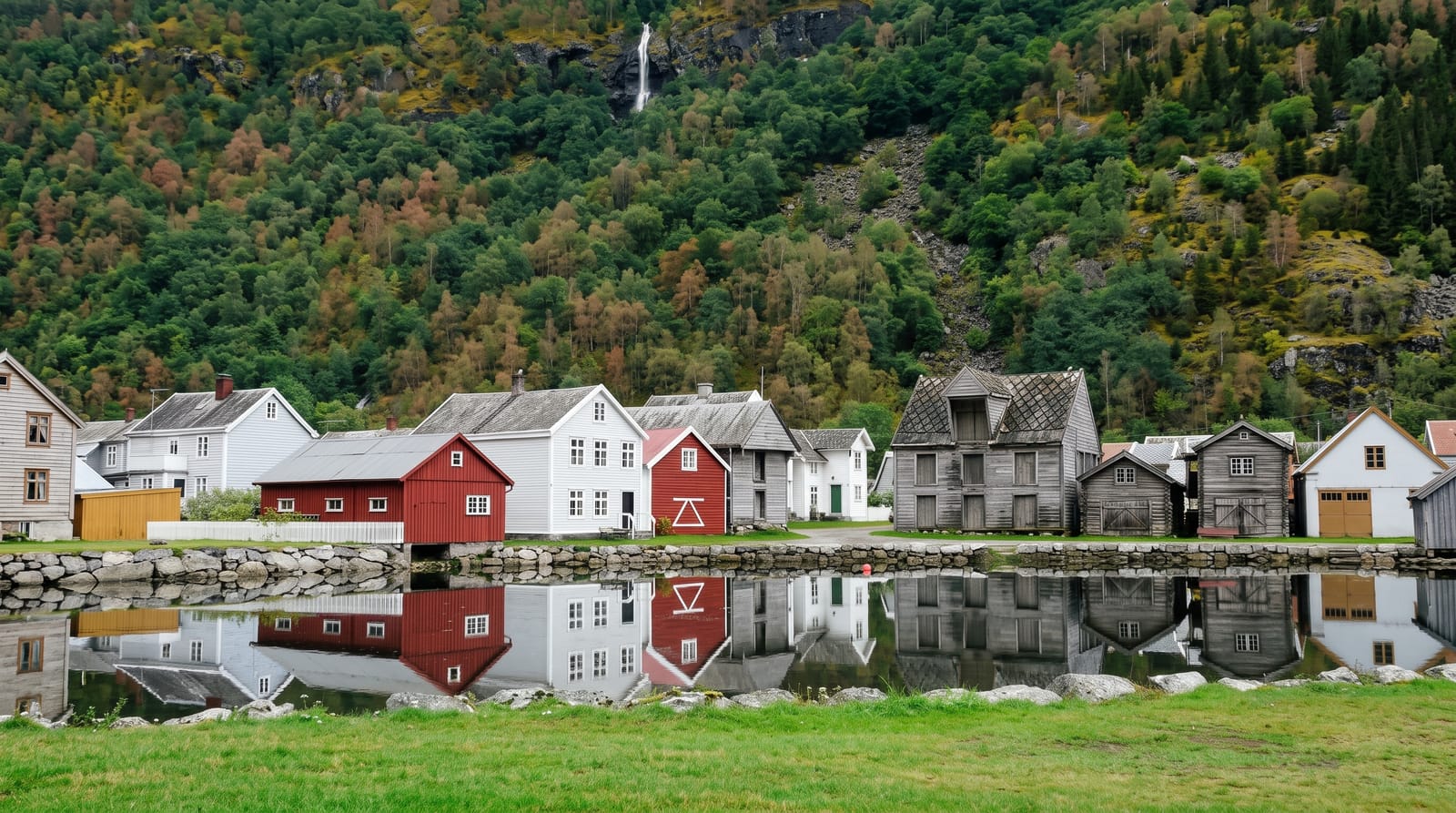
Laerdalsoyri grew as a market town where the trade routes from eastern Norway met the Sognefjord, and its old quarter preserves about 160 wooden buildings from the eighteenth and nineteenth centuries in a grid of narrow streets, one of the best-kept concentrations of timber town architecture in Norway. In January 2014 a fire driven by strong wind destroyed around forty buildings in a night, including one listed building, and the rebuilding that followed has been careful but the loss is visible to anyone who knows the earlier photographs. The village also holds the Norwegian Wild Salmon Centre on the Laerdal river, one of the most famous salmon rivers in the country, and the 24.5-kilometre Laerdal tunnel begins here.
History
The name joins the old river name Lærr with dalr, "valley", and øyri, "sandbank". The village was a major trading port between east and west, where sea-going ships landed goods for the overland journey into eastern Norway, and several County Governors of Nordre Bergenhus lived here; on the night of 18 January 2014 a wind-driven fire spread towards the centre and the town was evacuated (Wikipedia, Lærdalsøyri).
The main sights
- The timber quarter - around 160 protected wooden buildings in a grid.
- The 2014 fire scars - rebuilt sections where forty buildings were lost.
- The Wild Salmon Centre - an exhibition on the Laerdal river and its fish.
- The tunnel mouth - the entrance to the world's longest road tunnel.
When to go
May to September for the village at its best and the salmon centre open; the fjord and the tunnel are accessible year-round. Summer brings traffic through on the E16 route between Oslo and Bergen.
What to expect
Part of what guidebooks describe was destroyed in 2014, and the replacements, though sympathetic, are new. The buildings are private homes rather than a museum. The village is small and takes about two hours.
Nearby
Borgund stave church is up the valley; Aurland, Stegastein and the Sognefjord ferries lie west.
Key facts
Source: Wikidata, item Q2741974, read on 18 October 2026.
What to pack for Laerdalsoyri
Chosen from what this place is for. Tap a kit for the full checklist.
- Comfortable walking shoes - Sightseeing means kilometres of pavement and cobbles daily. Find on Amazon
- A slim anti-theft daypack - Zips that close properly; keep it in front in crowds and on transit. Find on Amazon
- A refillable water bottle - Many cities have public fountains; save money and plastic. Find on Amazon
- A light layer + compact umbrella - For museum air-con and a sudden shower. Find on Amazon
Some links on this page are Amazon affiliate links - if you buy through them we may earn a small commission at no extra cost to you.
All packing kitsPlan your trip
Where to start if Laerdalsoyri is going on the list.
Booking links on this page are affiliate links - if you book through them we may earn a small commission at no extra cost to you. It never changes what we write about a place.
Opening times, ticket prices and seasonal closures change - check the official source before you go: official site.