Dangjiacun
A merchant village of Ming and Qing courtyard houses, preserved because it sat in a hollow off the road.
Updated 19 October 2026
AI illustration
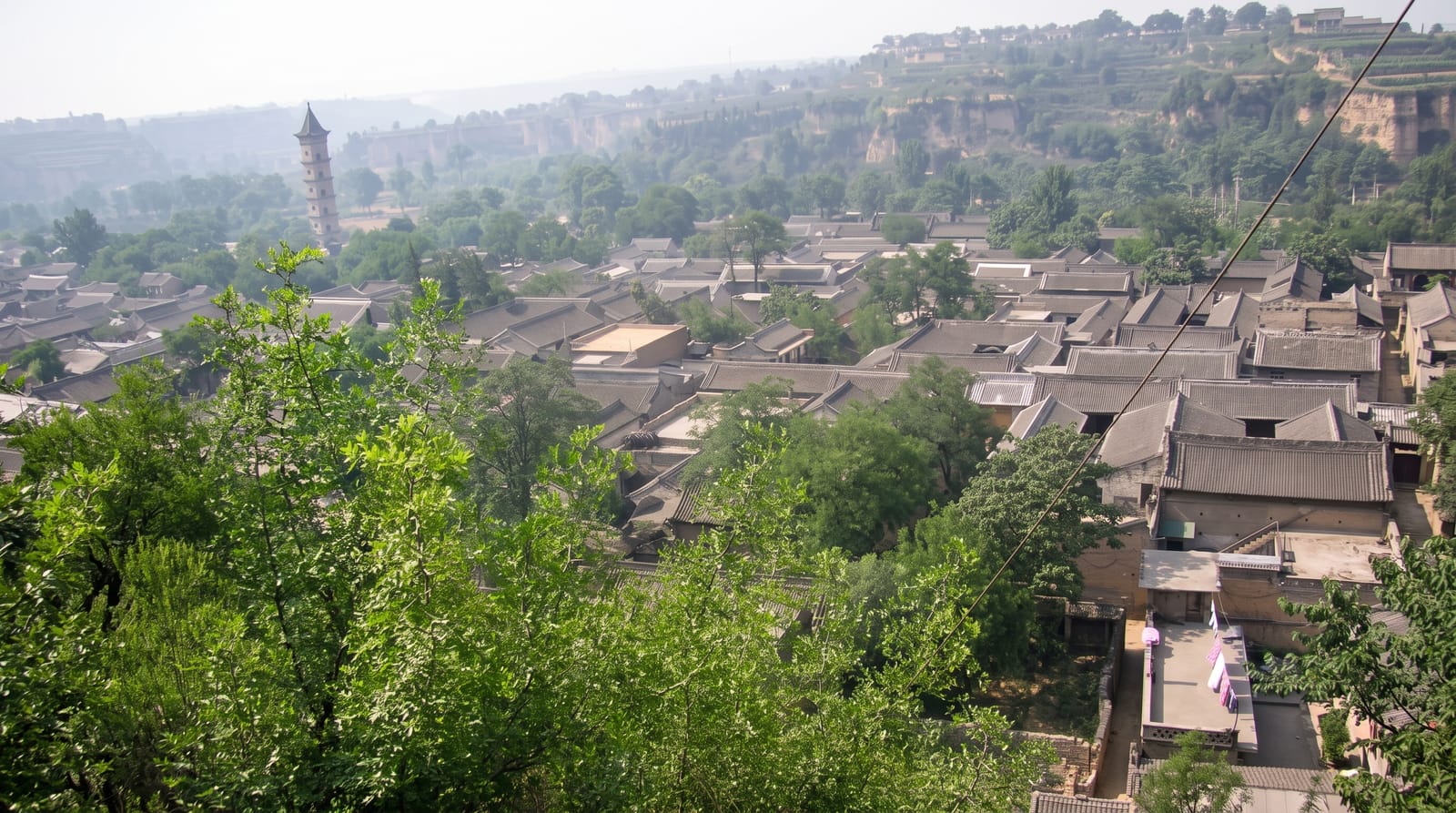
The Dang family made money moving goods on the Yellow River trade during the Ming and Qing and built their village in a sheltered hollow below the plateau, with more than a hundred courtyard houses of grey brick and carved timber, an ancestral hall, a village gate tower, a pagoda and a stone stele pavilion. Because the hollow lies off the main routes and the village lost its wealth, little was rebuilt or demolished, so the layout and much of the fabric survive as they were, with carved door screens, brick relief panels and family mottoes cut above the entrances. Residents still live in many of the houses.
History
Dangjia village was founded in 1331 in a gourd-shaped valley running east to west, laid out so that the village looks like a boat, and it once had more than 330 households and 1,400 people. Today 123 courtyard houses survive along old stone lanes, with an ancestral temple, the tall Wenxing tower, carved lintels, woodwork and brick, and old defences of walls and a fort set apart from the village (Wikipedia, Dangjia village).
What's there
- The courtyard houses - over a hundred Ming and Qing merchant homes.
- The carved detail - brick relief, timber screens and inscribed mottoes.
- The ancestral hall and pagoda - the village's communal buildings.
- The hollow setting - the sheltered site below the loess plateau.
When to go
April to June and September to October; the loess plateau is hot in summer and cold in winter. Weekdays are quiet. Morning light works best in the narrow lanes.
Before you go
Many houses are private homes, not open, and photographing residents should be asked first. Entry is charged. Hancheng requires a detour from the main Xi'an routes.
Nearby
Hancheng old town lies southwest; the Hukou waterfall is north on the Yellow River.
Key facts
Source: Wikidata, item Q10891162, read on 18 October 2026.
What to pack for Dangjiacun
Chosen from what this place is for. Tap a kit for the full checklist.
- Comfortable walking shoes - Sightseeing means kilometres of pavement and cobbles daily. Find on Amazon
- Modest clothing - Shoulders and knees covered - the single most common requirement. Find on Amazon
- A slim anti-theft daypack - Zips that close properly; keep it in front in crowds and on transit. Find on Amazon
- A scarf or shawl - To cover the head or shoulders on entry; women especially at mosques. Find on Amazon
Some links on this page are Amazon affiliate links - if you buy through them we may earn a small commission at no extra cost to you.
All packing kitsPlan your trip
Where to start if Dangjiacun is going on the list.
Booking links on this page are affiliate links - if you book through them we may earn a small commission at no extra cost to you. It never changes what we write about a place.
Opening times, ticket prices and seasonal closures change - check the official source before you go: official site.