Hill End
A gold-rush town of the 1870s that shrank from thousands to dozens, leaving stone buildings and photographs of what stood between.
Updated 18 October 2026
AI illustration
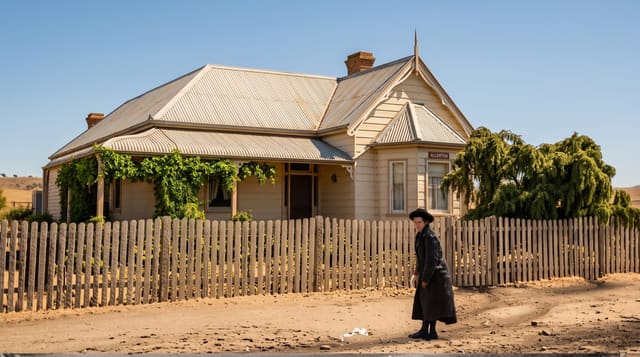
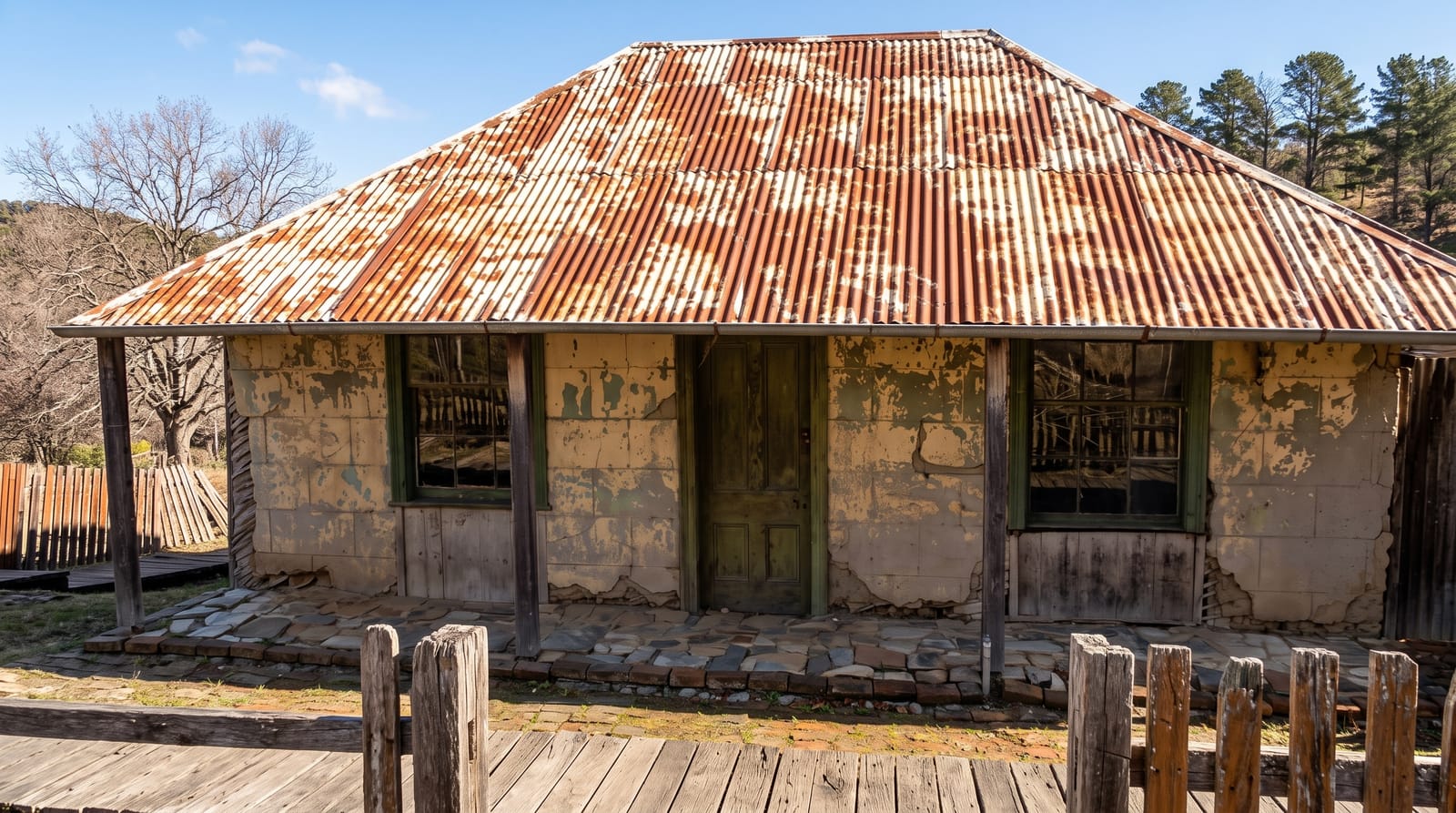
Hill End boomed after gold was found nearby, and by 1872 it held a population estimated in the thousands with dozens of pubs, hotels and stores along a main street of substantial buildings. The reef gold ran out, the town emptied, and what survives is a scatter of stone and timber buildings among empty lots on a windy ridge. The site is preserved as a historic site, and what makes it unusual is the record: the photographer Beaufoy Merlin documented the town in 1872 in a series of glass plate images, and copies are displayed at the exact spots where each was taken, so visitors can hold up the past against the gap. Artists have used the village as a retreat since the 1940s.
History
The area, known as Bald Hills in the 1850s, was proclaimed a village in 1860 as Forbes and renamed Hill End in 1862, and after rich reefs were found at Hawkins Hill in the early 1870s it overtook neighbouring Tambaroora, reaching about 8,000 people with two newspapers, five banks, eight churches and twenty-eight pubs. On 19 October 1872 Bernhardt Holtermann's mine brought up the Beyers-Holtermann Specimen, the largest mass of reef gold ever found, which yielded about 93 kilograms of gold when crushed despite his offer to buy it whole; the telegraph had arrived in October 1862, and when the gold gave out the town shrank to 700 people by 1945 (Wikipedia, Hill End, New South Wales).
What to look for
- The 1872 photographs - Merlin's images displayed where each was taken.
- The surviving buildings - stone and timber structures along the old street.
- The Royal Hotel - the pub still trading from the gold-rush era.
- The mining landscape - shafts, tailings and the Bald Hill mine nearby.
When to go
March to November for comfortable weather; the ridge is cold and exposed in winter and hot in midsummer. Weekends bring visitors and the pub and museum keep more reliable hours. Some roads in are unsealed and rough after rain.
Before you go
Most of the town is gone; this is an exercise in imagination rather than a preserved streetscape. Services are minimal, with one pub and limited food. The drive from Bathurst includes unsealed sections that are slow and dusty.
Nearby
Sofala, another gold village, lies between here and Bathurst; Mudgee is north.
Key facts
Source: Wikidata, item Q14202724, read on 18 October 2026.
What to pack for Hill End
Chosen from what this place is for. Tap a kit for the full checklist.
- Comfortable walking shoes - Sightseeing means kilometres of pavement and cobbles daily. Find on Amazon
- A slim anti-theft daypack - Zips that close properly; keep it in front in crowds and on transit. Find on Amazon
- A refillable water bottle - Many cities have public fountains; save money and plastic. Find on Amazon
- A light layer + compact umbrella - For museum air-con and a sudden shower. Find on Amazon
Some links on this page are Amazon affiliate links - if you buy through them we may earn a small commission at no extra cost to you.
All packing kitsPlan your trip
Where to start if Hill End is going on the list.
Booking links on this page are affiliate links - if you book through them we may earn a small commission at no extra cost to you. It never changes what we write about a place.
Opening times, ticket prices and seasonal closures change - check the official source before you go: official site.