Westerkerk
The tallest church tower in Amsterdam, whose bells Anne Frank listened to from the annexe next door.
Updated 21 October 2026
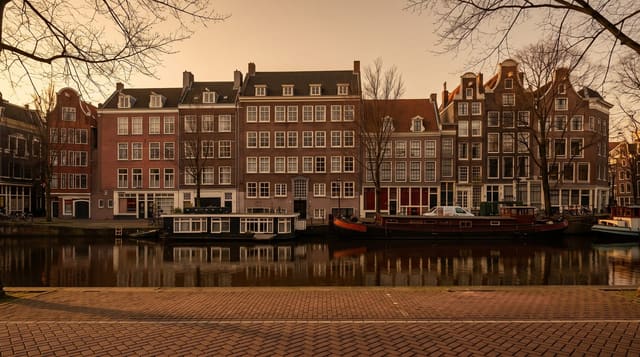
The Westerkerk was built between 1620 and 1631 by Hendrick de Keyser and finished after his death, and it is still the largest church in the Netherlands built for Protestant worship - a Dutch Renaissance building designed for preaching, with a broad interior, plain walls and clear glass, no images and the pulpit at the centre of the arrangement rather than an altar. Its tower, the Westertoren, is eighty-seven metres, the tallest in the city, topped with a copy of the imperial crown of Maximilian I, which Amsterdam was granted the right to use in 1489 and put on everything. Rembrandt was buried here in 1669 in a rented grave, the location of which is not known - a wall marker records him without claiming a spot. The Anne Frank House is a few doors along Prinsengracht, and the diary mentions the Westertoren bells repeatedly.
History
The church was built between 1620 and 1631 to designs by Hendrick de Keyser, finished by his son Pieter de Keyser and inaugurated on 8 June 1631. It was one of the first purpose-built Protestant churches, and Rembrandt was buried here on 8 October 1669 in a grave whose exact place is no longer known (Wikipedia, Westerkerk).
What you'll find
- An eighty-seven-metre tower - the tallest in Amsterdam, with the imperial crown on top.
- A preaching interior - broad, plain and clear-glazed, built for Protestant worship.
- Rembrandt's burial - in an unmarked rented grave, recorded on a wall.
- The bells of the diary - heard from the annexe a few doors along the canal.
When to go
April to October. Two hours.
Practical notes
The tower is climbed only on a guided tour with limited numbers and a steep narrow stair - book ahead. The church closes for services and concerts. Rembrandt's actual grave location is unknown.
Nearby
The Anne Frank House is a few doors along; the Jordaan is behind.
Key facts
Source: Wikidata, item Q1130722, read on 18 October 2026.
What to pack for Westerkerk
Chosen from what this place is for. Tap a kit for the full checklist.
- Comfortable walking shoes - Sightseeing means kilometres of pavement and cobbles daily. Find on Amazon
- Modest clothing - Shoulders and knees covered - the single most common requirement. Find on Amazon
- A slim anti-theft daypack - Zips that close properly; keep it in front in crowds and on transit. Find on Amazon
- A scarf or shawl - To cover the head or shoulders on entry; women especially at mosques. Find on Amazon
Some links on this page are Amazon affiliate links - if you buy through them we may earn a small commission at no extra cost to you.
All packing kitsPlan your trip
Where to start if Westerkerk is going on the list.
Booking links on this page are affiliate links - if you book through them we may earn a small commission at no extra cost to you. It never changes what we write about a place.
Opening times, ticket prices and seasonal closures change - check the official source before you go: official site.