Jordaan
A working-class quarter of narrow streets and hidden almshouse courtyards, now the most expensive in Amsterdam.
Updated 21 October 2026
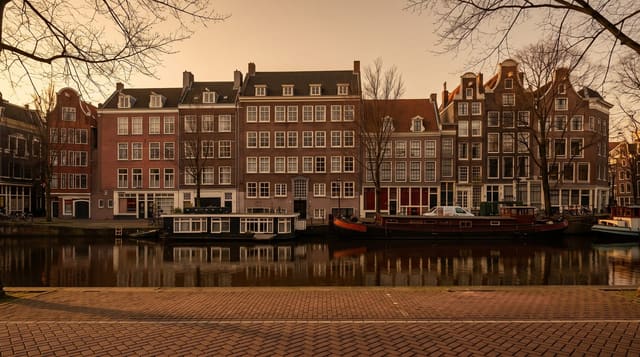
The Jordaan was laid out in the 1610s as part of the canal expansion, but not for merchants: it was built on the existing field pattern rather than the grand plan, with narrow streets, small plots and cheap housing for artisans, immigrants and the poor, which is why the grid runs at an angle to the canal belt and the streets are named after flowers and trees. It stayed a poor, dense and famously insular quarter into the twentieth century, with its own dialect and songs, and was gentrified from the 1970s until it became one of the most expensive districts in the city. Hidden through it are hofjes - almshouse courtyards founded by wealthy benefactors from the seventeenth century, entered through unmarked doors, several of which admit visitors quietly during the day. The Noordermarkt holds a farmers' market on Saturdays and a flea market on Mondays.
History
The most common theory derives the name from the French jardin, "garden", since most of the streets and canals are named after trees and flowers. Rembrandt spent his last years in the Jordaan, on the Rozengracht, and was buried in the Westerkerk nearby (Wikipedia, Jordaan).
What to look for
- A grid at an angle - built on old field lines rather than the planned canal belt.
- Hofjes - almshouse courtyards behind unmarked doors, some open by day.
- Flower and tree street names - the pattern of the original 1610s layout.
- Noordermarkt - farmers' market on Saturday, flea market on Monday.
When to go
April to October. A day.
Practical notes
The hofjes are private residential courtyards - quiet and short visits only, and several have closed to visitors because of noise. The district is expensive and busy. Little of the old working-class character survives beyond the buildings.
Nearby
The Anne Frank House and Westerkerk are on the eastern edge.
Key facts
Source: Wikidata, item Q1401387, read on 18 October 2026.
What to pack for Jordaan
Chosen from what this place is for. Tap a kit for the full checklist.
- Comfortable walking shoes - Sightseeing means kilometres of pavement and cobbles daily. Find on Amazon
- A slim anti-theft daypack - Zips that close properly; keep it in front in crowds and on transit. Find on Amazon
- A refillable water bottle - Many cities have public fountains; save money and plastic. Find on Amazon
- A light layer + compact umbrella - For museum air-con and a sudden shower. Find on Amazon
Some links on this page are Amazon affiliate links - if you buy through them we may earn a small commission at no extra cost to you.
All packing kitsPlan your trip
Where to start if Jordaan is going on the list.
Booking links on this page are affiliate links - if you book through them we may earn a small commission at no extra cost to you. It never changes what we write about a place.
Opening times, ticket prices and seasonal closures change - check the official source before you go: official site.