The Amsterdam Canals
The graceful heart of Amsterdam - a UNESCO ring of seventeenth-century canals lined by gabled merchant houses, humpback bridges and houseboats, best seen from the water.
Updated 18 October 2026
AI illustration
UNESCO World Heritage
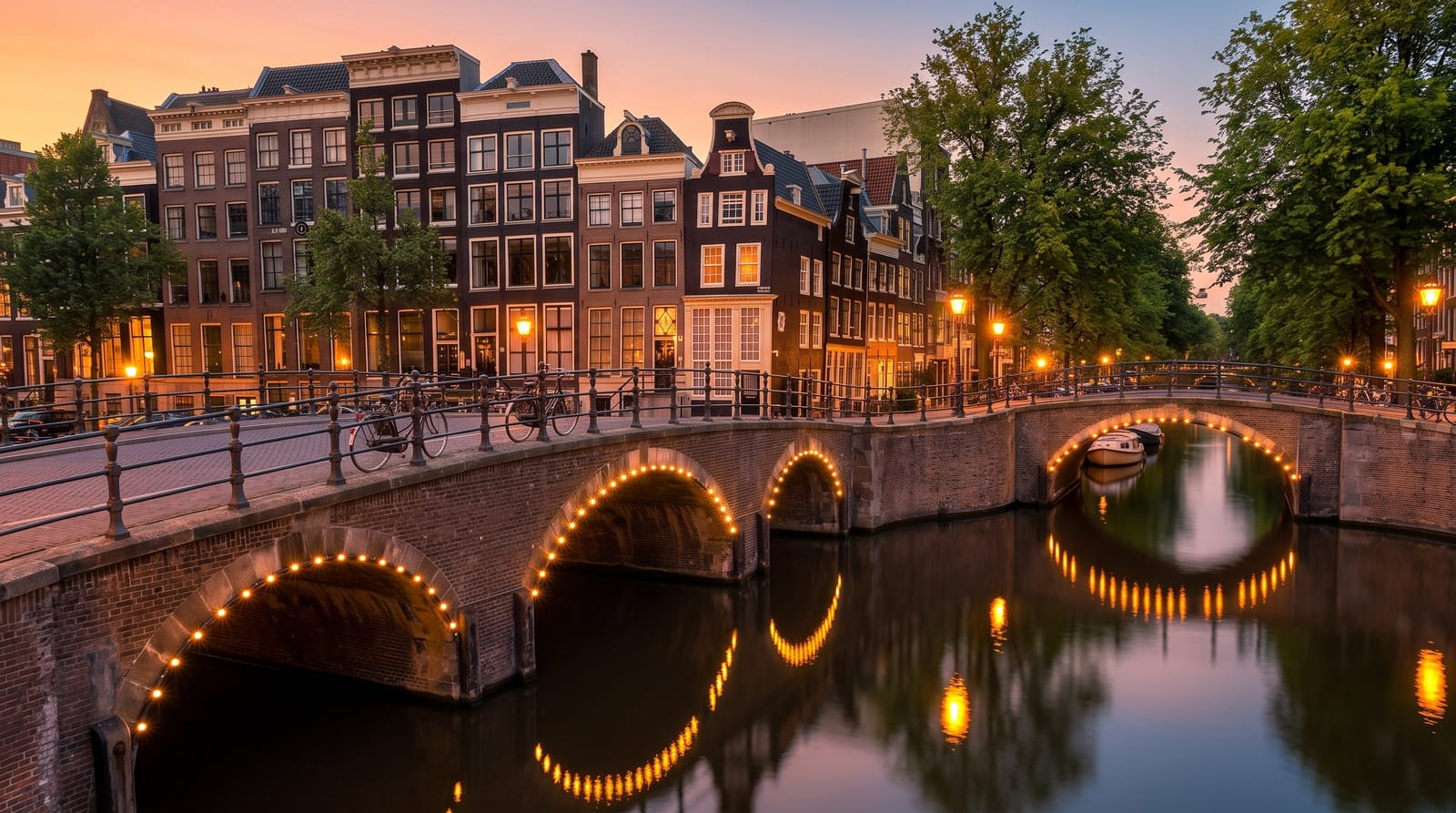
The canal ring of Amsterdam is the graceful heart of the city, a UNESCO masterpiece of urban planning laid out in the seventeenth-century Golden Age. Its concentric arcs of water are lined with tall, narrow gabled merchant houses, crossed by humpback bridges and dotted with houseboats, and gliding along them by boat or strolling their leafy quays is the quintessential Amsterdam experience.
History
With immigration rising early in the 17th century, Amsterdam drew up a comprehensive plan for four concentric half-circles of canals resting on the IJ: the Herengracht, Keizersgracht and Prinsengracht for housing and the outer Singelgracht for defence and water management, with radial canals, a set of parallel canals in the Jordaan for goods such as beer, the old defensive Singel turned over to homes and trade, and more than a hundred bridges. Building went from west to east across the layout, like a giant windscreen wiper, as the historian Geert Mak puts it, not outwards from the centre as the popular myth has it: the north-western sector was begun in 1613 and finished around 1625, and the southern sector followed slowly after 1664 because of an economic depression. The city now has more than 100 kilometres of canals, about 90 islands and 1,500 bridges, and in 2010 the 17th-century canal ring became a World Heritage Site (Wikipedia, Canals of Amsterdam).
What you'll find
- The canal ring - the concentric arcs of Golden Age canals and gabled houses.
- The bridges - the humpback bridges, lit with lights after dark.
- A canal cruise - the classic way to see the city from the water.
- The Jordaan - the pretty former working district of narrow lanes and cafes.
When to go
Spring to early autumn for the best weather and long light; the canals are magical after dark when the bridges are lit. Amsterdam is very busy in summer, so spring and early autumn are calmer.
Before you go
The centre is extremely crowded in peak season and around the red-light and party areas, which can be seedy; the quieter canals and the Jordaan are lovelier. Beware the busy cycle lanes when walking. Accommodation is expensive.
Nearby
The Rijksmuseum, Van Gogh Museum and Anne Frank House are all in the city; the tulip fields lie beyond in spring.
Key facts
Source: Wikidata, item Q340013, read on 18 October 2026.
What to pack for The Amsterdam Canals
Chosen from what this place is for. Tap a kit for the full checklist.
- Comfortable walking shoes - Sightseeing means kilometres of pavement and cobbles daily. Find on Amazon
- A slim anti-theft daypack - Zips that close properly; keep it in front in crowds and on transit. Find on Amazon
- A refillable water bottle - Many cities have public fountains; save money and plastic. Find on Amazon
- A light layer + compact umbrella - For museum air-con and a sudden shower. Find on Amazon
Some links on this page are Amazon affiliate links - if you buy through them we may earn a small commission at no extra cost to you.
All packing kitsPlan your trip
Where to start if The Amsterdam Canals is going on the list.
Booking links on this page are affiliate links - if you book through them we may earn a small commission at no extra cost to you. It never changes what we write about a place.
Opening times, ticket prices and seasonal closures change - check the official source before you go: official site.