Khujand
Tajikistan's northern anchor - a Silk Road city on the Syr Darya with a rebuilt citadel, the vast Panjshanbe bazaar and Fergana Valley ease.
Updated 2 October 2026
AI illustration
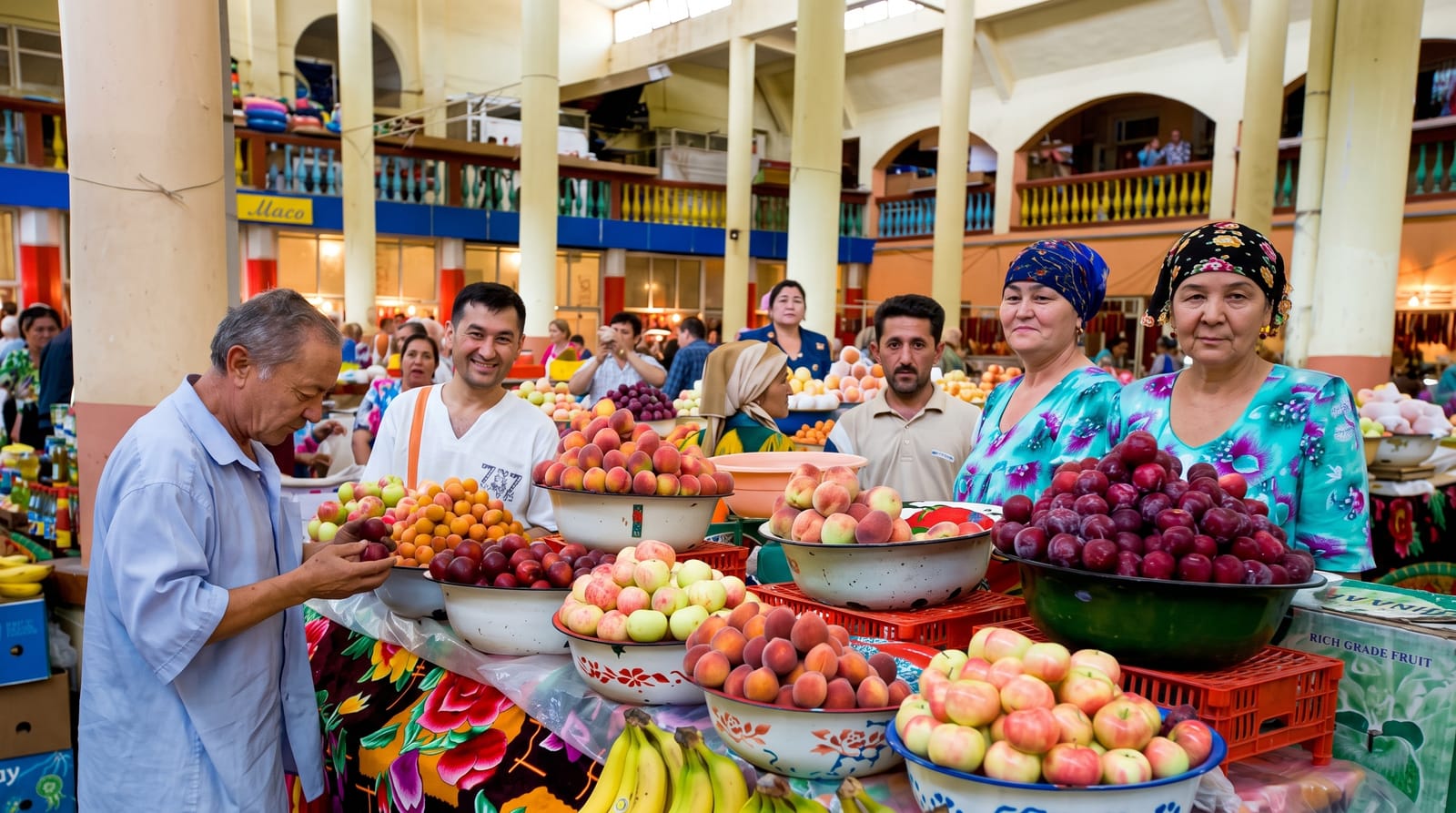
Khujand has watched the Syr Darya flow out of the Fergana Valley for some two and a half millennia - claimed as Alexander's furthest Alexandria, fought over by every power that wanted the valley's wealth, and now Tajikistan's easy-going second city. The rebuilt citadel walls hold the historical museum, but the living monument is Panjshanbe: one of Central Asia's great covered bazaars, a pink-arched hall where dried-apricot pyramids, bread stamps, gold teeth and wedding fabrics trade at full valley volume, facing the tiled Sheikh Muslihiddin mausoleum complex across the square. Riverside parks and cable cars add the city's unhurried pleasures.
What you'll find
- Panjshanbe Bazaar - the pink-arched hall at full trading pitch.
- Sheikh Muslihiddin complex - mosque, minaret and mausoleum by the square.
- The citadel and museum - Khujand's long story on the old walls' line.
- The Syr Darya banks - parks and the cable car over the river.
When to go
April to June and September to October dodge the valley's fierce summer; the bazaar peaks mornings, especially Thursdays and Sundays. The mountain road from Dushanbe is spectacular and slow - flying saves a day.
What to expect
Khujand is a relaxed provincial city rather than a monument town - the citadel is largely reconstruction, and the pleasure is bazaar life over architecture. Little English is spoken; smiles, gestures and a few Russian or Tajik words carry far. Summer tops 40 degrees with conviction.
Nearby
The Fergana Valley border towns, Istaravshan's old crafts quarter and the road south to the Fanns.
Key facts
Source: Wikidata, item Q373808, read on 18 October 2026.
What to pack for Khujand
Chosen from what this place is for. Tap a kit for the full checklist.
- Comfortable walking shoes - Sightseeing means kilometres of pavement and cobbles daily. Find on Amazon
- Modest clothing - Shoulders and knees covered - the single most common requirement. Find on Amazon
- A slim anti-theft daypack - Zips that close properly; keep it in front in crowds and on transit. Find on Amazon
- A scarf or shawl - To cover the head or shoulders on entry; women especially at mosques. Find on Amazon
Some links on this page are Amazon affiliate links - if you buy through them we may earn a small commission at no extra cost to you.
All packing kitsPlan your trip
Where to start if Khujand is going on the list.
Booking links on this page are affiliate links - if you book through them we may earn a small commission at no extra cost to you. It never changes what we write about a place.
Opening times, ticket prices and seasonal closures change - check the official source before you go: official site.