Kirkjubøur
The islands' medieval episcopal seat, with a ruined cathedral, an 800-year-old church and one of the oldest inhabited wooden houses in the world.
Updated 19 October 2026
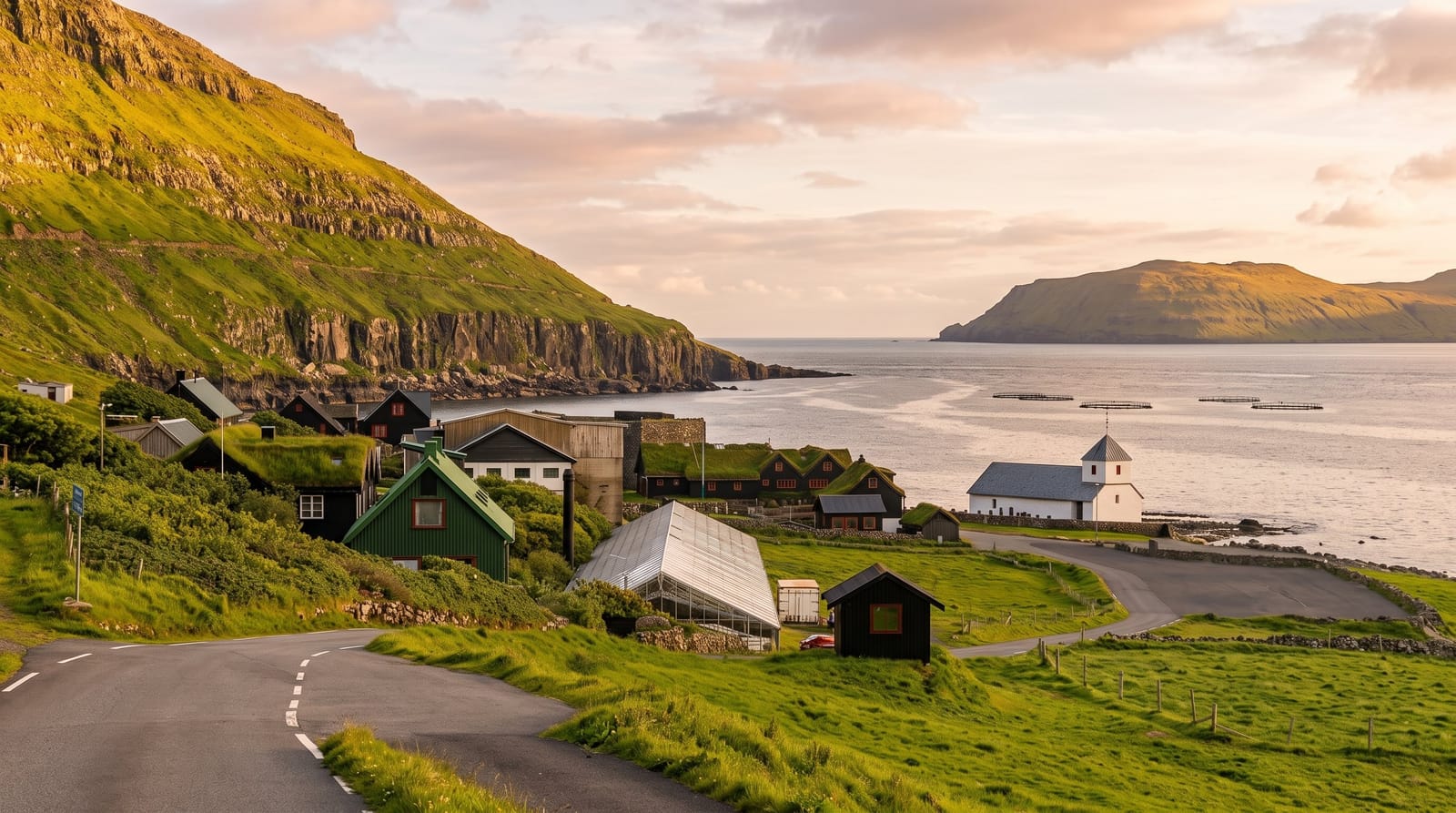
AI illustration
Kirkjubøur, on the southern tip of Streymoy, was the religious and cultural centre of the Faroes in the Middle Ages, seat of the bishops until the Reformation. Three buildings tell that story. The Magnus Cathedral was begun around 1300 and by tradition never finished, though recent research suggests it was roofed and in use before the Reformation; its roofless stone walls still stand gaunt against the sea. Saint Olav's Church, from the twelfth century, is the oldest still in use in the country. And Kirkjubøargarður, the old farmhouse, has been continuously inhabited by the same family for many generations and includes a log-built roykstovan, a smoke-room, whose timbers are among the oldest in any inhabited wooden house anywhere. The village faces the small island of Hestur across a sound, and the whole place is quietly extraordinary.
History
In the Middle Ages Kirkjubøur was the seat of the bishops of the Faroe Islands and the spiritual centre of the country, perhaps placed here to counter the pagan sanctuary at Velbastaður, 5 km up the coast. The village then had around 50 houses, most of them washed away by a fierce storm in 1602 that created the islet of Kirkjubøhólmur, where ruins from that time remain. Three buildings survive from its great age: the ruins of the Magnus Cathedral of about 1300, Saint Olav's Church of the 12th century, the oldest Faroese church still in use, and the farmhouse of Kirkjubøargarður, whose oldest parts go back to the 11th century; in 1832 a Viking Age runestone was found near the cathedral (Wikipedia, Kirkjubøur).
What's there
- Magnus Cathedral - the roofless medieval stone shell above the shore.
- Saint Olav's Church - the twelfth-century church, the oldest still in use in the Faroes.
- Kirkjubøargarður - the ancient inhabited farmhouse and its log-built smoke-room.
- The view to Hestur - the island across the sound, with Koltur beyond.
When to go
May to September for the mildest weather; the farmhouse museum keeps summer hours. The village is exposed and can be windswept and wet in any season. The hiking route over from Tórshavn is best on a clear day.
Good to know
The village is tiny and a visit is a couple of hours; the buildings are the point rather than any facilities. The farmhouse is a private home as well as a museum, so respect the family's space. Weather here is raw and changeable, and the walking trail over the ridge is exposed and should not be attempted in fog.
Nearby
Tórshavn and its old Tinganes quarter are 15 km away; boats to Hestur run from Gamlarætt nearby.
Key facts
Source: Wikidata, item Q578732, read on 18 October 2026.
What to pack for Kirkjubøur
Chosen from what this place is for. Tap a kit for the full checklist.
- Broken-in walking shoes or boots - Grip and ankle support matter more than looks; never hike in brand-new boots. Find on Amazon
- Comfortable walking shoes - Sightseeing means kilometres of pavement and cobbles daily. Find on Amazon
- Modest clothing - Shoulders and knees covered - the single most common requirement. Find on Amazon
- Layers + a waterproof shell - Mountain weather turns fast; a packable rain jacket saves the day. Find on Amazon
Some links on this page are Amazon affiliate links - if you buy through them we may earn a small commission at no extra cost to you.
All packing kitsPlan your trip
Where to start if Kirkjubøur is going on the list.
Booking links on this page are affiliate links - if you book through them we may earn a small commission at no extra cost to you. It never changes what we write about a place.
Opening times, ticket prices and seasonal closures change - check the official source before you go: official site.