Grand Mosque of Tangier
A mosque on a site that has carried a Roman temple, a Portuguese cathedral and an English church before it.
Updated 20 October 2026
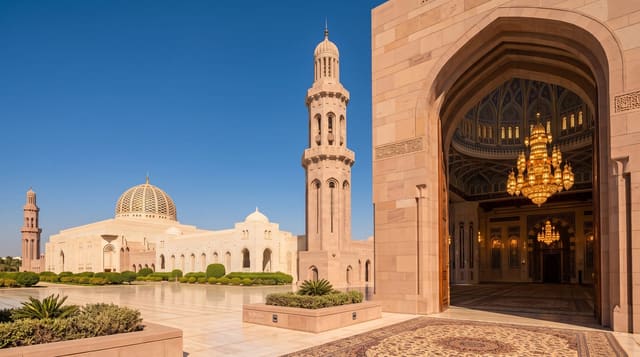
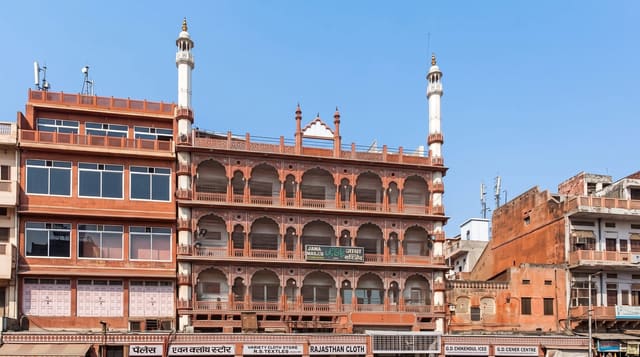
The site the Grand Mosque occupies has been in religious use for a very long time and by a succession of occupants, which is a compressed version of Tangier's history: a temple in the Roman period, a mosque under Muslim rule, a cathedral during the Portuguese occupation from 1471, a church when the city passed to England as part of Catherine of Braganza's dowry in 1662, and a mosque again after Moulay Ismail took it in 1684, rebuilt substantially from 1815 under Moulay Slimane. The minaret with its bands of green and white zellige is the visible part, seen from the lanes and from the Petit Socco below; non-Muslims cannot go inside, so the visit is the exterior and the surrounding streets. The mosque sits at the top of the Petit Socco, which was the centre of international-zone Tangier and still has its old cafes.
History
The site is believed to have held a Roman temple of Hercules and a 5th-century church, and a Friday mosque stood here under the Marinids. The Portuguese made it a cathedral after 1471; it became a mosque again after 1684, and Sultan Moulay Slimane, shocked by its state when he saw it in 1815, ordered it completely rebuilt, which is why the present design dates from the early 19th century (Wikipedia, Grand Mosque of Tangier).
What's there
- A layered site - Roman temple, mosque, cathedral, English church and mosque again.
- A tiled minaret - green and white zellige bands, seen from the lanes below.
- A nineteenth-century rebuilding - the present structure largely from Moulay Slimane.
- The Petit Socco below - the old international-zone square with its cafes.
When to go
Spring and autumn. Half an hour, walking the medina.
Good to know
Non-Muslims cannot enter - the minaret and the doorways are the visit. Lanes around it are narrow and steep. There is no interpretation of the site's layered history on the ground. The Petit Socco has a certain amount of touting.
Nearby
The Petit Socco is immediately below; the kasbah is up the hill.
Key facts
Source: Wikidata, item Q7682971, read on 18 October 2026.
What to pack for Grand Mosque of Tangier
Chosen from what this place is for. Tap a kit for the full checklist.
- Comfortable walking shoes - Sightseeing means kilometres of pavement and cobbles daily. Find on Amazon
- Modest clothing - Shoulders and knees covered - the single most common requirement. Find on Amazon
- A slim anti-theft daypack - Zips that close properly; keep it in front in crowds and on transit. Find on Amazon
- A scarf or shawl - To cover the head or shoulders on entry; women especially at mosques. Find on Amazon
Some links on this page are Amazon affiliate links - if you buy through them we may earn a small commission at no extra cost to you.
All packing kitsPlan your trip
Where to start if Grand Mosque of Tangier is going on the list.
Booking links on this page are affiliate links - if you book through them we may earn a small commission at no extra cost to you. It never changes what we write about a place.
Opening times, ticket prices and seasonal closures change - check the official source before you go: official site.