Plymouth, the Buried Capital
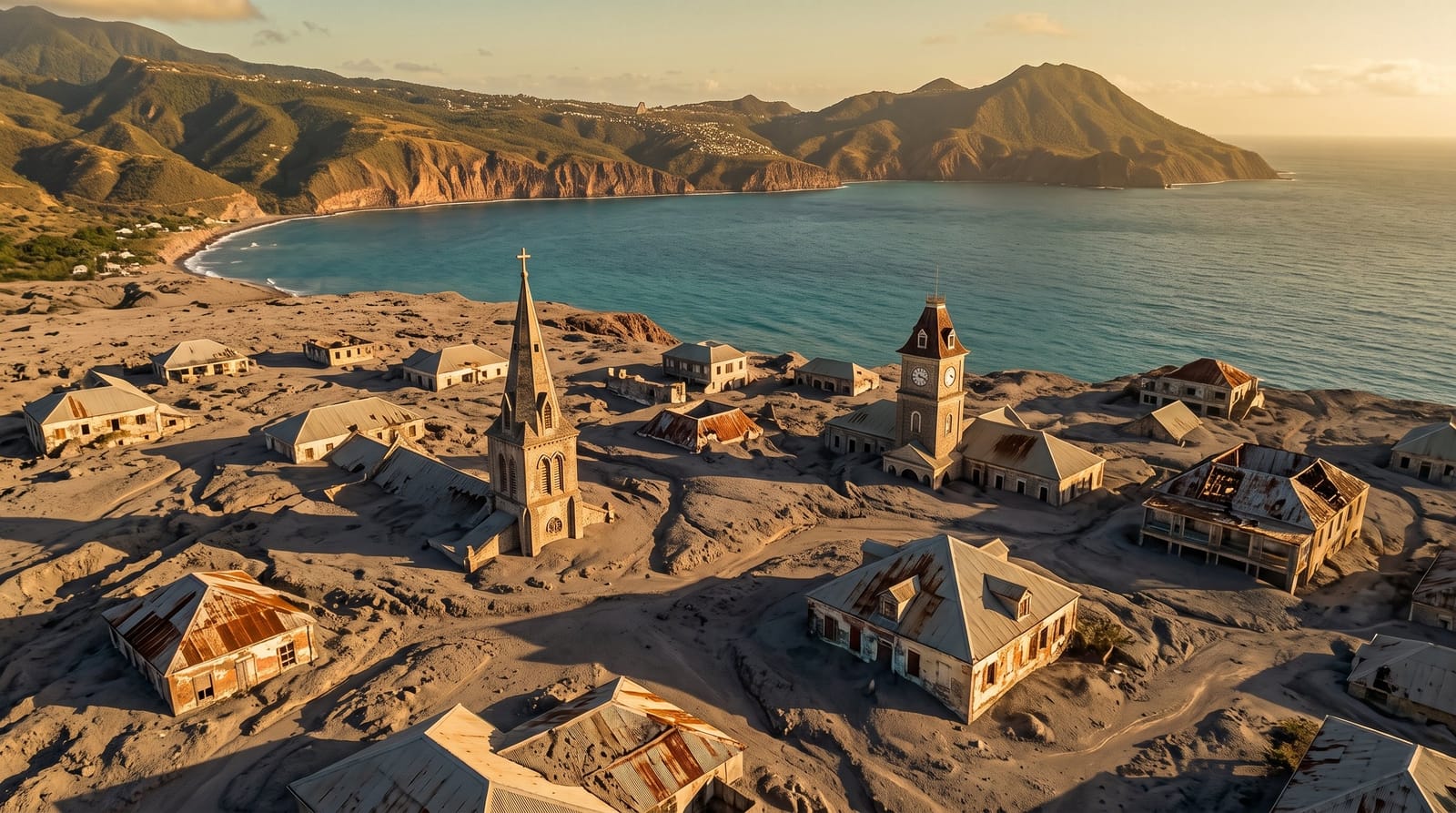
A modern Pompeii of the Caribbean - the former capital of Montserrat, buried under metres of volcanic ash and mud by the eruptions from 1995 and abandoned, its rooftops and church spires eerily protruding from the grey, a haunting and unique testament to nature's force.
Updated 6 August 2026
AI illustration
Plymouth, once the bustling capital and only town of any size on Montserrat, is now one of the most extraordinary and haunting sights in the Caribbean, a modern Pompeii. When the Soufriere Hills volcano erupted from 1995, it buried the Georgian town under metres of ash, mud and pyroclastic debris, and it was abandoned, becoming a ghost city within the volcanic exclusion zone. Today, the eerie remains, rooftops, church spires, the clock tower and upper storeys of buildings protruding from the hardened grey ashfall, can be viewed from lookouts such as Garibaldi Hill or, when conditions and permits allow, on guided visits, a sobering and unforgettable testament to the power of nature.
Highlights
- The buried town - the rooftops and spires in the grey ashfall.
- The lookout views - the vistas over Plymouth from Garibaldi Hill.
- The abandoned buildings - the eerie remains of the capital.
- The exclusion zone - the ghostly, ash-covered south.
When to go
December to April, the dry season, for the clearest views, as the volcano and its zone are often cloud-covered; Plymouth is generally viewed from lookouts in the safe area, and closer access, when the volcano's status allows, is only by permit and guided tour. Always follow official guidance, as the exclusion zone remains hazardous.
Before you go
Plymouth lies within an active volcanic exclusion zone, so it is usually viewed from a distance at lookouts rather than entered, and closer access is only by permit and guided tour when conditions allow; it is also a place of real loss, the abandoned home of thousands, to be treated with respect. As a genuinely unique and haunting sight, though, a modern Pompeii where a buried capital protrudes eerily from the volcanic grey, Plymouth is unforgettable and one of the most extraordinary places in the Caribbean.
Nearby
The Soufrière Hills volcano, the observatory and the safe north are within reach.
What to pack for Plymouth, the Buried Capital
Chosen from what this place is for. Tap a kit for the full checklist.
- Spare batteries + cards - Cold and long shoots drain power; never run out at the good light. Find on Amazon
- Comfortable walking shoes - Sightseeing means kilometres of pavement and cobbles daily. Find on Amazon
- A compact tripod - Essential for night skies, aurora, waterfalls and low light. Find on Amazon
- A slim anti-theft daypack - Zips that close properly; keep it in front in crowds and on transit. Find on Amazon
Some links on this page are Amazon affiliate links - if you buy through them we may earn a small commission at no extra cost to you.
All packing kitsPlan your trip
Where to start if Plymouth, the Buried Capital is going on the list.
Booking links on this page are affiliate links - if you book through them we may earn a small commission at no extra cost to you. It never changes what we write about a place.
Opening times, ticket prices and seasonal closures change - check the official source before you go: official site.