Curonian Spit
A ninety-eight kilometre finger of shifting sand dunes and pine between the lagoon and the open Baltic, shared with Russia and listed by UNESCO.
Updated 1 September 2026
AI illustration
UNESCO World Heritage
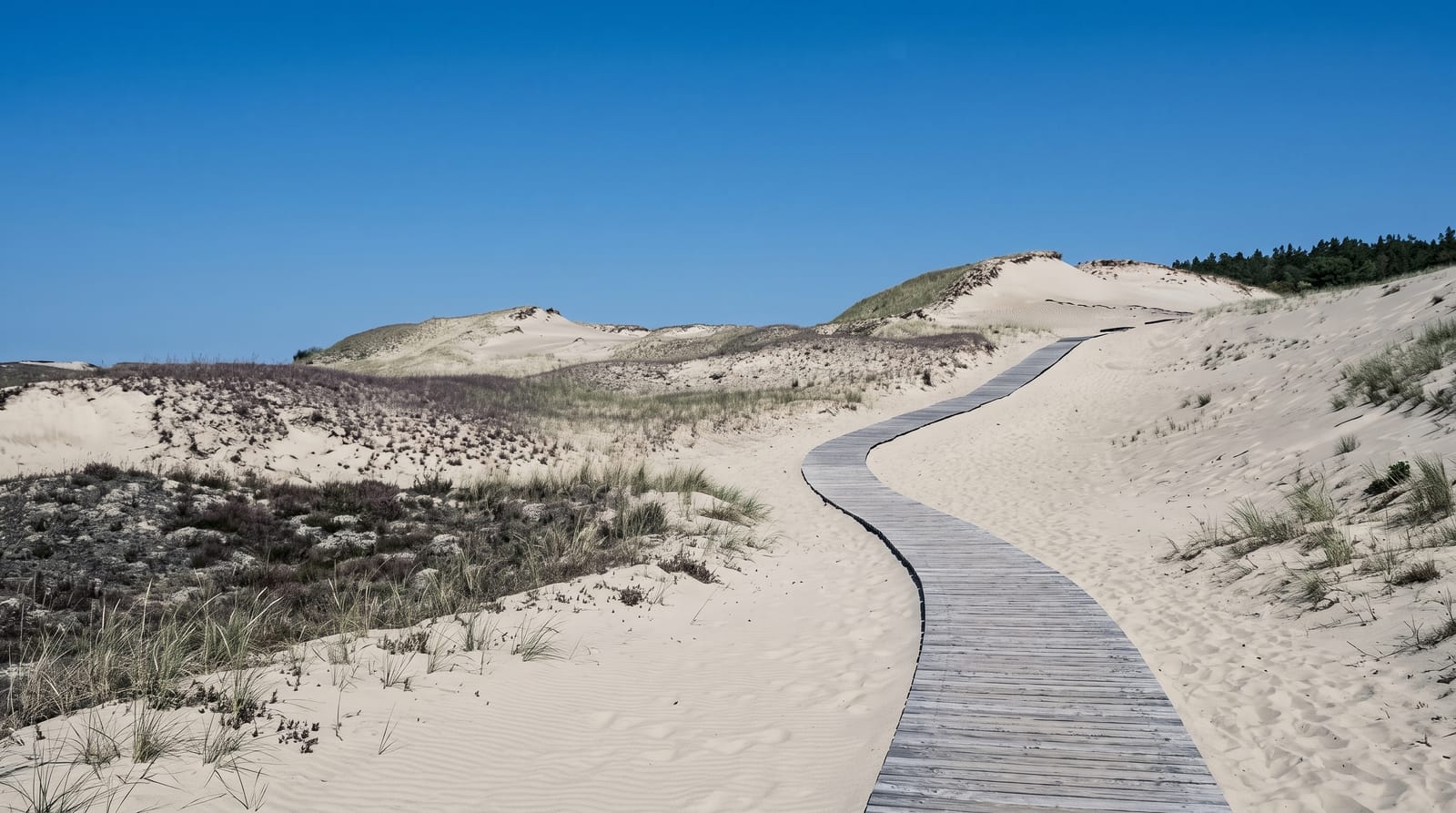
The Curonian Spit is a long, thin barrier of sand between the calm Curonian Lagoon and the open sea, held together by pine forest that people replanted after the dunes once swallowed whole villages. Its great grey dunes, painted fishing villages and huge migrating dunes make it one of the most distinctive landscapes in the Baltic, shared between Lithuania and Russia.
What you'll find
- The Parnidis dune - the great shifting dune above Nida, the closest thing here to a desert.
- Nida village - painted wooden fishermen's houses, weathervanes and Thomas Mann's summer cottage.
- The Dead Dunes - the wandering grey dunes that buried old villages, near Pervalka.
- The two coasts - the wild sea beach on one side, the calm lagoon on the other, minutes apart.
When to go
Summer for the beaches and full ferries; late spring and early autumn for quiet dunes and bird migration. The spit is busiest in July and August, when Nida fills with holidaymakers.
What to expect
It is long and thin, so you cover distances by car or bus between the highlights rather than walking it all. High summer brings crowds and booked-out accommodation in Nida. Walking on the fragile dunes off the boardwalks is banned to stop erosion, so stick to the marked paths.
Nearby
Klaipeda and its sea museum sit at the northern gate; the Nemunas Delta lies just inland across the lagoon.
Key facts
Source: Wikidata, item Q5595, read on 18 October 2026.
What to pack for Curonian Spit
Chosen from what this place is for. Tap a kit for the full checklist.
- Broken-in walking shoes or boots - Grip and ankle support matter more than looks; never hike in brand-new boots. Find on Amazon
- Travel rod + reel - A packable multi-piece rod fits in a case and covers most holiday fishing. Find on Amazon
- Reef-safe sunscreen - High SPF that will not bleach the coral you are swimming over. Find on Amazon
- Binoculars - The single best wildlife tool - even a compact pair transforms a sighting. Find on Amazon
Some links on this page are Amazon affiliate links - if you buy through them we may earn a small commission at no extra cost to you.
All packing kitsPlan your trip
Where to start if Curonian Spit is going on the list.
Booking links on this page are affiliate links - if you book through them we may earn a small commission at no extra cost to you. It never changes what we write about a place.
Opening times, ticket prices and seasonal closures change - check the official source before you go: official site.