Parnidis Dune
The great sand dune above Nida, crowned by a sundial and looking out over the lagoon, the sea and the drifting sand toward Russia.
Updated 18 October 2026
AI illustration
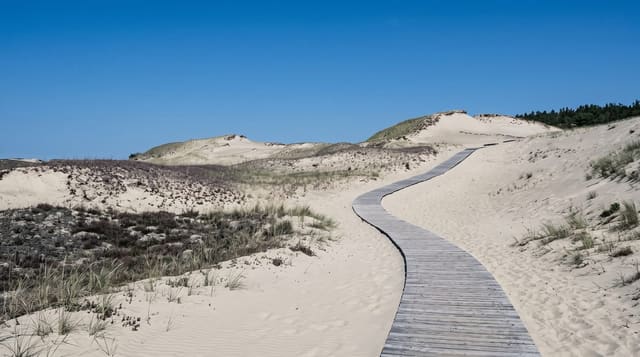
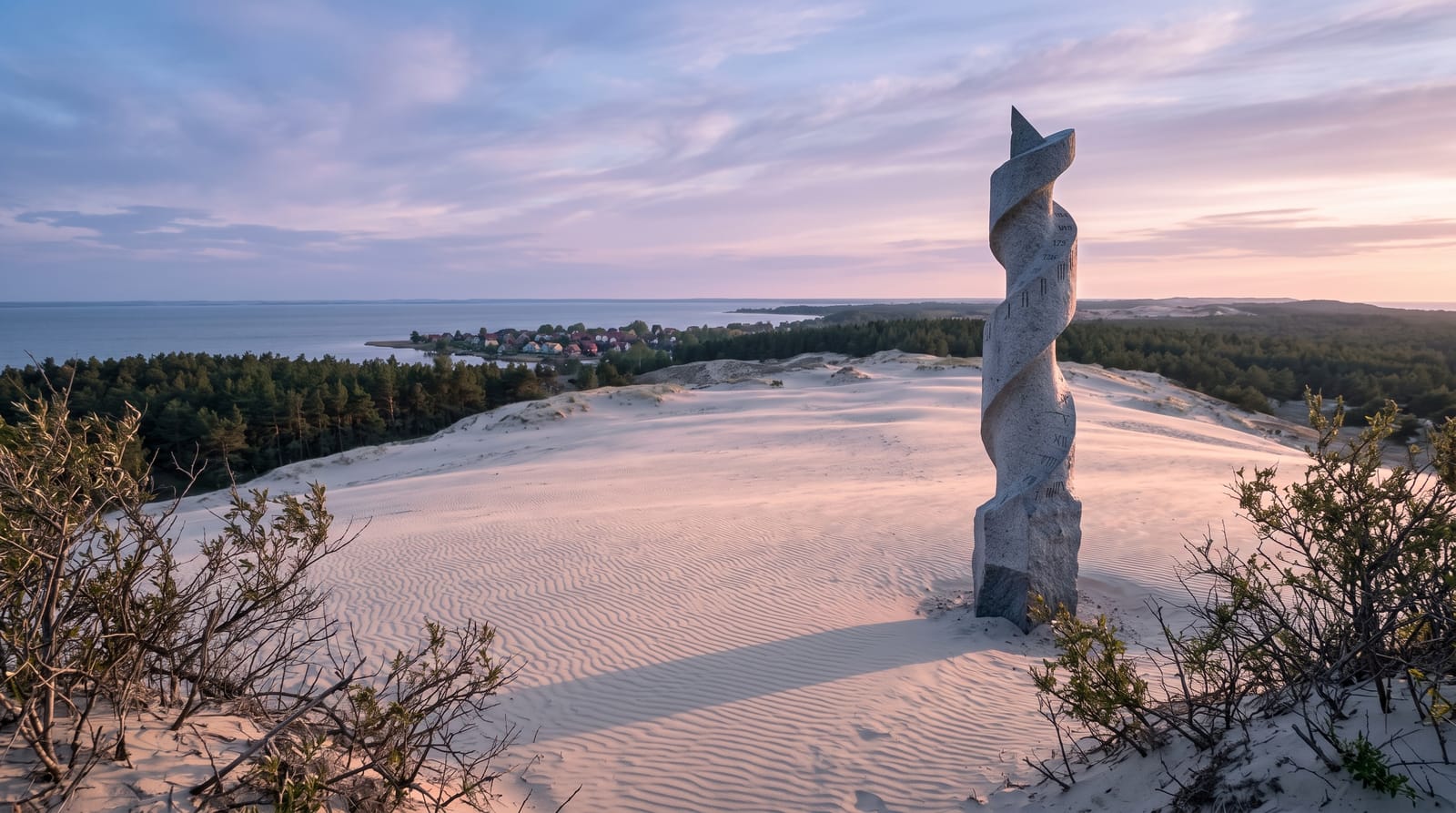
Parnidis is the accessible giant of the Curonian dunes, a wall of sand rising straight above Nida to a ridge topped with a granite sundial. From the crest the view runs over the town and lagoon on one side and the open sea on the other, with the moving sand stretching south toward the Russian border.
History
The dune keeps moving east towards the lagoon, and it has buried a lot on the way: between 1675 and 1854 the sand covered four successive villages of Nagliai, and between 1955 and 1973 it spilled over part of the lagoon shore and of the bay at Nida. Locals read the name as "the one that crossed Nida", since the sand has passed over the settlement more than once. The sundial on the top was built in 1995, damaged by Hurricane Anatoly in 1999 and restored in 2011. Erosion and people climbing the steep slopes cost the dune about 15 metres of height between 1984 and 2004, which is why walking off the marked paths is now strictly forbidden (Lithuanian Wikipedia, Parnidžio kopa).
Background
In Lithuanian the dune is called Parnidžio kopa. It is a drifting, semi-permanent dune southeast of Nida, almost entirely bare, and stands 52 metres above sea level. At one time its height reached 60 metres, but it has lost height as it creeps steadily eastward and the wind carries its sand into the Curonian lagoon, most visibly at the Parnidis Cape. The granite sundial on the crest dates from 1995. Its gnomon, a stone pillar, rises 13.8 metres, and the steps around it are faced with granite slabs cut with notches for the hours and half hours, for each month, and for the solstices and equinoxes. A storm broke the gnomon, and the sundial was rebuilt in 2011.
Source: Wikipedia, "Parnidis Dune"
Highlights
- The sundial column - a tall granite sun clock on the dune crest.
- The lagoon and sea view - both coasts of the spit at once from the ridge.
- The moving sand - the bare, wind-sculpted face of the dune.
- Nida below - the painted village and harbour at the foot.
When to go
Late afternoon and sunset, when the low sun models the sand and the light is best; midday flattens it. Summer is busiest, so an evening climb is calmer and cooler.
Things to know
You must keep to the boardwalk and stairs, since walking on the open dune damages it and is not allowed. The climb is short but sandy and exposed, with no shade. It is deservedly popular, so sunset draws a crowd.
Nearby
Nida village is at the foot; the rest of the Curonian Spit stretches north and south.
Key facts
Source: Wikidata, item Q16468842, read on 18 October 2026.
What to pack for Parnidis Dune
Chosen from what this place is for. Tap a kit for the full checklist.
- Broken-in walking shoes or boots - Grip and ankle support matter more than looks; never hike in brand-new boots. Find on Amazon
- Reef-safe sunscreen - High SPF that will not bleach the coral you are swimming over. Find on Amazon
- Spare batteries + cards - Cold and long shoots drain power; never run out at the good light. Find on Amazon
- Loose, light, long clothing - Covering up beats bare skin in the desert - and locals dress this way for a reason. Find on Amazon
Some links on this page are Amazon affiliate links - if you buy through them we may earn a small commission at no extra cost to you.
All packing kitsPlan your trip
Where to start if Parnidis Dune is going on the list.
Booking links on this page are affiliate links - if you book through them we may earn a small commission at no extra cost to you. It never changes what we write about a place.
Opening times, ticket prices and seasonal closures change - check the official source before you go: official site.