The Tadrart Acacus
The painted desert mountains - UNESCO rock art spanning twelve millennia among arches and dune canyons of the deep Fezzan.
Updated 21 October 2026

AI illustration
UNESCO World Heritage
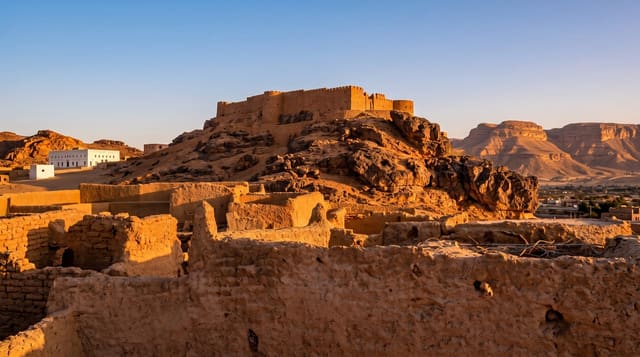
In Libya's far southwest, the Tadrart Acacus stacks a sandstone dreamscape against the Algerian border - arches, needle towers and canyons drowning in orange dune - and its walls remember the Sahara green: rock paintings and engravings spanning roughly twelve thousand years trace elephants, cattle herds, dancers and chariots through every climate the desert has worn, the sequence that earned early UNESCO inscription. Travel here is expedition truth - convoys from Ghat, camps under absolute starfields, Tuareg guides who read both dunes and art. Arrange the trip through specialist local operators.
History
Hunter-gatherers lived in these mountains throughout the Holocene, through the swings of the African Humid Period: in the Early Acacus, about 9810-8880 years ago, small mobile groups lived in valleys and by lowland lakes, in the drier Late Acacus, about 8870-7400 years ago, larger and more settled groups stored wild grain and used grinding stones and pottery, and in the Pastoral Neolithic that followed, domestic animals arrived, by around 7,000 years ago. Pottery here carries the earliest known traces of processed milk fats, dated to about 7,500 years ago. The rock paintings and carvings, from about 12,000 BC to AD 100, show giraffes, elephants, ostriches, camels, horses and people making music and dancing, and in 1985 they made the Acacus a World Heritage Site. Tadrart is the Berber feminine form of the word for mountain (Wikipedia, Acacus Mountains).
What to look for
- The painted shelters - twelve millennia of Saharan life on stone.
- The arches - Afzejare and its sandstone siblings.
- The dune canyons - orange sand drowning the black towers.
- The starfield camps - Fezzan nights at full depth.
When to go
November to February is the desert's expedition season. Arrange the trip through specialist local operators.
Before you go
Expeditions run through specialist local operators. The art is irreplaceable: no touching, no wetting, distance as guided - the shelters have suffered vandalism and deserve visitors who are the antidote.
Nearby
Ghat's old town and the Algerian Tadrart beyond the border.
Key facts
Source: Wikidata, item Q308807, read on 18 October 2026.
What to pack for The Tadrart Acacus
Chosen from what this place is for. Tap a kit for the full checklist.
- Loose, light, long clothing - Covering up beats bare skin in the desert - and locals dress this way for a reason. Find on Amazon
- Strong insect repellent - DEET or picaridin; the jungle is where bites and disease risk are highest. Find on Amazon
- Comfortable walking shoes - Sightseeing means kilometres of pavement and cobbles daily. Find on Amazon
- Shelter suited to the place - Tent, tarp or hut booking - match it to the terrain and rules. Find on Amazon
Some links on this page are Amazon affiliate links - if you buy through them we may earn a small commission at no extra cost to you.
All packing kitsPlan your trip
Where to start if The Tadrart Acacus is going on the list.
Booking links on this page are affiliate links - if you book through them we may earn a small commission at no extra cost to you. It never changes what we write about a place.
Opening times, ticket prices and seasonal closures change - check the official source before you go: official site.