Pha That Luang
The gold-covered national stupa of Laos, rebuilt from ruins in the 1930s and the focus of the country's largest festival.
Updated 20 October 2026
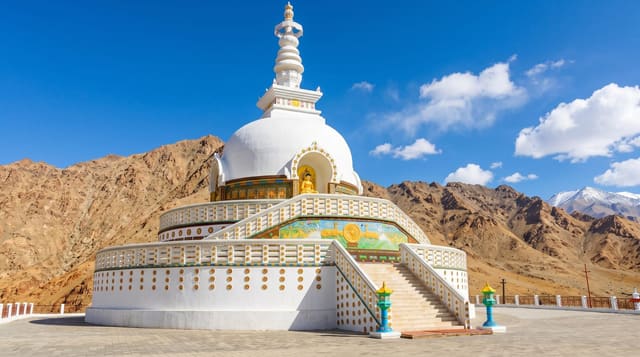
Pha That Luang is the image on the national seal and the building Laos uses to represent itself. A tradition holds that a stupa has stood here since the third century BC; the structure you see was raised in the sixteenth century when Vientiane became the capital, wrecked in the nineteenth, and rebuilt in the 1930s from a French sketch of the ruins. The result is a stepped gold-covered spire on a square base, ringed by a cloister, in a walled enclosure with a good deal of open space around it.
History
Tradition says missionaries sent by the emperor Ashoka brought a relic of the Buddha, believed to be his breastbone, and enshrined it in a stupa here in the 3rd century BC. King Setthathirat ordered the present temple in 1566 after moving his capital to Vientiane, and in 1641 the Dutch envoy Gerrit van Wuysthoff wrote of its "enormous pyramid" covered with gold leaf (Wikipedia, Pha That Luang).
Highlights
- The central spire - a stepped gold-covered stupa, deliberately shaped like a lotus bud.
- The cloister - a walled square of galleries around the base, holding older images and stones.
- The enclosure - wide open ground that gives the building its distance, unlike most temple sites.
- The two temples - Wat That Luang Neua and Wat That Luang Tai flanking the compound.
When to go
November to February is the cool dry season, and the That Luang festival in November is the largest religious gathering in the country, with a wax castle procession and days of crowds. Early morning and late afternoon give the best light on the gold and the least heat on the open ground.
Practical notes
The gold is paint and gilding rather than solid metal, and the building is a twentieth-century reconstruction, which some visitors find deflating. The enclosure is exposed with almost no shade. Outside festival time it is a quiet site rather than a busy one.
Nearby
Patuxai is on the avenue leading back towards the centre, and Wat Si Saket is in the old quarter.
Key facts
Source: Wikidata, item Q1059720, read on 18 October 2026.
What to pack for Pha That Luang
Chosen from what this place is for. Tap a kit for the full checklist.
- Comfortable walking shoes - Sightseeing means kilometres of pavement and cobbles daily. Find on Amazon
- Modest clothing - Shoulders and knees covered - the single most common requirement. Find on Amazon
- A slim anti-theft daypack - Zips that close properly; keep it in front in crowds and on transit. Find on Amazon
- A scarf or shawl - To cover the head or shoulders on entry; women especially at mosques. Find on Amazon
Some links on this page are Amazon affiliate links - if you buy through them we may earn a small commission at no extra cost to you.
All packing kitsPlan your trip
Where to start if Pha That Luang is going on the list.
Booking links on this page are affiliate links - if you book through them we may earn a small commission at no extra cost to you. It never changes what we write about a place.
Opening times, ticket prices and seasonal closures change - check the official source before you go: official site.