Shanti Stupa, Leh
A white peace pagoda built by Japanese monks on a hill above Leh, with the whole valley below it.
Updated 4 September 2026
AI illustration
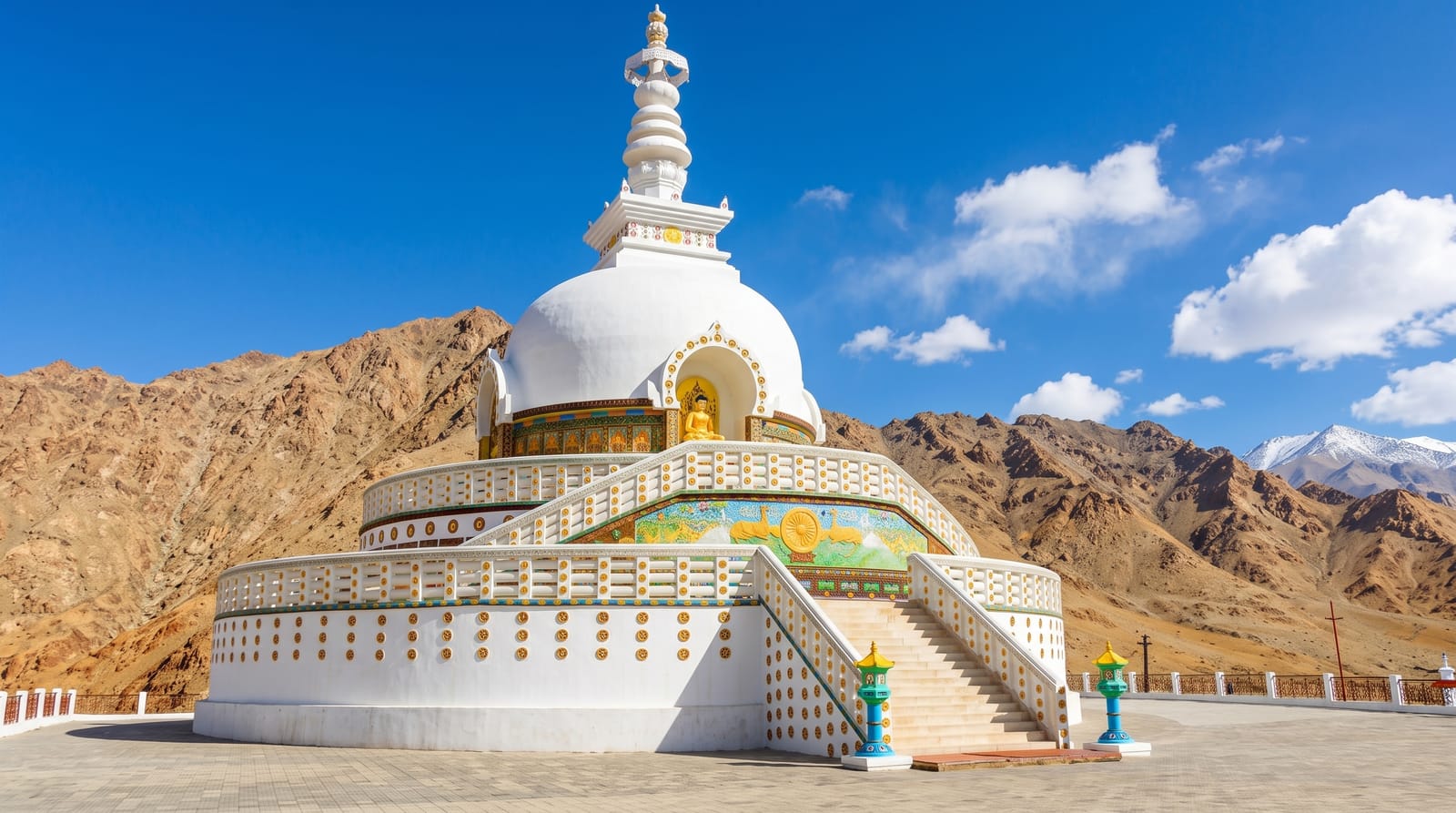
The Shanti Stupa was built by the Japanese Buddhist order Nipponzan Myohoji, which has put up peace pagodas around the world since the Second World War, and was completed in 1991 on a hill above the Changspa quarter of Leh. It is white, two-tiered, with gilded relief panels showing scenes from the Buddha's life around the drum, and relics enshrined within. Its position is the point: the terrace looks over the whole Leh valley, the town and palace below, the Stok range opposite and the Indus valley running away, and it is used for sunrise and sunset by most visitors staying in town.
What you'll find
- The white stupa - two tiers with gilded relief panels around the drum.
- The valley view - Leh, the palace and the Stok range from the terrace.
- The stair climb - a long flight up from Changspa, or a road round.
- The sunset gathering - the standard evening spot for visitors in Leh.
When to go
May to September; sunrise and sunset are the times people come. Winter access is possible but cold and icy on the steps. The site is quiet in the middle of the day.
Before you go
The stair climb is over five hundred steps and hard on unacclimatised visitors at 3,600 metres. Sunset crowds are considerable. The stupa itself is modern, dating only from 1991.
Nearby
Leh Palace lies across the town; Changspa guesthouses are below.
What to pack for Shanti Stupa, Leh
Chosen from what this place is for. Tap a kit for the full checklist.
- Layers for big temperature swings - Warm sun by day, near-freezing at night, even near the equator. Find on Amazon
- Comfortable walking shoes - Sightseeing means kilometres of pavement and cobbles daily. Find on Amazon
- Extra-strong sun protection - Thin air means fierce UV; hat, sunglasses and high-SPF sunscreen. Find on Amazon
- A slim anti-theft daypack - Zips that close properly; keep it in front in crowds and on transit. Find on Amazon
Some links on this page are Amazon affiliate links - if you buy through them we may earn a small commission at no extra cost to you.
All packing kitsPlan your trip
Where to start if Shanti Stupa, Leh is going on the list.
Booking links on this page are affiliate links - if you book through them we may earn a small commission at no extra cost to you. It never changes what we write about a place.
Opening times, ticket prices and seasonal closures change - check the official source before you go: official site.


