Central Island National Park
A volcanic island in Lake Turkana with three crater lakes, and one of the largest Nile crocodile breeding grounds in Africa.
Updated 1 November 2026
UNESCO World Heritage
Central Island sits in the middle of Lake Turkana and is entirely volcanic, made of overlapping craters of which three hold their own lakes: Crocodile Lake, Flamingo Lake and Tilapia Lake, each with different water chemistry and different life in it. The island still steams from fumaroles. Its ecological significance is the crocodiles: thousands of Nile crocodiles breed on the shores here, one of the largest concentrations anywhere, hauling out on the beaches and nesting in the sand, and the sight of them from the crater rims is what visitors come for. Flamingos use the alkaline crater lake. Getting there means a boat crossing of an hour or two from Kalokol on the west shore or from Loiyangalani, and Turkana is notorious for sudden violent winds that make the lake dangerous with little warning.
Background
Central Island, also called Crocodile Island, lies in the middle of Lake Turkana and is a national park run by the Kenya Wildlife Service. The island, 3 km across and mostly of basalt, is built of over a dozen cones and craters, and small lakes fill three of them; the two largest lie in craters as much as a kilometre across and some 80 m deep, whose floors are close to sea level. Its highest point reaches 550 m, about 190 m above the lake, and a chain of small explosion craters runs east to west across its eastern side. Steam vents line the rim of the central crater: visitors in the 1930s saw sprays of sulphur, and in 1974 molten sulphur and clouds of steam could be seen from the mainland.
Source: Wikipedia, "Central Island"
What's there
- The three crater lakes - separate waters inside the volcanic island.
- Crocodile breeding beaches - very large numbers hauled out and nesting.
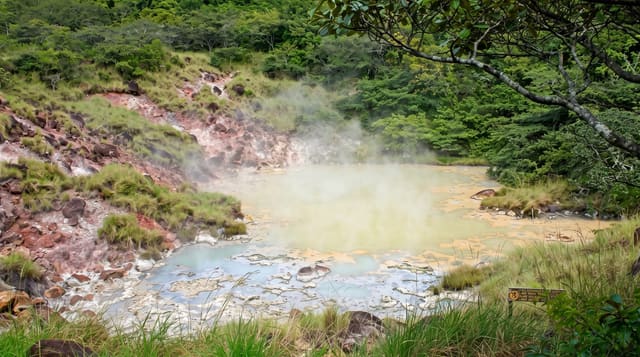
- Fumaroles - steam still escaping from the volcanic ground.
- Flamingos - birds on the alkaline crater lake.
When to go
Dry seasons; crossings are weather-dependent year-round and are often cancelled. Early morning is calmest on the lake. Crocodile nesting concentrates in the drier months, which is when the beaches are busiest with animals.
Before you go
The crossing is the risk: Turkana squalls arrive fast and boats are small. Only go with an experienced operator and be willing to turn back. There is no shade, water or shelter on the island. Crocodiles are wild and numerous and distance matters.
Nearby
Sibiloi lies on the eastern shore; Loiyangalani is on the southeast.
Key facts
Source: Wikidata, item Q1053880, read on 18 October 2026.
What to pack for Central Island National Park
Chosen from what this place is for. Tap a kit for the full checklist.
- Broken-in walking shoes or boots - Grip and ankle support matter more than looks; never hike in brand-new boots. Find on Amazon
- Reef-safe sunscreen - High SPF that will not bleach the coral you are swimming over. Find on Amazon
- Binoculars - The single best wildlife tool - even a compact pair transforms a sighting. Find on Amazon
- Layers + a waterproof shell - Mountain weather turns fast; a packable rain jacket saves the day. Find on Amazon
Some links on this page are Amazon affiliate links - if you buy through them we may earn a small commission at no extra cost to you.
All packing kitsPlan your trip
Where to start if Central Island National Park is going on the list.
Booking links on this page are affiliate links - if you book through them we may earn a small commission at no extra cost to you. It never changes what we write about a place.
Opening times, ticket prices and seasonal closures change - check the official source before you go: official site.