Abila
A Decapolis city north of Irbid spread over two tells, largely unexcavated.
Updated 20 October 2026
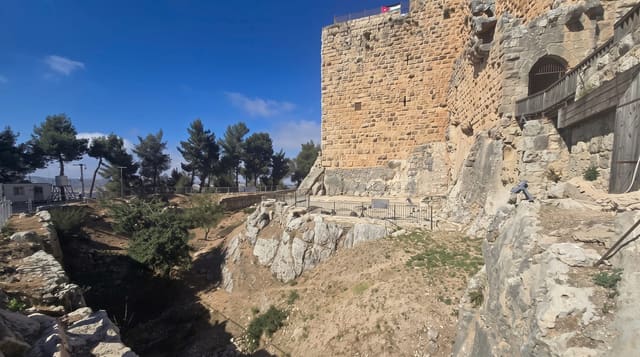
Abila was one of the cities of the Decapolis, spread across two hills and the saddle between them north of Irbid, and it remains largely unexcavated: a theatre cut into a slope, the outlines of Byzantine churches, columns lying where they fell in the earthquake, tombs cut into the hillsides with painted decoration inside, and olive groves growing over most of the rest. Almost nobody visits and there is no gate.
History
The name comes from the Semitic Abel, "meadow" in Hebrew and "green growth" in Arabic, and the south hill is called Umm al-Amad, "Mother of the Columns". Jordan put the site on its tentative list for UNESCO in 2001 (Wikipedia, Abila (Decapolis)).
What's there
- The two tells - the hills the city was built across, with the saddle between.
- The fallen columns - the shafts lying where the earthquake dropped them.
- The rock-cut tombs - the burials in the hillsides, some with painted interiors.
- The unexcavated ground - olive groves growing over most of the city.
When to go
March to May and October to November are the comfortable months. Spring brings wild flowers across the site. Summer is hot with no shade.
Good to know
Nothing is signposted or interpreted and the site takes finding. There is no gate, guard or facility. Tombs are locked or unsafe and should not be entered alone.
Nearby
Irbid is south, and Umm Qais is northwest.
Key facts
Source: Wikidata, item Q1314033, read on 18 October 2026.
What to pack for Abila
Chosen from what this place is for. Tap a kit for the full checklist.
- Comfortable walking shoes - Sightseeing means kilometres of pavement and cobbles daily. Find on Amazon
- A slim anti-theft daypack - Zips that close properly; keep it in front in crowds and on transit. Find on Amazon
- A refillable water bottle - Many cities have public fountains; save money and plastic. Find on Amazon
- A light layer + compact umbrella - For museum air-con and a sudden shower. Find on Amazon
Some links on this page are Amazon affiliate links - if you buy through them we may earn a small commission at no extra cost to you.
All packing kitsPlan your trip
Where to start if Abila is going on the list.
Booking links on this page are affiliate links - if you book through them we may earn a small commission at no extra cost to you. It never changes what we write about a place.
Opening times, ticket prices and seasonal closures change - check the official source before you go: official site.