Lamanai
A Maya city reached by river safari - crocodile-named ruins above a lagoon, howler monkeys in the canopy and masks on the temple walls.
Updated 18 October 2026
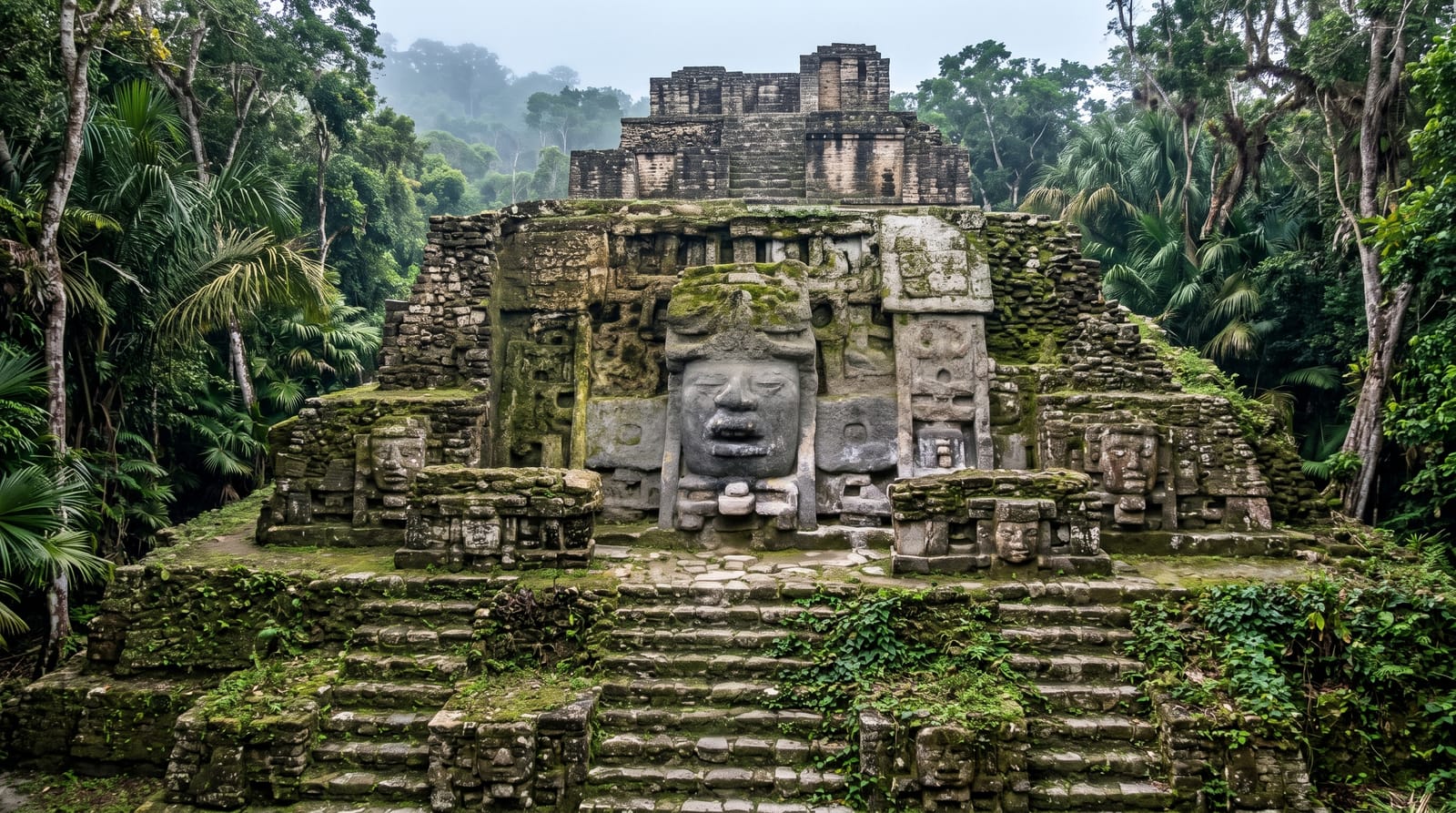
AI illustration
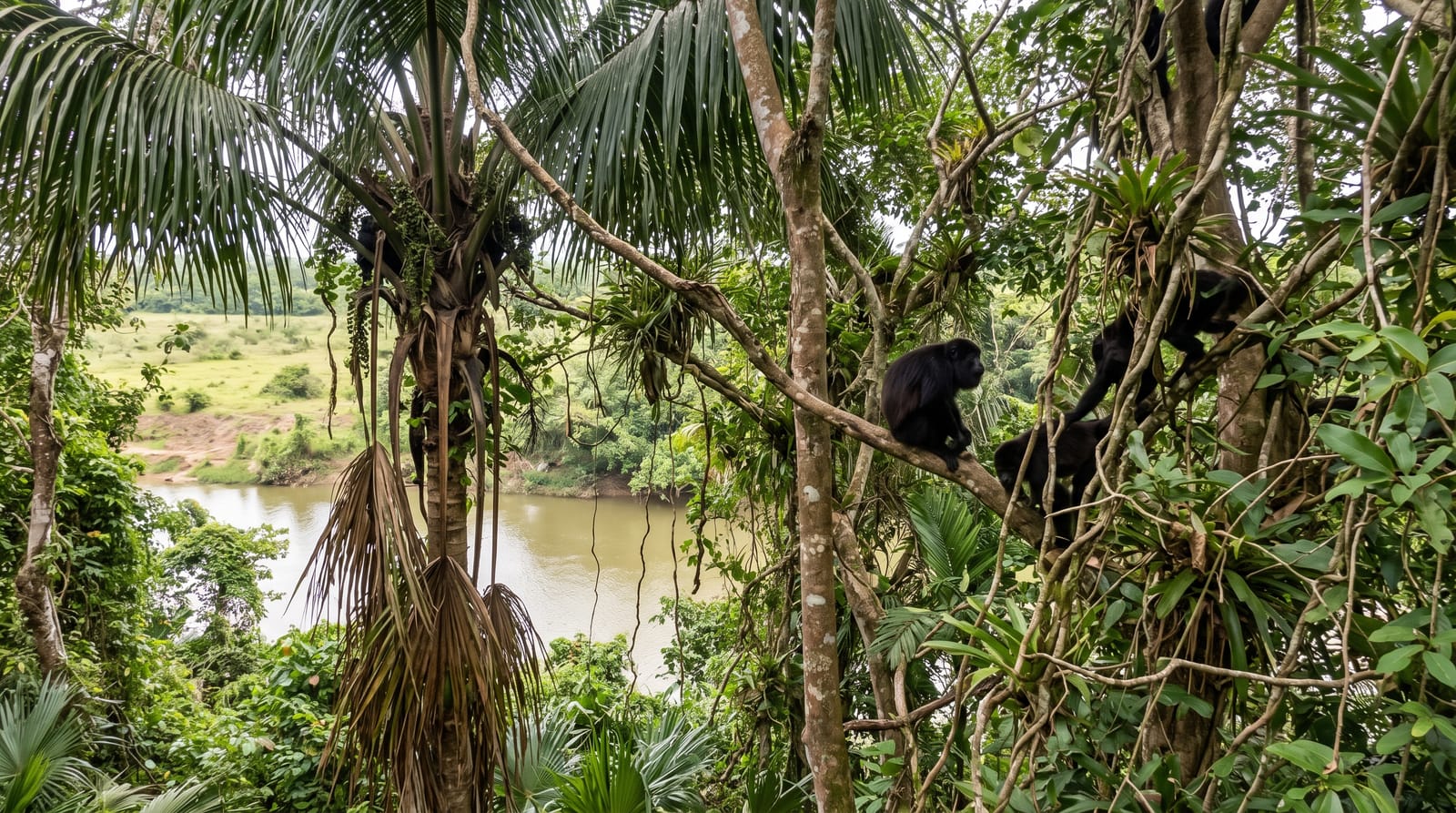
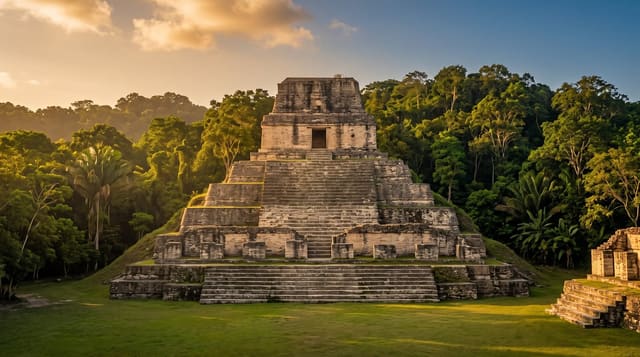
Lamanai means submerged crocodile, and the approach explains the name: the classic way in is a fast boat up the New River past crocodiles, snail kites and riverside orchids, arriving at a dock below ruins that stretch along the lagoon shore. The city was occupied for three thousand years, longer than almost any Maya site - it was still inhabited when the Spanish arrived, and two ruined colonial churches and a sugar mill stand among the temples as evidence of what followed. The High Temple climbs above the canopy, the Mask Temple carries four-metre carved faces, and howler monkeys provide the soundtrack.
History
Lamanai was lived in from as early as the 16th century BC and became a leading centre in the Preclassic, from the 4th century BC to the 1st century AD; Stela 9 was raised here in 625, and unlike most Classic cities of the southern lowlands it was not abandoned in the 10th century but stayed occupied into the 17th. During the Spanish conquest of Yucatán friars built two churches here until a Maya revolt drove the Spanish out, and the site later became part of British Honduras (Wikipedia, Lamanai).
Highlights
- The river journey - crocodiles, birds and jungle banks on the way in.
- The High Temple - the lagoon panorama from the top.
- The Mask Temple - the great carved faces on the facade.
- The colonial churches - Spanish ruins inside a Maya city.
When to go
The dry season from December to May is best for both river and ruins. Morning departures catch the wildlife active and beat the heat on the temples. Rain makes the alternative road route miserable but rarely stops the boats.
Good to know
The site involves real climbing on steep temple stairs in humidity - take water and grippy shoes. Howler monkeys are loud and sometimes fling things; keep distance under occupied trees. Most visits are organised boat tours with lunch included, which is genuinely the best way in; independent road access is long and rough. Mosquitoes at the lagoon edge are enthusiastic.
Nearby
Orange Walk Town, the Rio Bravo conservation area and the road south to Belize City.
Key facts
Source: Wikidata, item Q968562, read on 18 October 2026.
What to pack for Lamanai
Chosen from what this place is for. Tap a kit for the full checklist.
- Reef-safe sunscreen - High SPF that will not bleach the coral you are swimming over. Find on Amazon
- Binoculars - The single best wildlife tool - even a compact pair transforms a sighting. Find on Amazon
- Strong insect repellent - DEET or picaridin; the jungle is where bites and disease risk are highest. Find on Amazon
- Comfortable walking shoes - Sightseeing means kilometres of pavement and cobbles daily. Find on Amazon
Some links on this page are Amazon affiliate links - if you buy through them we may earn a small commission at no extra cost to you.
All packing kitsPlan your trip
Where to start if Lamanai is going on the list.
Booking links on this page are affiliate links - if you book through them we may earn a small commission at no extra cost to you. It never changes what we write about a place.
Opening times, ticket prices and seasonal closures change - check the official source before you go: official site.