The Royal Palm Reserve
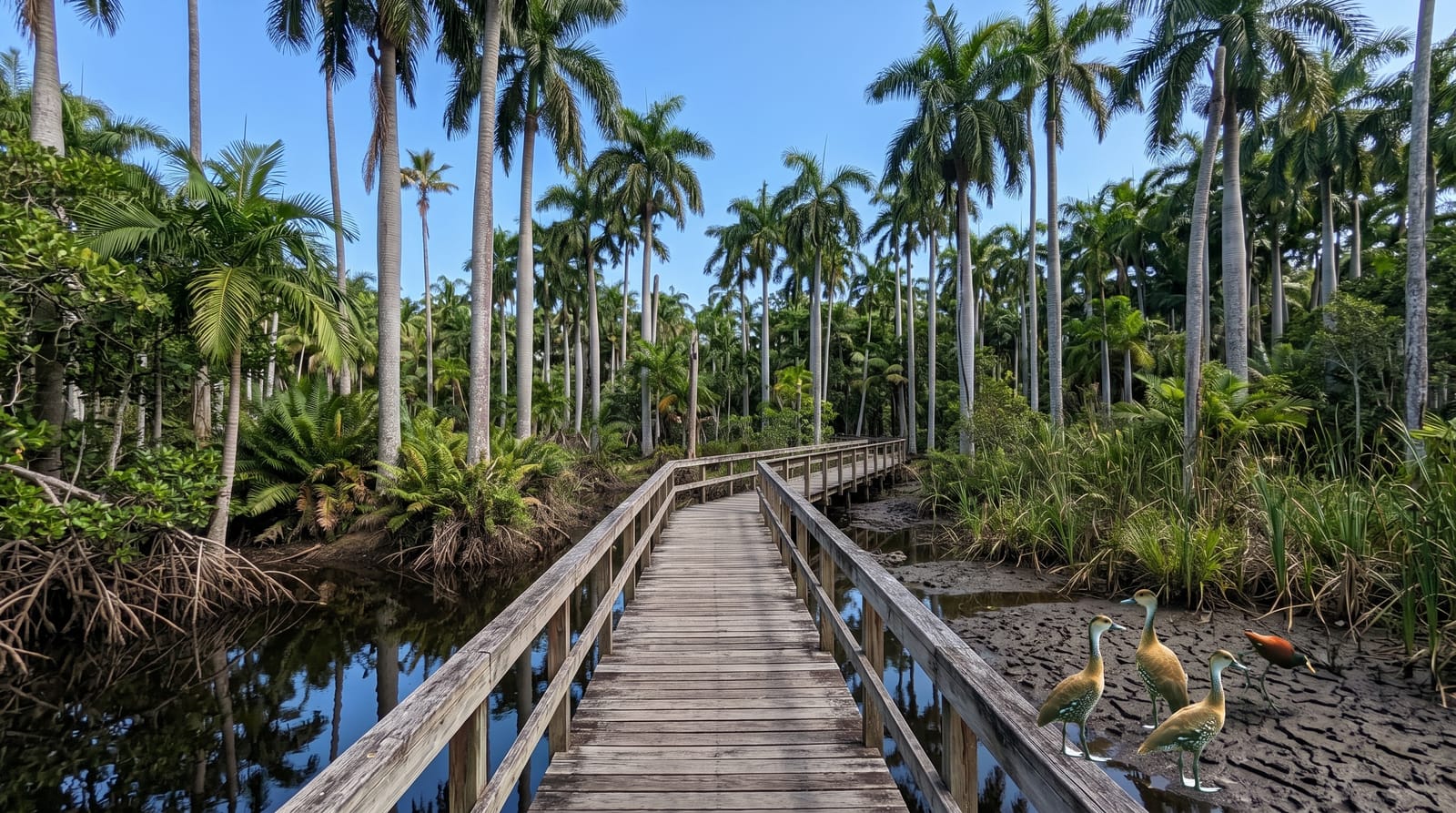
A boardwalk through swamp forest in the Negril morass, where the endemic Jamaican royal palm grows in stands.
Updated 2 September 2026
AI illustration
Behind Negril's beach lies the Great Morass, a peat wetland of around twenty-three square kilometres that filters the water reaching the coast and holds the island's largest stand of Roystonea princeps, the Jamaican royal palm, which grows nowhere else in the world. The reserve protects a piece of it, with raised boardwalks running out through swamp forest and open water between palms sixty feet high. Birdlife is good, with herons, jacanas, whistling ducks and West Indian woodpeckers, and American crocodiles live in the wetland. There are ponds for fishing and a viewing tower. It is one of the few pieces of interior nature within reach of the Negril strip.
Highlights
- The royal palm stands - the endemic species, found only in Jamaica.
- The boardwalks - raised walkways out over swamp forest and open water.
- Birdlife - herons, jacanas, whistling ducks and endemic woodpeckers.
- The viewing tower - over the morass toward the coast.
When to go
December to April is drier and the boardwalks in better condition. Early morning and late afternoon are best for birds. The reserve keeps set hours and has closed for periods when funding lapsed, so check before going.
Good to know
The reserve has been closed or barely staffed at various times and the boardwalks have suffered from underfunding, with sections in poor repair. It is small and takes about ninety minutes. Mosquitoes are heavy. The morass itself is under real pressure from drainage and development, which the reserve alone cannot fix.
Nearby
Negril's beach is fifteen minutes; Mayfield Falls is an hour inland.
What to pack for The Royal Palm Reserve
Chosen from what this place is for. Tap a kit for the full checklist.
- Broken-in walking shoes or boots - Grip and ankle support matter more than looks; never hike in brand-new boots. Find on Amazon
- Travel rod + reel - A packable multi-piece rod fits in a case and covers most holiday fishing. Find on Amazon
- Binoculars - The single best wildlife tool - even a compact pair transforms a sighting. Find on Amazon
- Layers + a waterproof shell - Mountain weather turns fast; a packable rain jacket saves the day. Find on Amazon
Some links on this page are Amazon affiliate links - if you buy through them we may earn a small commission at no extra cost to you.
All packing kitsPlan your trip
Where to start if The Royal Palm Reserve is going on the list.
Booking links on this page are affiliate links - if you book through them we may earn a small commission at no extra cost to you. It never changes what we write about a place.
Opening times, ticket prices and seasonal closures change - check the official source before you go: official site.