The Bob Marley Museum
The house on Hope Road where Marley lived and recorded, left much as it was, bullet holes and all.
Updated 12 October 2026
AI illustration
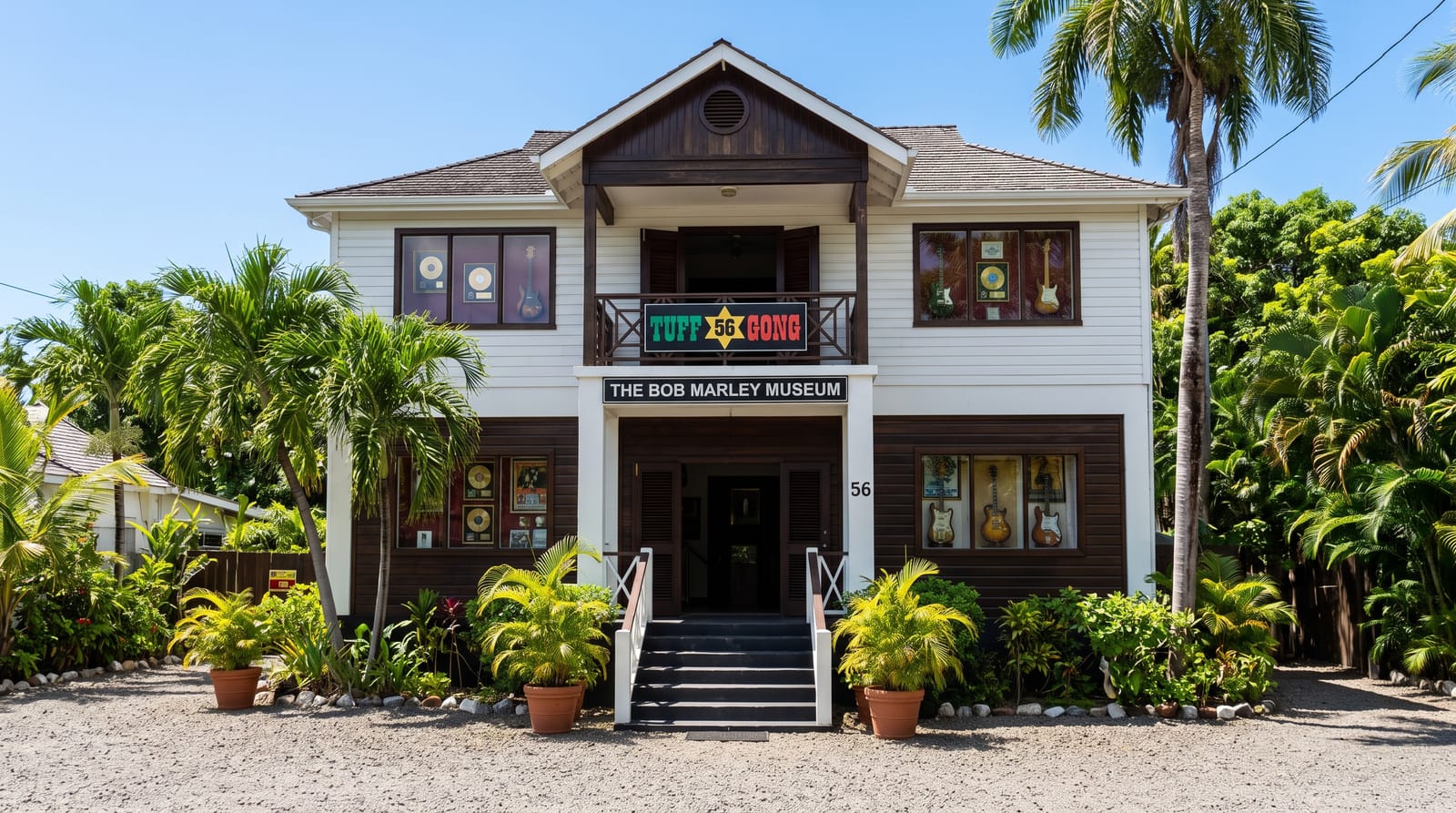
Marley bought this nineteenth-century house on Hope Road in 1975 and lived and worked in it until he left Jamaica for the last time, running his label from the front and recording in a studio at the back. It opened as a museum in 1986 and has been left close to how he had it: his bedroom with a guitar-shaped headboard, the kitchen where he made his own food, the rehearsal room, gold discs, and the wall of the room where an assassination attempt in December 1976 left bullet holes that have deliberately never been repaired. Tours are guided, an hour or so, and end in a small cinema. The tour finishes at the record shop and the tree in the yard.
What you'll find
- The house rooms - bedroom, kitchen and rehearsal space left as they were.
- The bullet holes - from the 1976 attack, deliberately never repaired.
- The gold discs and stage clothes - across the upper floor.
- The recording studio - the Tuff Gong room at the back.
When to go
Year-round; closed Sundays. Tours run at set intervals through the day and the last is in the late afternoon. February, around Marley's birthday, brings events and larger crowds.
Before you go
Photography inside the house is prohibited and enforced strictly, which surprises many visitors. Entry is expensive by Jamaican standards and the tour is fixed with no wandering. Guides vary considerably in quality. Parking on Hope Road is limited.
Nearby
Devon House is ten minutes; Trench Town is a short drive downtown.
Key facts
Source: Wikidata, item Q650517, read on 18 October 2026.
What to pack for The Bob Marley Museum
Chosen from what this place is for. Tap a kit for the full checklist.
- Comfortable walking shoes - Sightseeing means kilometres of pavement and cobbles daily. Find on Amazon
- A slim anti-theft daypack - Zips that close properly; keep it in front in crowds and on transit. Find on Amazon
- A refillable water bottle - Many cities have public fountains; save money and plastic. Find on Amazon
- A light layer + compact umbrella - For museum air-con and a sudden shower. Find on Amazon
Some links on this page are Amazon affiliate links - if you buy through them we may earn a small commission at no extra cost to you.
All packing kitsPlan your trip
Where to start if The Bob Marley Museum is going on the list.
Booking links on this page are affiliate links - if you book through them we may earn a small commission at no extra cost to you. It never changes what we write about a place.
Opening times, ticket prices and seasonal closures change - check the official source before you go: official site.