Raja Dinkar Kelkar Museum
One man's collection of twenty thousand everyday objects, assembled over sixty years and given to the state.
Updated 19 October 2026
AI illustration
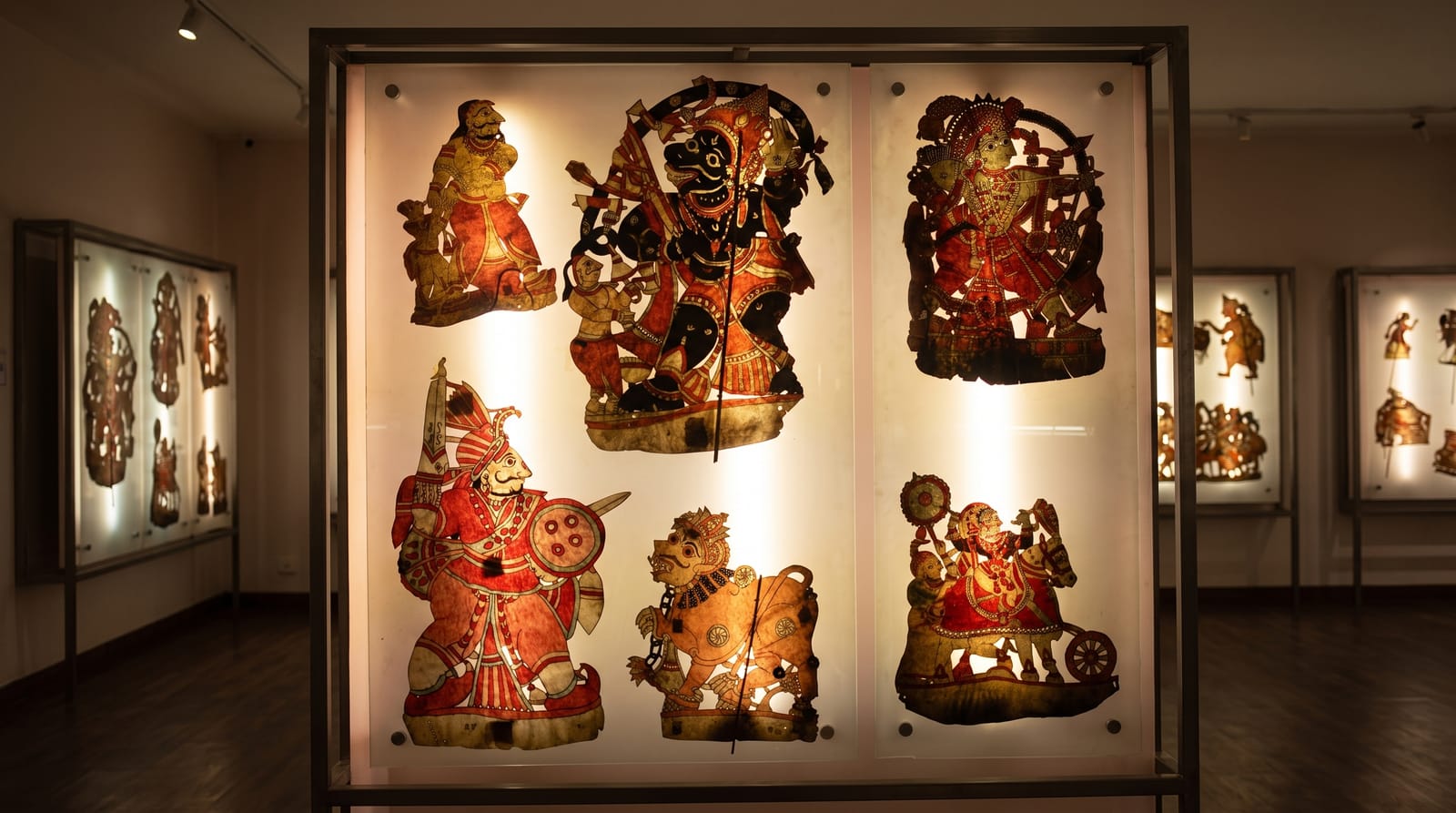
Dinkar Kelkar collected for around sixty years from the 1920s, concentrating not on royal treasure but on the objects of ordinary Indian life: nutcrackers in hundreds of forms, lamps, inkstands, writing sets, textile printing blocks, musical instruments, combs, locks and door fittings, betel-nut cutters shaped as figures, kitchen tools. He named the collection for his son, who died young, and gave it to the state of Maharashtra in 1992, thirty years after the museum opened in 1962. Around twenty thousand objects are held with a fraction on display, including a reconstructed carved wooden palace room, the Mastani Mahal, assembled from an eighteenth-century building.
History
The collection of Dr. Dinkar G. Kelkar, who lived from 1896 to 1990, was begun around 1920 and dedicated to the memory of his only son, Raja; by 1984 it held around 15,000 objects. The museum was established in 1962, and Kelkar donated his collection to the Government of Maharashtra in 1992 (Wikipedia, Raja Dinkar Kelkar Museum).
What you'll find
- The everyday collections - nutcrackers, lamps, locks and kitchen tools in hundreds.
- Mastani Mahal - a carved wooden room reassembled from an old palace.
- The instruments - a large collection of Indian musical instruments.
- The textile blocks - printing blocks and craft tools by region.
When to go
October to March; the museum is indoors and open year-round, closing on public holidays. Mornings are quieter. Allow more time than the modest size suggests.
Good to know
Only a fraction of the collection is displayed at a time and space is cramped. Labelling is uneven. Photography is restricted or charged in parts.
Nearby
Shaniwar Wada lies north; Pune's old city surrounds it.
Key facts
Source: Wikidata, item Q1134736, read on 18 October 2026.
What to pack for Raja Dinkar Kelkar Museum
Chosen from what this place is for. Tap a kit for the full checklist.
- Comfortable walking shoes - Sightseeing means kilometres of pavement and cobbles daily. Find on Amazon
- A slim anti-theft daypack - Zips that close properly; keep it in front in crowds and on transit. Find on Amazon
- A refillable water bottle - Many cities have public fountains; save money and plastic. Find on Amazon
- A light layer + compact umbrella - For museum air-con and a sudden shower. Find on Amazon
Some links on this page are Amazon affiliate links - if you buy through them we may earn a small commission at no extra cost to you.
All packing kitsPlan your trip
Where to start if Raja Dinkar Kelkar Museum is going on the list.
Booking links on this page are affiliate links - if you book through them we may earn a small commission at no extra cost to you. It never changes what we write about a place.
Opening times, ticket prices and seasonal closures change - check the official source before you go: official site.