Pitti Palace and Boboli Gardens
A rival's palace bought by the Medici, with a hillside garden that set the pattern for European court gardens.
Updated 4 September 2026
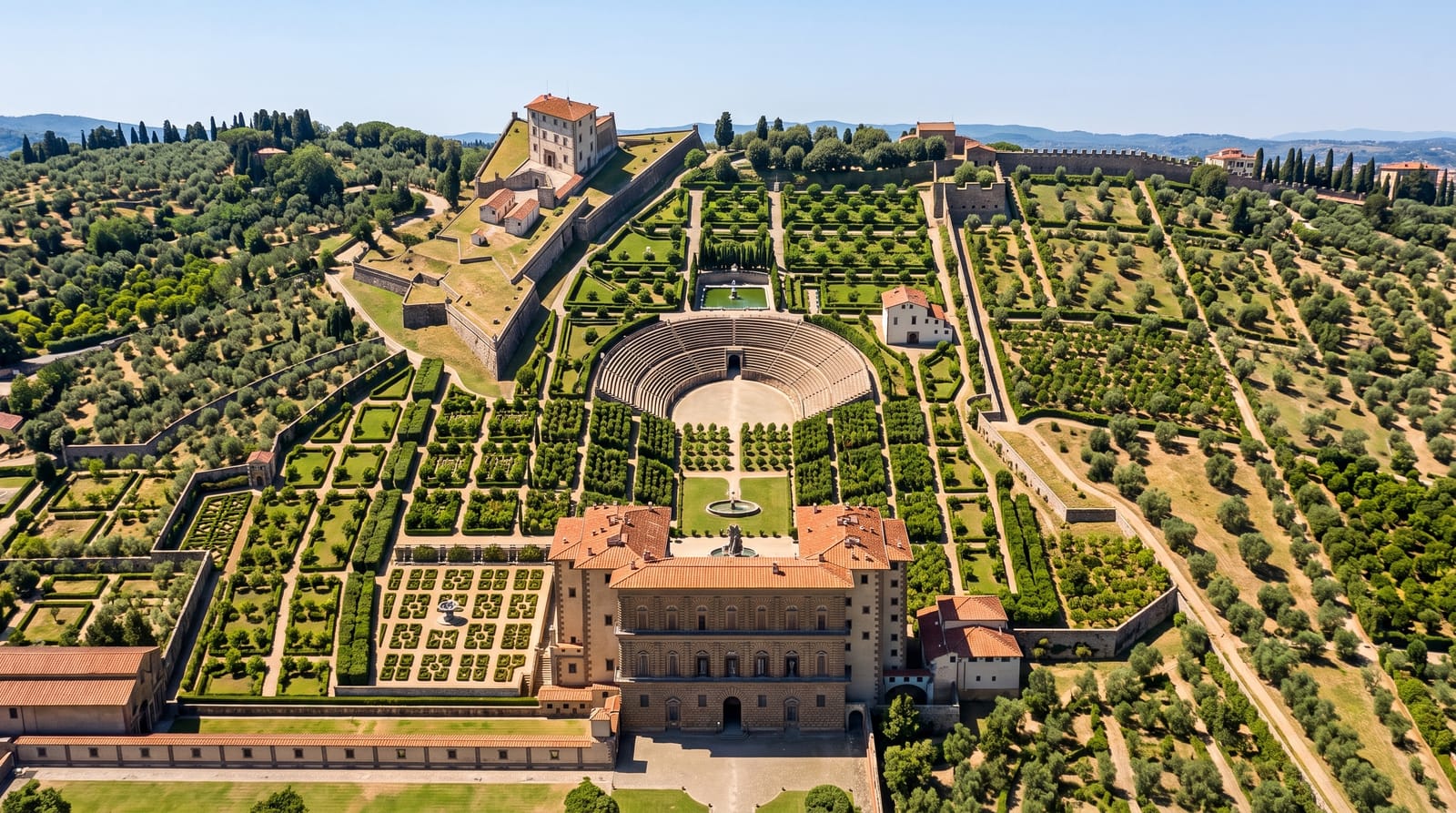
AI illustration
Luca Pitti built the palace in the 1450s to outdo the Medici and his family went bankrupt; the Medici bought it in 1550 and made it their main residence, extending it into the vast rusticated block that stands now. Behind it Boboli climbs the hill in terraces, amphitheatres, avenues and grottoes, laid out from the sixteenth century and copied across Europe. The Buontalenti grotto is encrusted with false stalactites and once held Michelangelo's Prisoners. Inside, the Palatine Gallery hangs pictures in the dense princely manner rather than by chronology, with a large group of Raphaels and Titians.
Highlights
- The Palatine Gallery - Raphaels and Titians hung as the grand dukes arranged them.
- The Boboli terraces - a hillside garden of avenues, basins and statuary.
- The Buontalenti grotto - a chamber of artificial stalactites and figures.
- The royal apartments - state rooms of the Medici, Lorraine and Savoy.
When to go
April to June and September to October; Boboli has little shade and is punishing in summer. The palace closes Mondays. Combined tickets cover several museums.
Good to know
The gardens are a steep climb with limited shade and few facilities. The picture hang is dense and poorly lit in places. Combined tickets are valid over set days only.
Nearby
Ponte Vecchio lies north; Santo Spirito is close.
What to pack for Pitti Palace and Boboli Gardens
Chosen from what this place is for. Tap a kit for the full checklist.
- Broken-in walking shoes or boots - Grip and ankle support matter more than looks; never hike in brand-new boots. Find on Amazon
- Head torch + spare batteries - Hands-free light is essential; caves are truly dark. Find on Amazon
- Comfortable walking shoes - Sightseeing means kilometres of pavement and cobbles daily. Find on Amazon
- Layers + a waterproof shell - Mountain weather turns fast; a packable rain jacket saves the day. Find on Amazon
Some links on this page are Amazon affiliate links - if you buy through them we may earn a small commission at no extra cost to you.
All packing kitsPlan your trip
Where to start if Pitti Palace and Boboli Gardens is going on the list.
Booking links on this page are affiliate links - if you book through them we may earn a small commission at no extra cost to you. It never changes what we write about a place.
Opening times, ticket prices and seasonal closures change - check the official source before you go: official site.