Basilica of Santa Croce
The burial church of Michelangelo, Galileo and Machiavelli, with Giotto frescoes recovered from under whitewash.
Updated 16 October 2026
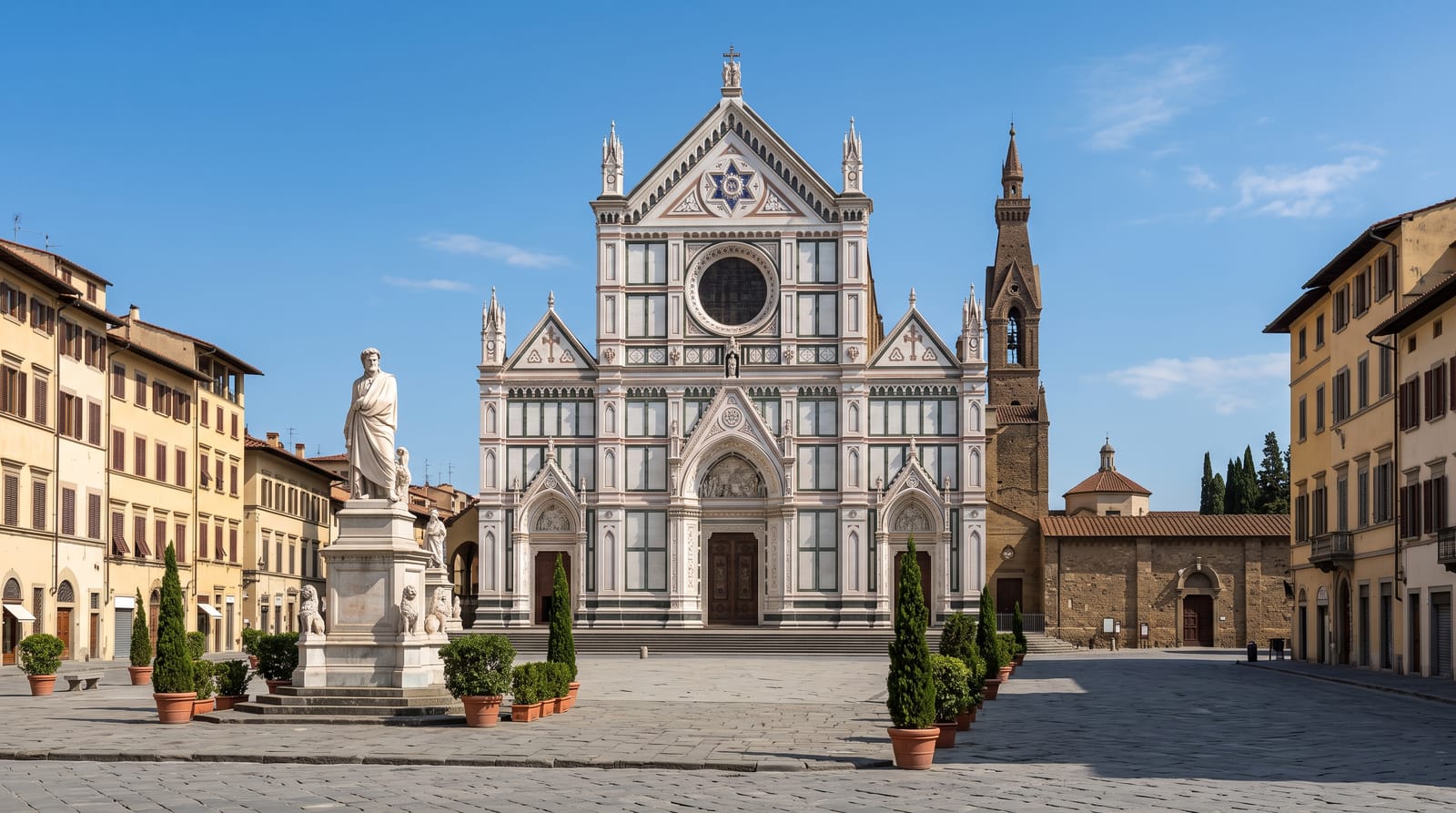
AI illustration
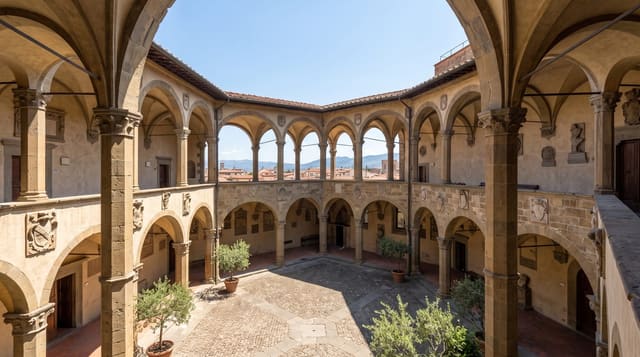
The Franciscans began this in 1294 and it became the pantheon of Tuscany: Michelangelo, Galileo, Machiavelli, Rossini and Ghiberti are buried here, and Dante has a monument although he is buried in Ravenna, which refuses to return him. Galileo was denied a church burial when he died in 1642 and only moved into the nave in 1737. The Bardi and Peruzzi chapels hold Giotto fresco cycles that were whitewashed in the eighteenth century and clumsily uncovered in the nineteenth, then re-restored. Brunelleschi's Pazzi Chapel stands in the cloister. The 1966 flood reached about five metres inside the church.
Background
The name means 'Basilica of the Holy Cross', and it is the principal Franciscan church of Florence. It faces the Piazza di Santa Croce, some 800 metres to the southeast of the Duomo, on ground that was once marsh outside the city walls. Work began on 12 May 1294, possibly under Arnolfo di Cambio, and Pope Eugene IV consecrated it in 1442. The plan is a Tau cross, the emblem of St Francis, and runs 115 metres, with a nave and two aisles between rows of octagonal columns. Giorgio Vasari rebuilt the choir area in 1560, the bell tower dates from 1842 and the neo-Gothic marble façade from 1857 to 1863.
Source: Wikipedia, "Santa Croce, Florence"
Highlights
- The tombs - Michelangelo, Galileo, Machiavelli and Rossini in one nave.
- The Giotto chapels - Bardi and Peruzzi cycles recovered from whitewash.
- The Pazzi Chapel - Brunelleschi's small domed chapel in the cloister.
- The flood marks - the 1966 water level recorded inside.
When to go
April to June and September to October; the basilica closes to visitors during services and on Sunday mornings. Dress code covers shoulders and knees.
Practical notes
The Giotto frescoes are damaged from the whitewashing and restoration history. It is busy and ticketed. Sunday morning access is limited to worship.
Nearby
The Duomo lies west; the Bargello is between them.
Key facts
Source: Wikidata, item Q51177, read on 18 October 2026.
What to pack for Basilica of Santa Croce
Chosen from what this place is for. Tap a kit for the full checklist.
- Comfortable walking shoes - Sightseeing means kilometres of pavement and cobbles daily. Find on Amazon
- Modest clothing - Shoulders and knees covered - the single most common requirement. Find on Amazon
- A slim anti-theft daypack - Zips that close properly; keep it in front in crowds and on transit. Find on Amazon
- A scarf or shawl - To cover the head or shoulders on entry; women especially at mosques. Find on Amazon
Some links on this page are Amazon affiliate links - if you buy through them we may earn a small commission at no extra cost to you.
All packing kitsPlan your trip
Where to start if Basilica of Santa Croce is going on the list.
Booking links on this page are affiliate links - if you book through them we may earn a small commission at no extra cost to you. It never changes what we write about a place.
Opening times, ticket prices and seasonal closures change - check the official source before you go: official site.