Cefalù
A Norman cathedral of golden mosaic under a 270-metre crag, with a beach town packed around it.
Updated 19 October 2026
AI illustration
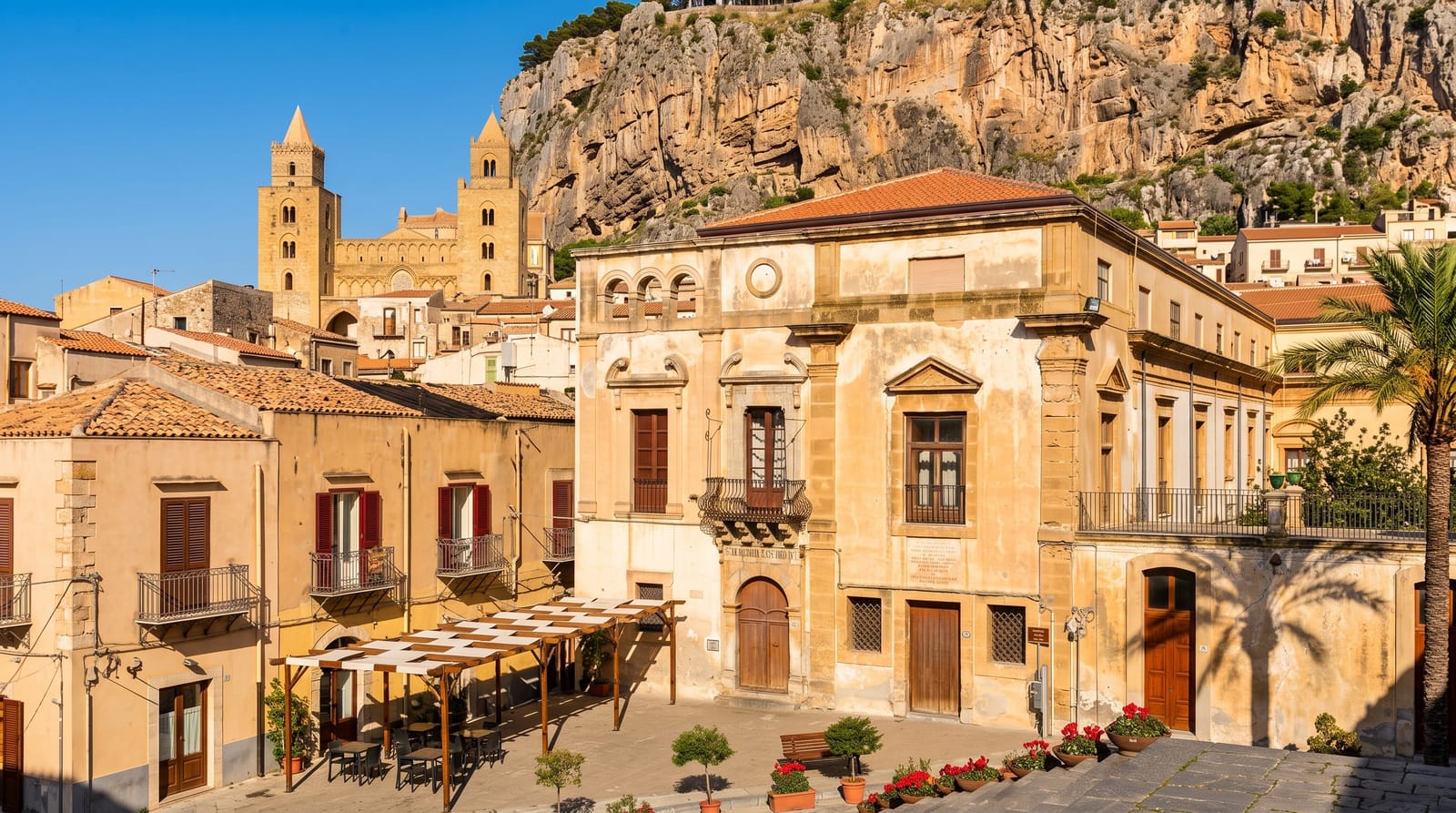
Roger II began the cathedral in 1131, and the apse carries a Christ Pantocrator in mosaic completed around 1145, among the earliest of the great Sicilian mosaic figures and, to many, the finest. The building's twin towers stand against the Rocca, a limestone mass rising some 270 metres straight behind the town, on which stand a megalithic structure known as the Temple of Diana and a ruined Norman castle reached by a steep path. In the old town a medieval lavatoio, a public washhouse fed by a spring, is reached by steps down below street level. UNESCO listed the cathedral in 2015.
History
The town was founded by the Sicels, and in the 4th century BC the Greeks named the settlement Kephaloídion, from its position on a lofty rock headland. Its name first appears in history in 396 BC, when the Carthaginian general Himilco made a treaty with the people of Himera and Cephaloedium (Wikipedia, Cefalù).
What you'll find
- The Christ Pantocrator - a 1140s apse mosaic under a Norman roof.
- The Rocca - a 270-metre crag with a temple and castle ruins on top.
- The medieval washhouse - a spring-fed lavatoio below street level.
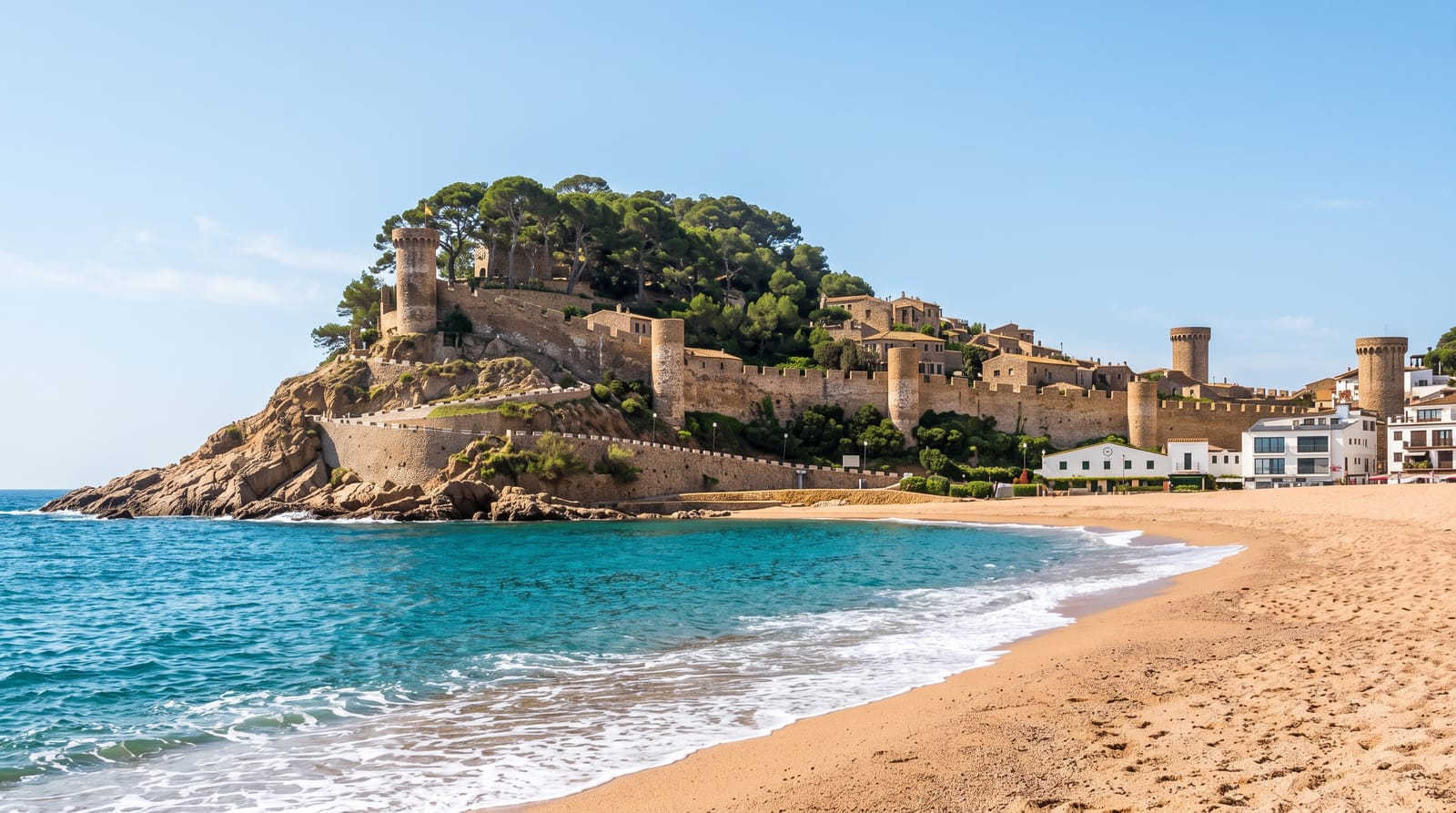
- The old town beach - sand running up to the walls of the old quarter.
When to go
May to June and September; July and August are very crowded and the beach fills. The Rocca climb is best early or late in the day, and access is ticketed.
Things to know
The Rocca climb is steep, exposed and can close in high wind. The old town is packed in summer. Cathedral dress code and photography rules apply.
Nearby
The Madonie park rises inland; Palermo lies west.
Key facts
Source: Wikidata, item Q235163, read on 18 October 2026.
What to pack for Cefalù
Chosen from what this place is for. Tap a kit for the full checklist.
- Comfortable walking shoes - Sightseeing means kilometres of pavement and cobbles daily. Find on Amazon
- Modest clothing - Shoulders and knees covered - the single most common requirement. Find on Amazon
- A slim anti-theft daypack - Zips that close properly; keep it in front in crowds and on transit. Find on Amazon
- A scarf or shawl - To cover the head or shoulders on entry; women especially at mosques. Find on Amazon
Some links on this page are Amazon affiliate links - if you buy through them we may earn a small commission at no extra cost to you.
All packing kitsPlan your trip
Where to start if Cefalù is going on the list.
Booking links on this page are affiliate links - if you book through them we may earn a small commission at no extra cost to you. It never changes what we write about a place.
Opening times, ticket prices and seasonal closures change - check the official source before you go: official site.