Sitges
A whitewashed seafront town near Barcelona with a church on a rock, seventeen beaches and a long-established gay scene.
Updated 4 September 2026
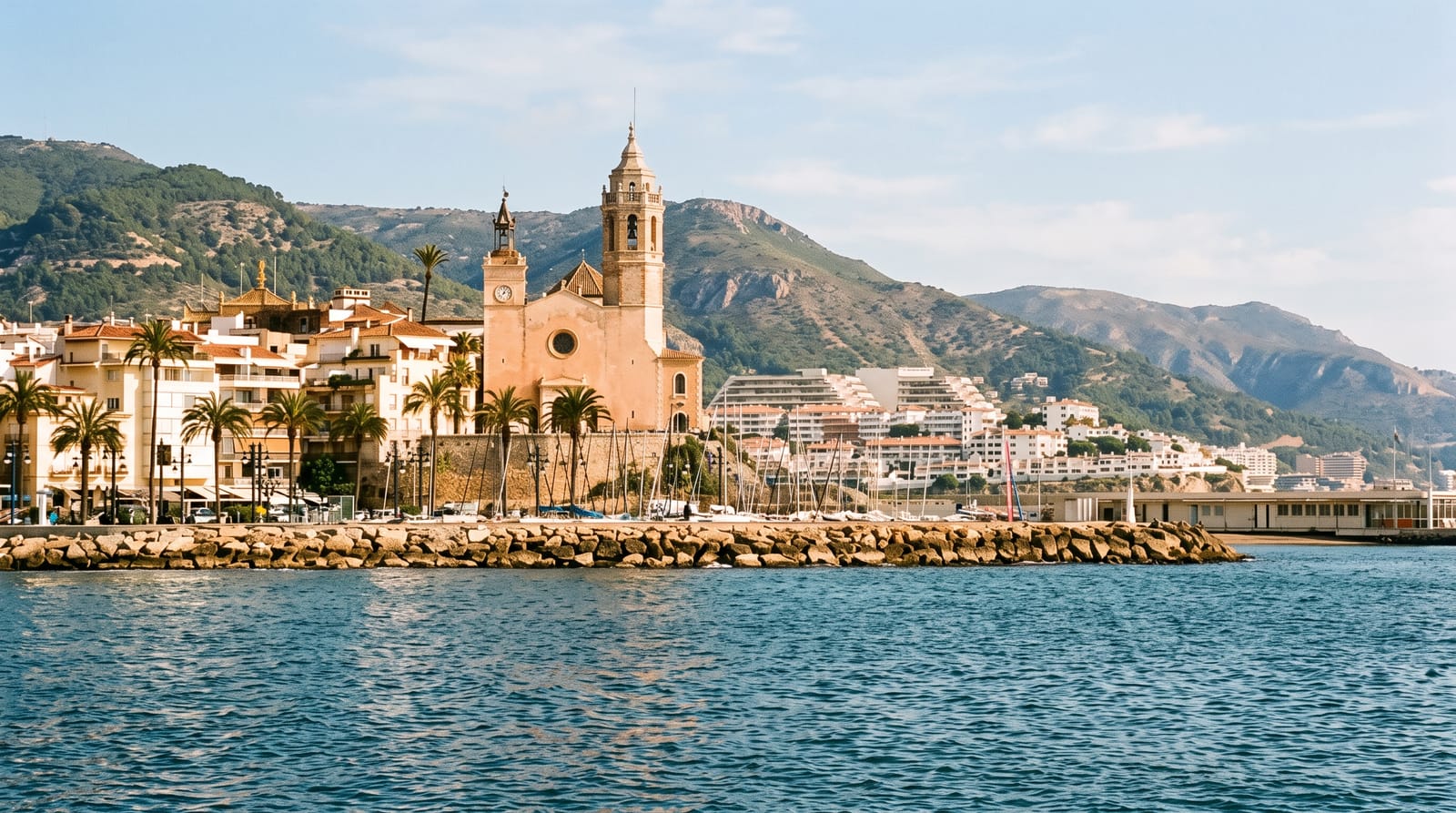
AI illustration
Sitges was a fishing town that became an artists' colony in the 1890s when Santiago Rusinol settled there and made his house, Cau Ferrat, a centre of Catalan Modernisme, filling it with ironwork, ceramics and two El Grecos; it is now a museum alongside the Maricel next door. The church of Sant Bartomeu i Santa Tecla stands on a rock above the sea and gives the town its silhouette. Seventeen beaches run along the front and beyond, including several that are gay and nudist, and since the 1980s Sitges has been one of the main gay resorts in Europe. Its February carnival is among the largest in Catalonia, and the October fantasy and horror film festival is internationally established.
What's there
- The church on the rock - Sant Bartomeu above the sea, the town's outline.
- Cau Ferrat - Rusinol's house museum with ironwork and two El Grecos.
- The seventeen beaches - a long run of sand along and beyond the front.
- The festivals - February carnival and October's film festival.
When to go
May, June, September and October for the beaches without peak crowds; February for carnival and October for the film festival, both of which fill the town. July and August are extremely busy.
Good to know
Accommodation prices rise sharply during carnival, the film festival and Pride, and book out months ahead. The town is small and gets very crowded. Trains from Barcelona are packed on summer weekends.
Nearby
The Penedes cava cellars lie inland; Barcelona is forty minutes by train.
Key facts
Source: Wikidata, item Q15551, read on 18 October 2026.
What to pack for Sitges
Chosen from what this place is for. Tap a kit for the full checklist.
- Travel rod + reel - A packable multi-piece rod fits in a case and covers most holiday fishing. Find on Amazon
- Reef-safe sunscreen - High SPF that will not bleach the coral you are swimming over. Find on Amazon
- Comfortable walking shoes - Sightseeing means kilometres of pavement and cobbles daily. Find on Amazon
- A small tackle selection - Hooks, weights, line and a few lures or flies suited to local waters. Find on Amazon
Some links on this page are Amazon affiliate links - if you buy through them we may earn a small commission at no extra cost to you.
All packing kitsPlan your trip
Where to start if Sitges is going on the list.
Booking links on this page are affiliate links - if you book through them we may earn a small commission at no extra cost to you. It never changes what we write about a place.
Opening times, ticket prices and seasonal closures change - check the official source before you go: official site.