Montjuic
The hill above Barcelona's port, holding a castle, gardens, museums and the venues of the 1929 exposition and the 1992 Olympics.
Updated 20 October 2026
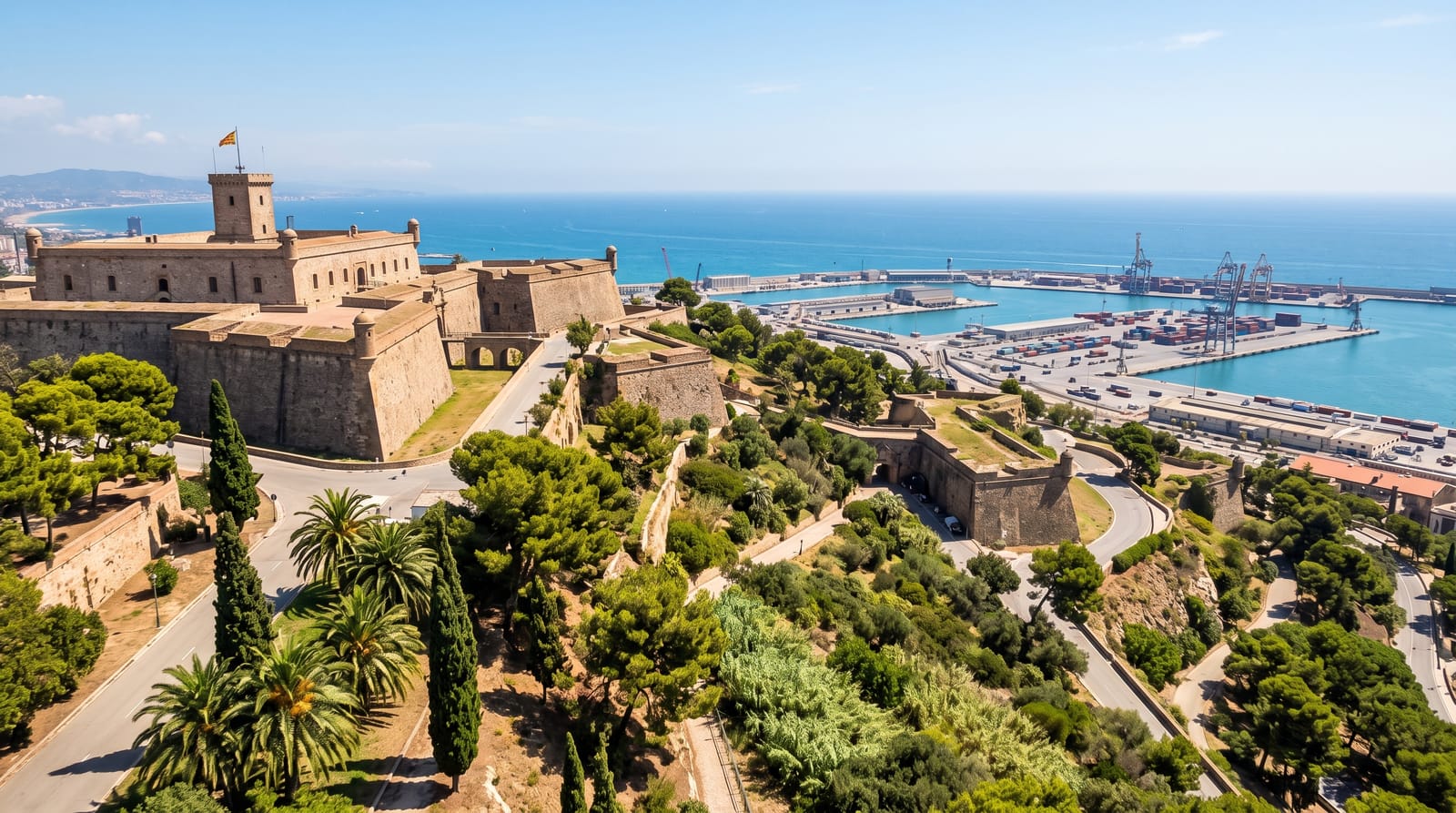
AI illustration
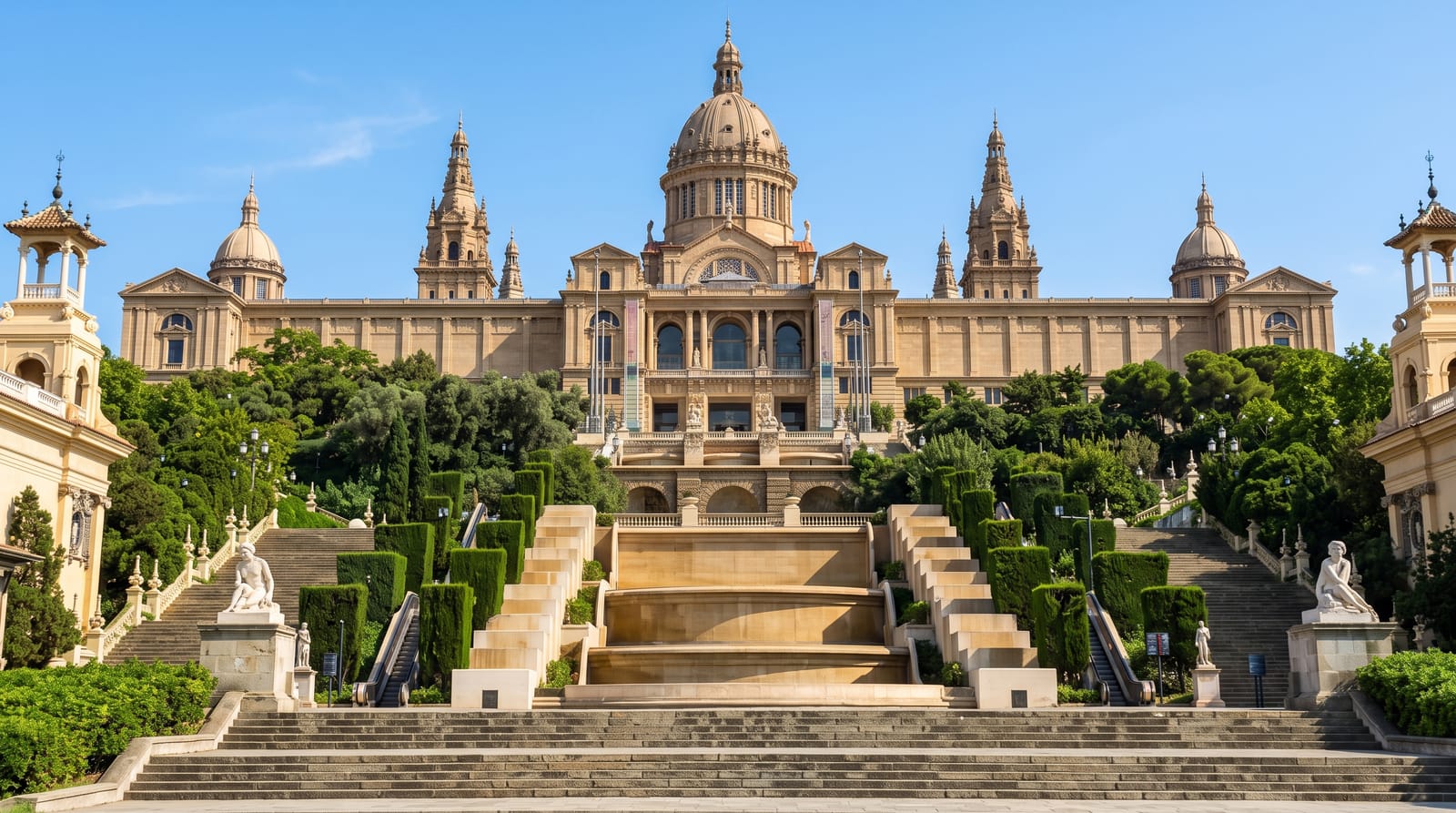
Montjuic rises 173 metres directly above the port, and almost everything on it was built for an event: the 1929 International Exposition left the Palau Nacional, the Magic Fountain, the Poble Espanyol and Mies van der Rohe's German pavilion, reconstructed in 1986; the 1992 Olympics left the stadium, the Calatrava communications tower and the Palau Sant Jordi. Above them all sits the castle, a seventeenth and eighteenth-century fortress that trained its guns on the city as often as on attackers, now a museum with a walkable rampart. The hill also holds extensive gardens, the Miro foundation and the Catalan art museum, and a cable car crosses from the port.
What to look for
- The castle - a fortress with ramparts over the port and the city.
- The 1929 legacy - the Palau Nacional, Magic Fountain and Mies pavilion.
- The Olympic ring - the 1992 stadium and Calatrava tower.
- The gardens and cable car - planted terraces and a crossing from the port.
When to go
Spring and autumn; the hill is exposed and hot in summer. The Magic Fountain runs shows on set evenings from spring to autumn, with a winter pause and occasional suspensions for drought.
Practical notes
The hill is large and its sites are far apart, so covering it means a lot of uphill walking or using the funicular and buses. The Magic Fountain schedule is reduced and has been suspended during water restrictions. Museums charge separately.
Nearby
The Miro foundation and Catalan art museum are on the hill; the port and Poble Sec lie below.
Key facts
Source: Wikidata, item Q1122701, read on 18 October 2026.
What to pack for Montjuic
Chosen from what this place is for. Tap a kit for the full checklist.
- Comfortable walking shoes - Sightseeing means kilometres of pavement and cobbles daily. Find on Amazon
- A slim anti-theft daypack - Zips that close properly; keep it in front in crowds and on transit. Find on Amazon
- A refillable water bottle - Many cities have public fountains; save money and plastic. Find on Amazon
- A light layer + compact umbrella - For museum air-con and a sudden shower. Find on Amazon
Some links on this page are Amazon affiliate links - if you buy through them we may earn a small commission at no extra cost to you.
All packing kitsPlan your trip
Where to start if Montjuic is going on the list.
Booking links on this page are affiliate links - if you book through them we may earn a small commission at no extra cost to you. It never changes what we write about a place.
Opening times, ticket prices and seasonal closures change - check the official source before you go: official site.