Sardana
A Catalan circle dance performed in public squares on Sunday mornings, danced by whoever joins the ring.
Updated 18 October 2026
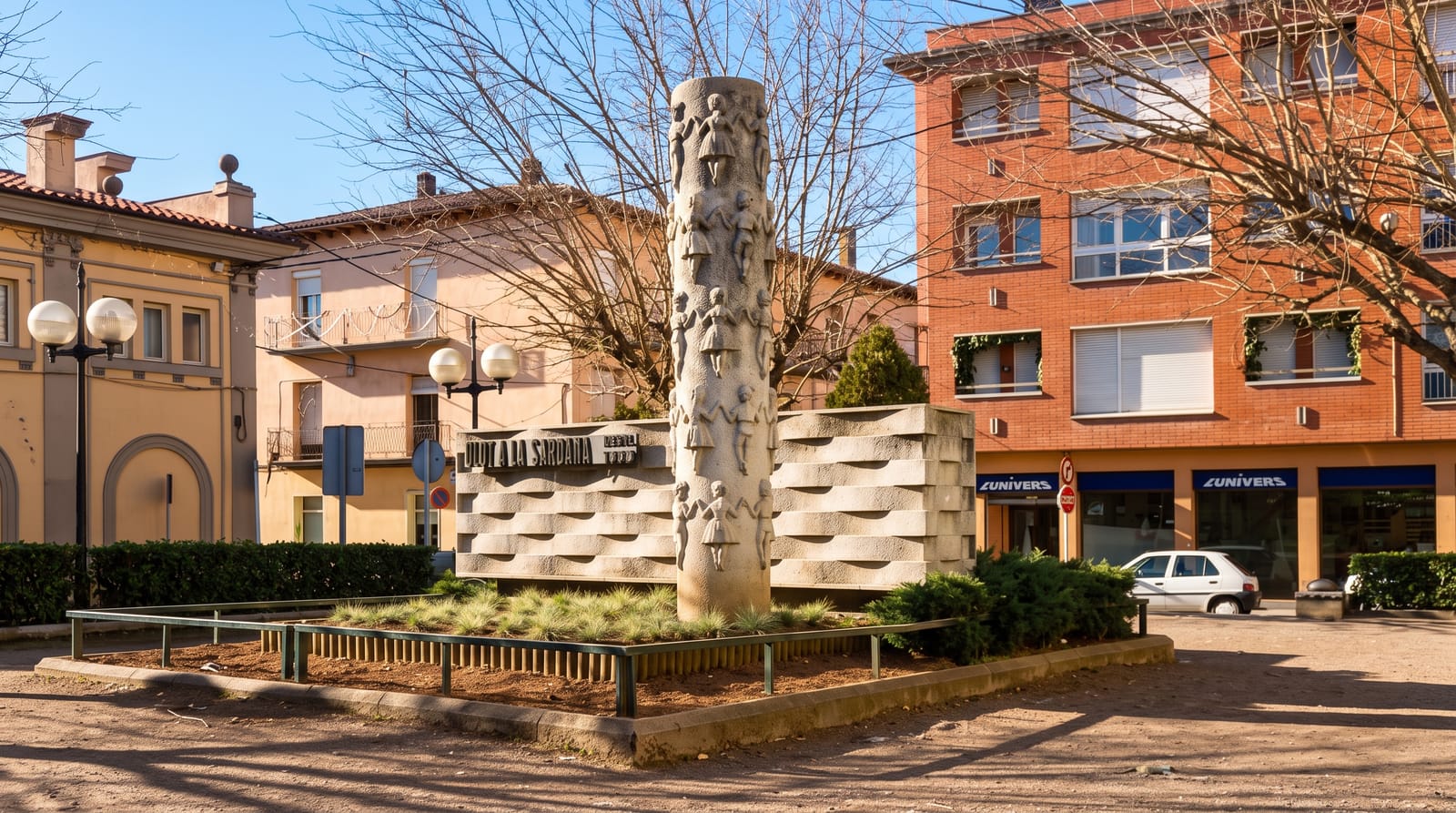
AI illustration
The sardana is danced in a circle with hands joined and raised, to music played by a cobla, an eleven-piece band of wind instruments including the tenora and tible, double bass and the flabiol, a small flute played with one hand while the same player strikes a small drum with the other. The steps alternate between short and long sequences, and the counting matters, so dancers place someone reliable in the ring. Anyone may join by opening the circle at the right moment. It took its modern form in the nineteenth century and became a symbol of Catalan identity, suppressed under Franco. Circles form outside Barcelona cathedral on Sunday mornings and in squares across Catalonia through the year.
History
No one knows where the sardana began; the word first appears in 1552, and from the 16th to the 19th century a folk dance of that name spread through what is now the province of Girona, popular by the mid-1800s in the Empordà, Roussillon and Garrotxa. The long modern form, the sardana llarga, was shaped in the 19th century: Andreu Toron brought the tenora, a tenor oboe, into the band at Perpignan in 1849, Miquel Pardàs published a method for dancing it in 1850, and Pep Ventura fixed its rhythm and the eleven-player cobla that still plays it. A story of the time linked it to ancient Greek dances at Empúries - a legend, not history (Wikipedia, Sardana).
What you'll find
- The joined circle - dancers with hands raised, open to newcomers.
- The cobla - an eleven-piece wind band with tenora and flabiol.
- The counted steps - alternating short and long sequences.
- The Sunday gatherings - circles outside Barcelona cathedral and in town squares.
When to go
Sunday mornings outside Barcelona cathedral is the reliable slot, with more sessions through summer and during local festivals. Times shift and are posted by the cathedral and the sardana federations.
Things to know
Joining a circle is genuinely open but the counting is harder than it looks and beginners are best joining beside experienced dancers, who will usually help. Bags are placed in the middle of the ring. Sessions are short and weather-dependent.
Nearby
Barcelona cathedral square is the best-known venue; town squares across Catalonia hold their own.
Key facts
Source: Wikidata, item Q99455699, read on 18 October 2026.
What to pack for Sardana
Chosen from what this place is for. Tap a kit for the full checklist.
- Comfortable walking shoes - Sightseeing means kilometres of pavement and cobbles daily. Find on Amazon
- Modest clothing - Shoulders and knees covered - the single most common requirement. Find on Amazon
- A slim anti-theft daypack - Zips that close properly; keep it in front in crowds and on transit. Find on Amazon
- A scarf or shawl - To cover the head or shoulders on entry; women especially at mosques. Find on Amazon
Some links on this page are Amazon affiliate links - if you buy through them we may earn a small commission at no extra cost to you.
All packing kitsPlan your trip
Where to start if Sardana is going on the list.
Booking links on this page are affiliate links - if you book through them we may earn a small commission at no extra cost to you. It never changes what we write about a place.
Opening times, ticket prices and seasonal closures change - check the official source before you go: official site.