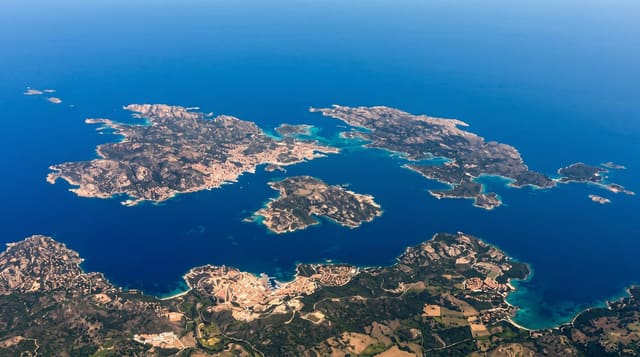
Capo Testa
A granite headland eroded into rounded boulders and hollows, quarried by the Romans for columns.
Updated 4 September 2026

AI illustration
Capo Testa is joined to the mainland by a narrow isthmus with a beach on each side, and the headland itself is granite worn by wind and salt into rounded blocks, mushroom shapes and honeycomb hollows, a process called tafoni weathering that is unusually well developed here. The Romans quarried the stone and took columns from it; abandoned worked blocks and cutting marks remain in the Valle della Luna and along the shore. That valley has been occupied intermittently since the 1960s by people living among the rocks. A lighthouse stands on the point, and Corsica is visible across the strait.
Highlights
- The tafoni weathering - granite hollowed into honeycombs and mushrooms.
- The Roman quarries - abandoned worked blocks and cutting marks.
- The Valle della Luna - a boulder valley long occupied informally.
- The double beach - sand on both sides of the connecting isthmus.
When to go
May to September; the cape is exposed and the wind here is strong, which is part of the reason for the erosion. Sunset light suits the granite.
Practical notes
The wind is often very strong. Paths among the boulders are unmarked and easy to lose. Parking near the isthmus fills quickly in summer.
Nearby
La Maddalena lies east; Corsica is across the strait.
Key facts
Source: Wikidata, item Q1034748, read on 18 October 2026.
What to pack for Capo Testa
Chosen from what this place is for. Tap a kit for the full checklist.
- Broken-in walking shoes or boots - Grip and ankle support matter more than looks; never hike in brand-new boots. Find on Amazon
- Layers + a waterproof shell - Mountain weather turns fast; a packable rain jacket saves the day. Find on Amazon
- Daypack with rain cover - 20-30 litres holds water, snacks, layers and a first-aid kit. Find on Amazon
- Offline maps + a power bank - Download the trail before you lose signal; carry backup charge. Find on Amazon
Some links on this page are Amazon affiliate links - if you buy through them we may earn a small commission at no extra cost to you.
All packing kitsPlan your trip
Where to start if Capo Testa is going on the list.
Booking links on this page are affiliate links - if you book through them we may earn a small commission at no extra cost to you. It never changes what we write about a place.
Opening times, ticket prices and seasonal closures change - check the official source before you go: official site.