Campi Flegrei and Baiae
A caldera that rises and sinks measurably, with a Roman resort town now lying under the sea.
Updated 4 September 2026
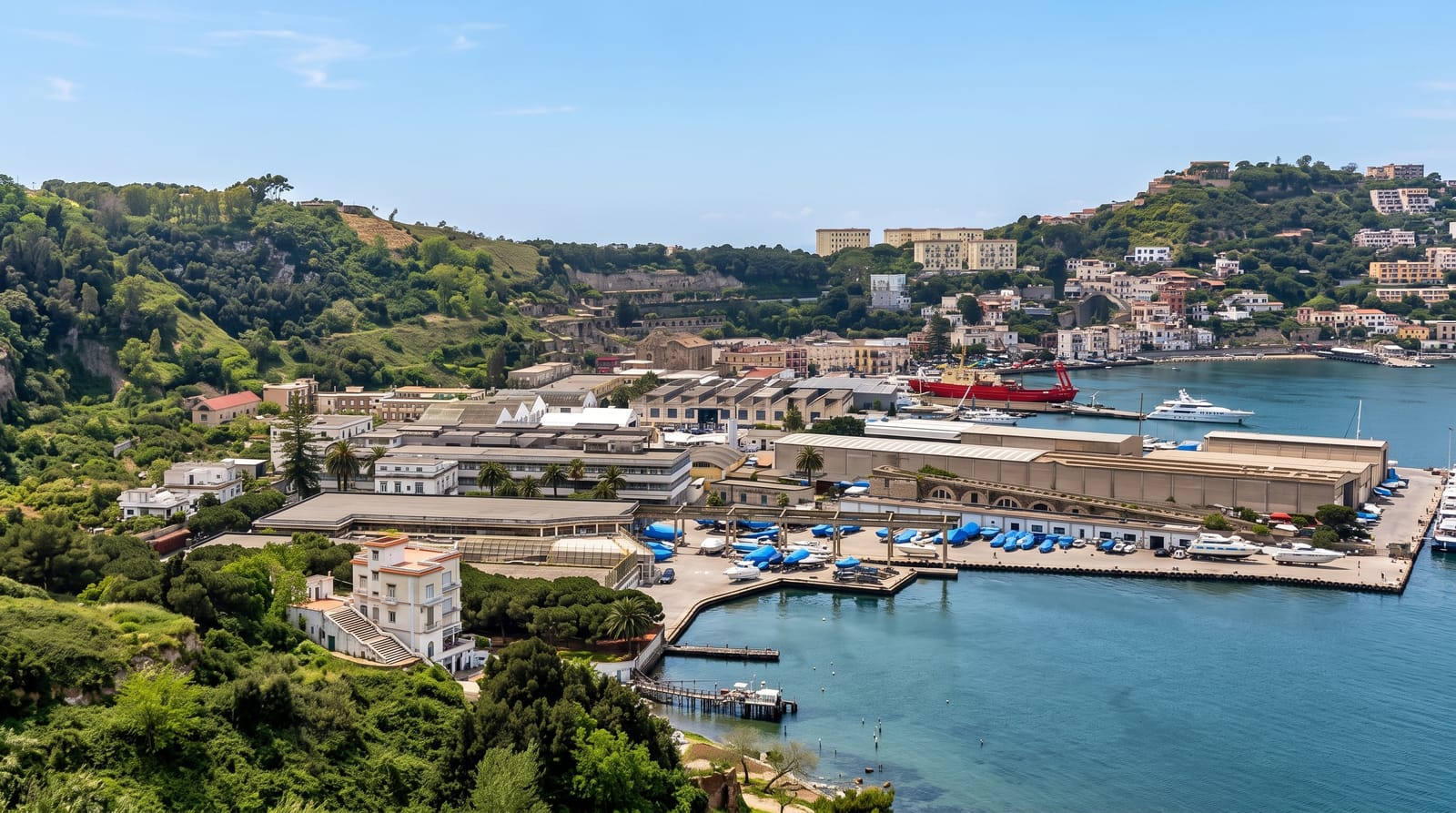
AI illustration
West of Naples the ground is a large caldera of craters, fumarole fields and hot springs, and it moves: bradyseism raises and lowers the land by metres over decades, visible on the columns of the Serapeum at Pozzuoli, where marine molluscs bored holes several metres above the present floor, showing the market was once submerged. Baiae was the empire's most fashionable resort, with bath complexes and villas; the same subsidence took part of it under the sea, and streets, mosaics and statue bases now lie in shallow water as an underwater archaeological park visited by glass-bottomed boat, snorkel or dive.
Highlights
- The sunken city - Roman streets and mosaics in shallow water at Baiae.
- The Serapeum columns - mollusc borings marking former sea levels.
- The Solfatara crater - a fumarole field, currently closed to visitors.
- The Baiae baths - terraced bath complexes above the shore.
When to go
April to June and September to October; underwater visibility is best in calm settled weather and boat trips are cancelled in swell. Summer is hot and crowded.
Practical notes
The Solfatara crater has been closed to the public since a fatal accident in 2017. Underwater visits depend entirely on sea conditions. Sites are scattered and need a car or several trains.
Nearby
Naples lies east; Cuma's Sibyl cave is north.
What to pack for Campi Flegrei and Baiae
Chosen from what this place is for. Tap a kit for the full checklist.
- Your own mask + snorkel - A well-fitting mask is the single biggest comfort upgrade underwater. Find on Amazon
- Head torch + spare batteries - Hands-free light is essential; caves are truly dark. Find on Amazon
- Comfortable walking shoes - Sightseeing means kilometres of pavement and cobbles daily. Find on Amazon
- Swimwear - Needed at most public thermal pools; some traditional baths are nude and single-sex. Find on Amazon
Some links on this page are Amazon affiliate links - if you buy through them we may earn a small commission at no extra cost to you.
All packing kitsPlan your trip
Where to start if Campi Flegrei and Baiae is going on the list.
Booking links on this page are affiliate links - if you book through them we may earn a small commission at no extra cost to you. It never changes what we write about a place.
Opening times, ticket prices and seasonal closures change - check the official source before you go: official site.