Paestum
Three Greek temples standing almost whole in a field south of Salerno, better preserved than most of what survives in Greece.
Updated 18 October 2026

AI illustration
UNESCO World Heritage
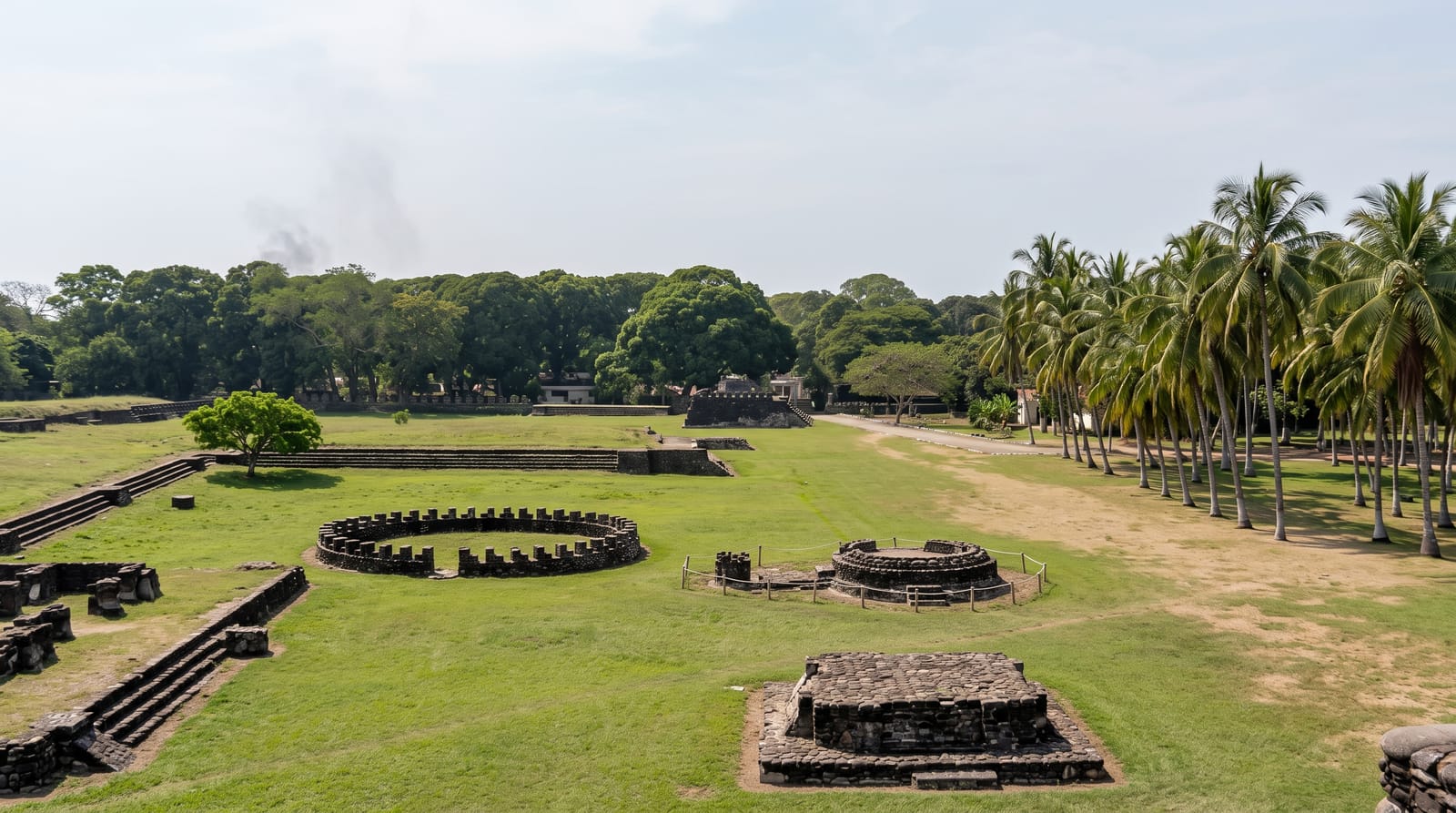
Poseidonia was founded by Greeks from Sybaris around six hundred BC and its three Doric temples still stand in a flat field near the sea, two of them with their colonnades and entablatures essentially complete. They are older than the Parthenon and in better condition than almost anything comparable in Greece, largely because the site was abandoned to malarial marsh in late antiquity and nobody quarried it. The museum holds the Tomb of the Diver, a painted slab of around four hundred and seventy BC showing a figure diving into water, the only surviving Greek figurative tomb painting of its period.
History
Greeks from Sybaris founded the city as Poseidonia around 600 BC, by the archaeological evidence; Strabo says the settlers first built fortifications by the sea and then founded the city farther inland, and it probably took in refugees when Croton conquered Sybaris in 510 BC. At the end of the 5th century BC the Lucanians conquered it, with Greek and Oscan cultures thriving side by side, and in 273 BC, after the Pyrrhic War, it became the Roman Latin colony of Paestum. It later became a bishopric but was abandoned in the early Middle Ages, probably as changes in drainage turned the land into malarial swamp, with Saracen raids perhaps playing a part, and it lay largely forgotten until the 18th century. Count Gazzola took the architects Jacques-Germain Soufflot and Dumont to the site in 1750, the early Greek temples caused a sensation across Europe, and an 18th-century road cut the ancient site in two; it is now a World Heritage Site (Wikipedia, Paestum).
What you'll find
- The Temple of Neptune - the most complete, and among the finest Doric buildings anywhere.
- The Temple of Hera - the oldest of the three, from around 550 BC.
- The Tomb of the Diver - the unique Greek painted tomb in the museum.
- The city walls - nearly five kilometres, largely intact.
When to go
March to June and September to October are best; the site is flat, open and baking in high summer. Early morning has the best light on the temples and the fewest people. Allow half a day for the site and museum together.
Practical notes
It is a long flat walk in full sun with almost no shade. The modern development around the archaeological zone is ugly. Buffalo mozzarella producers nearby are heavily geared to coach parties. Getting there without a car means a slow regional train and a walk.
Nearby
The Cilento coast is south; Salerno and the Amalfi coast are north.
Key facts
Source: Wikidata, item Q329967, read on 18 October 2026.
What to pack for Paestum
Chosen from what this place is for. Tap a kit for the full checklist.
- Your own mask + snorkel - A well-fitting mask is the single biggest comfort upgrade underwater. Find on Amazon
- Comfortable walking shoes - Sightseeing means kilometres of pavement and cobbles daily. Find on Amazon
- Modest clothing - Shoulders and knees covered - the single most common requirement. Find on Amazon
- Rash guard or thin wetsuit - Sun cover on the surface and warmth on longer or deeper dives. Find on Amazon
Some links on this page are Amazon affiliate links - if you buy through them we may earn a small commission at no extra cost to you.
All packing kitsPlan your trip
Where to start if Paestum is going on the list.
Booking links on this page are affiliate links - if you book through them we may earn a small commission at no extra cost to you. It never changes what we write about a place.
Opening times, ticket prices and seasonal closures change - check the official source before you go: official site.