Certosa di Padula
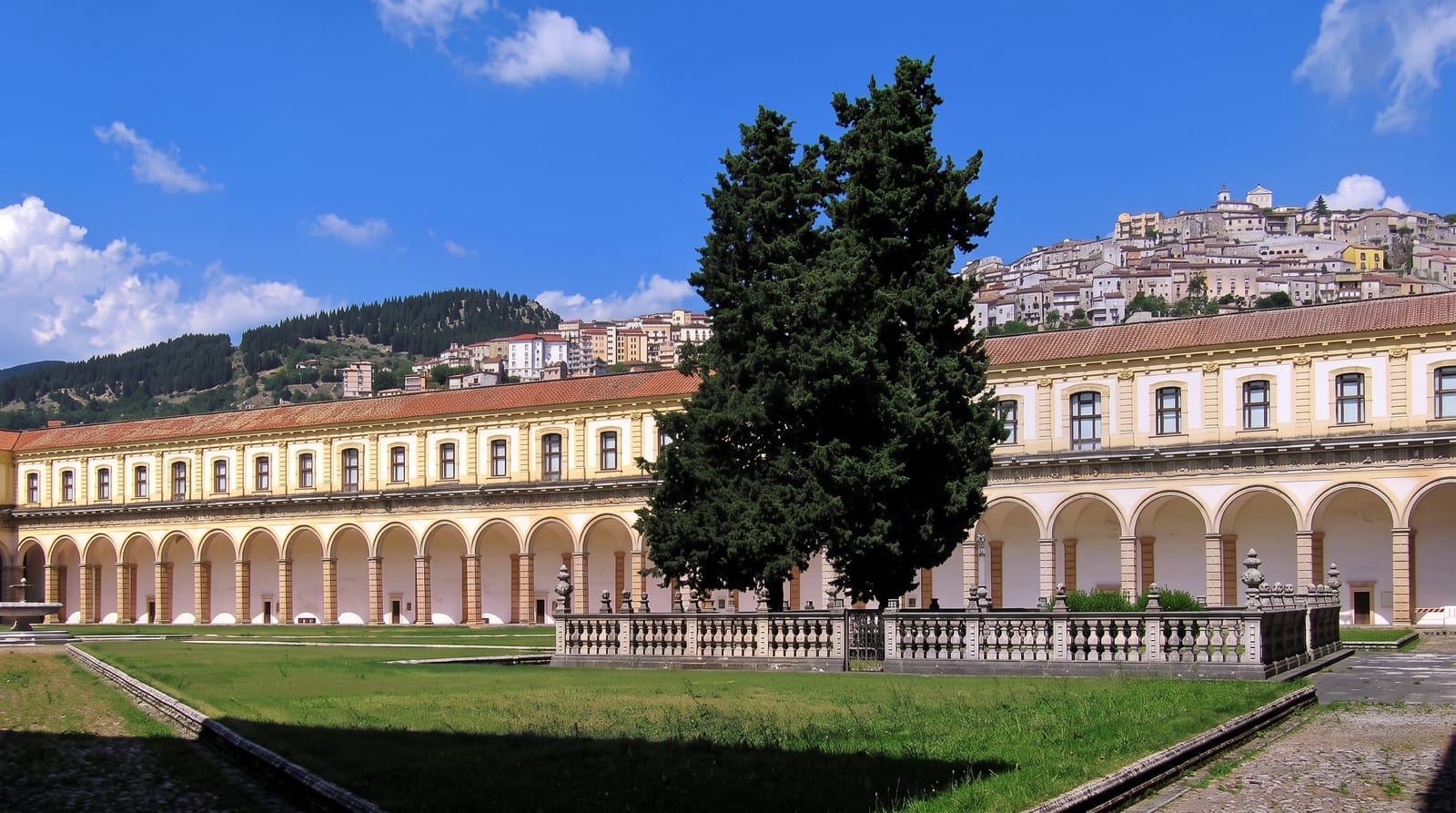
One of the largest monasteries in Europe, with a cloister of eighty-four columns and a spiral stone staircase.
Updated 18 October 2026
AI illustration
UNESCO World Heritage
Founded in 1306 and built over four centuries, the Certosa di San Lorenzo covers about fifty-one thousand square metres, one of the largest monastic complexes in Europe, with three hundred and twenty rooms and halls. The great cloister is among the biggest in the world, enclosed by eighty-four columns, and an elliptical double-helix staircase of stone climbs from it to the library. A story, unverifiable, says a thousand-egg omelette was made here for Charles V in 1535. Carthusian monks lived in individual cells with their own gardens. UNESCO listed it in 1998 with Paestum and Velia.
History
Tommaso di San Severino founded the charterhouse on 27 April 1306 on the site of an earlier monastery and dedicated it to Saint Lawrence, and building went on for some 450 years, though the main parts are Baroque; it covers 51,500 square metres with 320 rooms and halls, the largest monastery in Italy, and its great cloister of 12,000 square metres is ringed by 84 columns. Carthusian life was divided between contemplation, in the cloisters, library and chapels with their 18th-century scagliola altar fronts, and work, in the kitchen, cellars, laundries and yards with stables, ovens and an olive mill. The charterhouse was the French headquarters in the Napoleonic Wars, a base of Garibaldi's Southern Army in the Risorgimento and an internment camp in both world wars, and in 1917 the Czechoslovak Legion in Italy was founded here; today it also holds the archaeological museum of Western Lucania (Wikipedia, Certosa di Padula).
What you'll find
- The great cloister - a court enclosed by 84 columns.
- The spiral staircase - an elliptical stone double helix to the library.
- The monks' cells - individual houses with private gardens.
- The kitchens - vast service rooms including the famous omelette story.
When to go
April to October; the complex is largely unheated and cold in winter. It closes some Mondays. Allow two hours minimum for the scale.
Things to know
Much of the complex is bare and unfurnished after suppressions and looting. It is very large and tiring. The Vallo di Diano is remote without a car.
Nearby
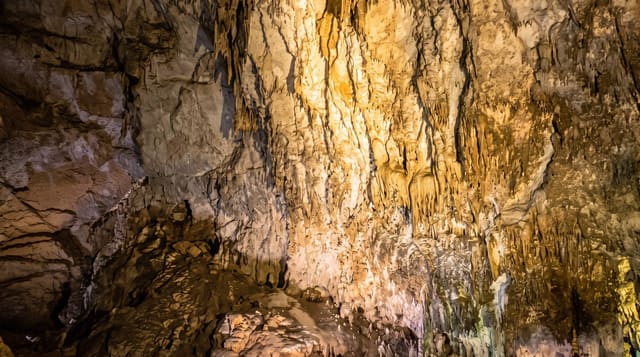
The Pertosa caves lie north; Pollino park is southeast.
Key facts
Source: Wikidata, item Q1051820, read on 18 October 2026.
What to pack for Certosa di Padula
Chosen from what this place is for. Tap a kit for the full checklist.
- Head torch + spare batteries - Hands-free light is essential; caves are truly dark. Find on Amazon
- Comfortable walking shoes - Sightseeing means kilometres of pavement and cobbles daily. Find on Amazon
- Modest clothing - Shoulders and knees covered - the single most common requirement. Find on Amazon
- Grippy closed shoes - Cave floors are wet, muddy and slick with formations. Find on Amazon
Some links on this page are Amazon affiliate links - if you buy through them we may earn a small commission at no extra cost to you.
All packing kitsPlan your trip
Where to start if Certosa di Padula is going on the list.
Booking links on this page are affiliate links - if you book through them we may earn a small commission at no extra cost to you. It never changes what we write about a place.
Opening times, ticket prices and seasonal closures change - check the official source before you go: official site.