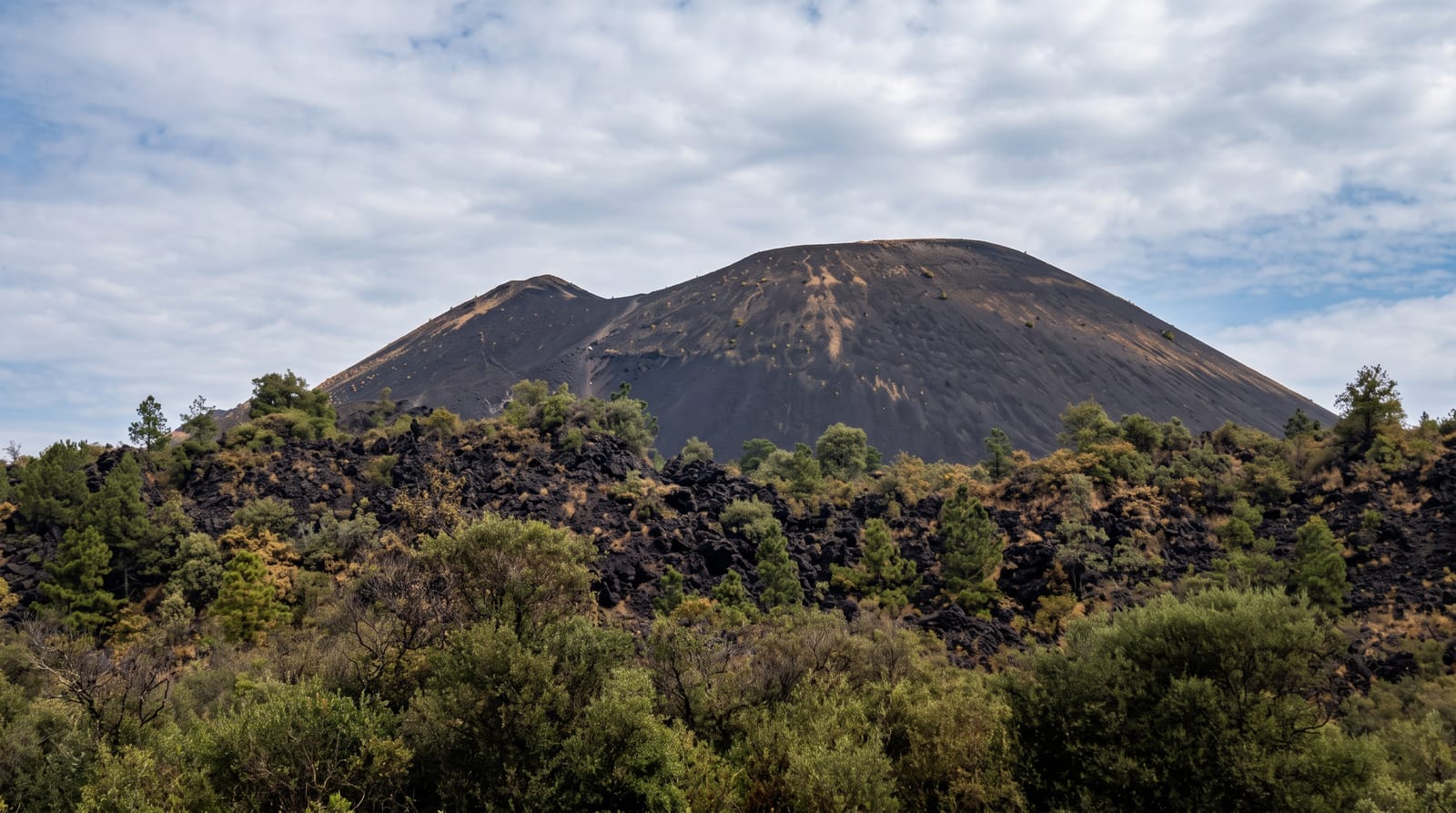
Mount Tambora
The volcano whose 1815 eruption was the largest in recorded history and gave the world a year without a summer.
Updated 19 October 2026
In April 1815 Tambora erupted with an explosivity index of seven, ejecting on the order of a hundred and fifty cubic kilometres of material and removing about a third of the mountain's height - the largest eruption in recorded human history. It destroyed the Tambora kingdom and its language, killed tens of thousands directly and far more through famine on Sumbawa and Lombok, and put enough sulphate into the stratosphere to cool the northern hemisphere the following year: 1816 is remembered as the year without a summer, with crop failures across Europe and North America, snow in New England in June, and a wet Swiss holiday that produced Frankenstein. What remains is a caldera six kilometres across and over a kilometre deep, climbed in two or three days.
History
Before 1815 Tambora stood about 4,300 metres high, one of the tallest peaks in the archipelago. The eruption of that year, the largest in recorded history, ejected up to 150 cubic kilometres of material, cut the mountain to 2,850 metres and left a caldera 6 to 7 kilometres across and about 1,300 metres deep, and the summer of 1816 became known as the Year Without a Summer (Wikipedia, Mount Tambora).
The landscape
- A six-kilometre caldera - over a kilometre deep, left where the summit was.
- The 1815 site - the largest eruption in recorded history.
- Buried settlement remains - excavations of the destroyed Tambora kingdom in the ash.
- A two to three day climb - from Pancasila through forest to the rim.
When to go
May to September; the climb needs a dry window. Four days including travel.
What to expect
Sumbawa is a long way from anywhere - budget days for travel. Guides and porters are required. There is no water high on the mountain. It is still an active volcano and is monitored.
Nearby
Satonda island is off the coast below; Bima and Dompu are the road towns.
Key facts
Source: Wikidata, item Q168714, read on 18 October 2026.
What to pack for Mount Tambora
Chosen from what this place is for. Tap a kit for the full checklist.
- Broken-in walking shoes or boots - Grip and ankle support matter more than looks; never hike in brand-new boots. Find on Amazon
- Warm base layers - Merino or synthetic against the skin - never cotton, which chills when damp. Find on Amazon
- Layers for big temperature swings - Warm sun by day, near-freezing at night, even near the equator. Find on Amazon
- Layers + a waterproof shell - Mountain weather turns fast; a packable rain jacket saves the day. Find on Amazon
Some links on this page are Amazon affiliate links - if you buy through them we may earn a small commission at no extra cost to you.
All packing kitsPlan your trip
Where to start if Mount Tambora is going on the list.
Booking links on this page are affiliate links - if you book through them we may earn a small commission at no extra cost to you. It never changes what we write about a place.
Opening times, ticket prices and seasonal closures change - check the official source before you go: official site.