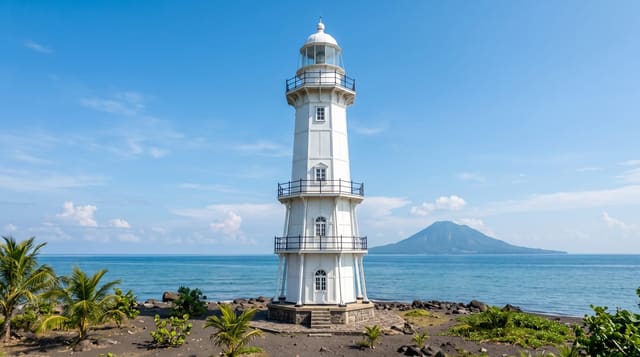
Krakatoa
The remains of the volcano that destroyed itself in 1883, and the new cone that has grown in its place.
Updated 19 October 2026
The eruption of Krakatoa in August 1883 destroyed most of the island, generated tsunamis that killed tens of thousands around the Sunda Strait, and produced a sound heard thousands of kilometres away - among the loudest events in recorded history, with atmospheric pressure waves that circled the globe several times. What remains are three fragments of the old island and, in the middle, Anak Krakatau - child of Krakatoa - a new cone that broke the surface in 1927 and has been growing since. In December 2018 a flank of that cone collapsed into the sea and generated a tsunami that killed over four hundred people on the Sunda Strait coasts with no seismic warning, and the cone lost most of its height. It is closely monitored and landing is often prohibited.
History
One of the earliest mentions of the name is in the Old Sundanese text Bujangga Manik of the late 15th century, as "the island of Rakata, a mountain in the middle of the sea", and the name most likely comes from the Sanskrit karkata, "crab". The eruption of 1883 left only Rakata of the old island, in 1927 Anak Krakatau, "child of Krakatoa", emerged from the caldera, and a large collapse in 2018 caused the Sunda Strait tsunami (Wikipedia, Krakatoa).
What you'll find
- The 1883 caldera remnants - Rakata and the fragments of the destroyed island.
- Anak Krakatau - the new cone, surfaced in 1927 and much reduced since 2018.
- A recent collapse scar - the flank that failed and caused the 2018 tsunami.
- Black volcanic beaches - the ash and lava shore of the young island.
When to go
April to September; check the current alert level first. Two days.
Before you go
Landing is restricted or banned depending on alert status - operators sometimes ignore this, and you should not. The crossing is open sea and rough at times. This volcano has killed recently.
Nearby
Kalianda and Carita are the mainland ports; Ujung Kulon is south-west.
Key facts
Source: Wikidata, item Q82613, read on 18 October 2026.
What to pack for Krakatoa
Chosen from what this place is for. Tap a kit for the full checklist.
- Broken-in walking shoes or boots - Grip and ankle support matter more than looks; never hike in brand-new boots. Find on Amazon
- Reef-safe sunscreen - High SPF that will not bleach the coral you are swimming over. Find on Amazon
- Layers + a waterproof shell - Mountain weather turns fast; a packable rain jacket saves the day. Find on Amazon
- Quick-dry towel - A microfibre towel packs small and dries in minutes. Find on Amazon
Some links on this page are Amazon affiliate links - if you buy through them we may earn a small commission at no extra cost to you.
All packing kitsPlan your trip
Where to start if Krakatoa is going on the list.
Booking links on this page are affiliate links - if you book through them we may earn a small commission at no extra cost to you. It never changes what we write about a place.
Opening times, ticket prices and seasonal closures change - check the official source before you go: official site.