Palampur Tea Gardens
Kangra tea gardens laid out below the Dhauladhar wall, growing a lighter tea than Darjeeling or Assam.
Updated 14 October 2026
AI illustration
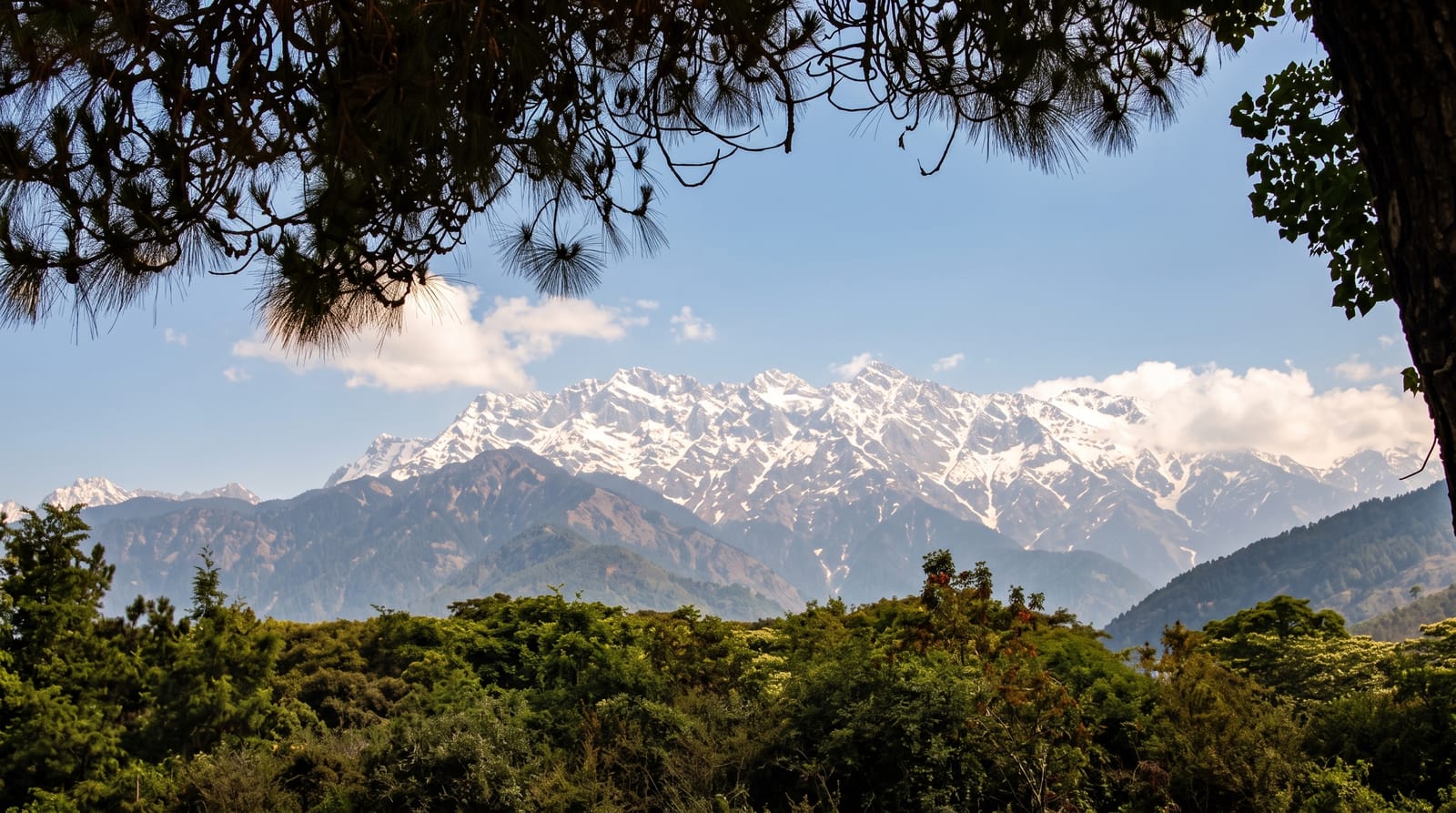
Tea was planted in the Kangra valley from the 1850s and Palampur became its centre, with gardens on the gentle ground below the Dhauladhar, which rises abruptly to over four thousand metres a short distance behind, so the tea rows sit with a wall of snow peaks directly above them. Kangra tea, given a geographical indication, is lighter and more floral than the better-known Indian teas, and production is smaller, having never fully recovered from the 1905 earthquake. Estates and a cooperative factory receive visitors for tasting and processing tours, and the roads through the gardens are walked and cycled.
The main sights
- The tea rows - gardens laid out below the Dhauladhar wall.
- The mountain backdrop - snow peaks rising abruptly behind the plantings.
- The processing factory - withering, rolling and drying of Kangra tea.
- The tasting rooms - the lighter Kangra leaf compared with other Indian teas.
When to go
March to June for the first flush and picking, and September to November for clear mountain views; the monsoon here is heavy. Factory activity follows the plucking season.
Practical notes
Estates are working farms and visits generally need arranging in advance. Kangra tea is a small industry and facilities are modest compared with Darjeeling. The Dhauladhar is often cloud-covered.
Nearby
Baijnath temple lies east; Bir Billing is southeast.
What to pack for Palampur Tea Gardens
Chosen from what this place is for. Tap a kit for the full checklist.
- Warm base layers - Merino or synthetic against the skin - never cotton, which chills when damp. Find on Amazon
- Strong insect repellent - DEET or picaridin; the jungle is where bites and disease risk are highest. Find on Amazon
- Layers for big temperature swings - Warm sun by day, near-freezing at night, even near the equator. Find on Amazon
- Comfortable walking shoes - Sightseeing means kilometres of pavement and cobbles daily. Find on Amazon
Some links on this page are Amazon affiliate links - if you buy through them we may earn a small commission at no extra cost to you.
All packing kitsPlan your trip
Where to start if Palampur Tea Gardens is going on the list.
Booking links on this page are affiliate links - if you book through them we may earn a small commission at no extra cost to you. It never changes what we write about a place.
Opening times, ticket prices and seasonal closures change - check the official source before you go: official site.