National Chambal Sanctuary
A clean river through badland ravines holding gharial, river dolphins and skimmers, watched from small boats.
Updated 19 October 2026
AI illustration
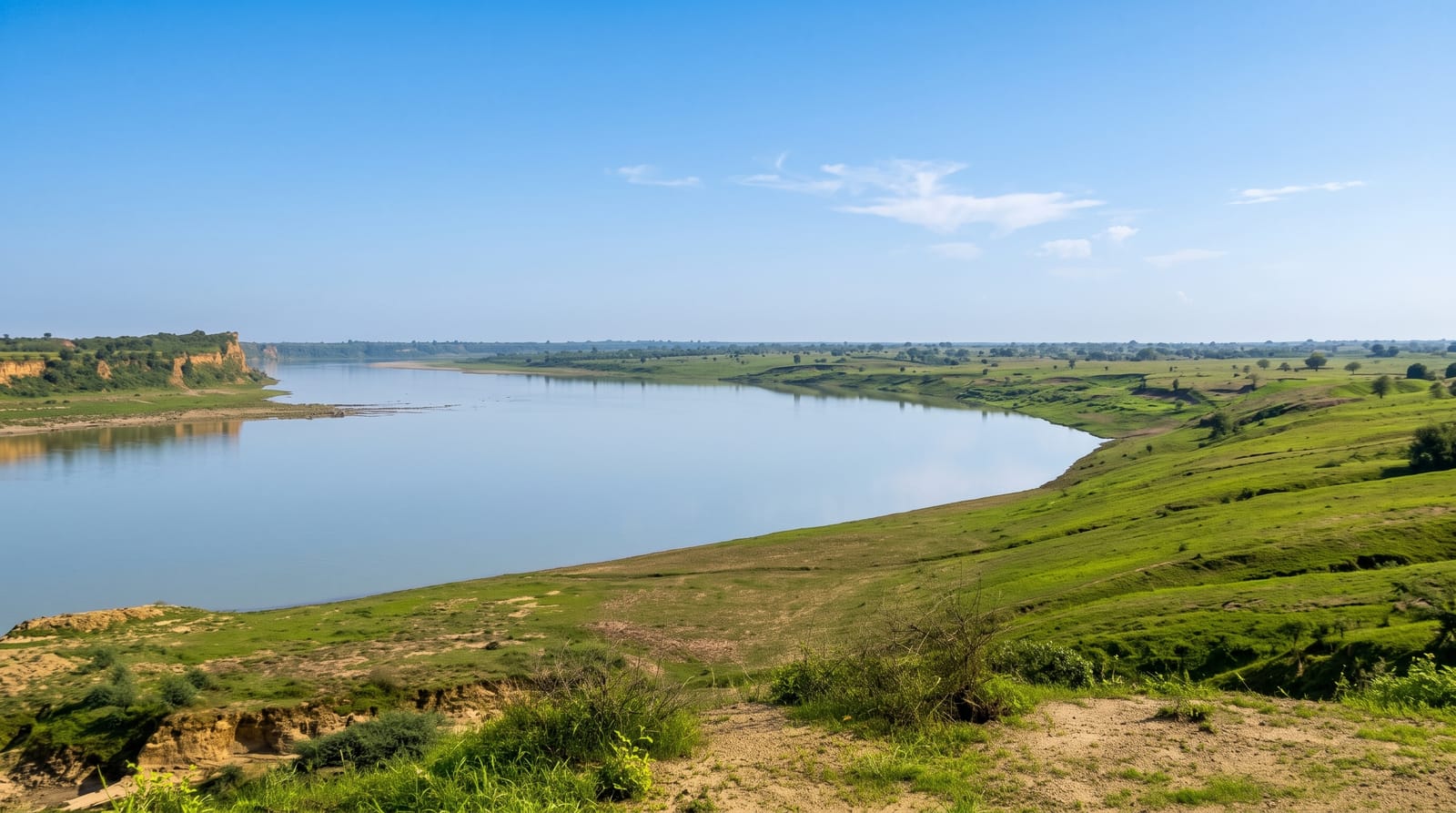
The Chambal escaped the industrial development and heavy abstraction that damaged most north Indian rivers, and it runs clear through ravines of eroded badland, which has made it a refuge: the largest population of gharial in the world lives here, a fish-eating crocodile with a needle snout and, in males, a bulbous growth on the nose, which came within a few hundred animals of extinction in the 1970s. Ganges river dolphins, mugger crocodiles, smooth-coated otters and Indian skimmers share the river, and turtles bask on the sandbars. Flat-bottomed boats run from landing points, usually in the early morning.
History
The government approved the establishment of the National Chambal Sanctuary in an order of 30 September 1978, to protect the gharial, the red-crowned roof turtle and the Ganges river dolphin. It is protected under the Wildlife Protection Act of 1972 and spread across three states, administered from Morena in Madhya Pradesh (Wikipedia, National Chambal Sanctuary).
The landscape
- The gharial - basking crocodiles with needle snouts on the sandbars.
- The river dolphins - Ganges dolphins surfacing in the deeper pools.
- The Indian skimmers - black and orange birds cutting the water with the lower bill.
- The ravines - eroded badland walls along the river.
When to go
November to March, when birds are present and animals bask through the day; gharial nest on the sandbars in spring. Summer is extremely hot and the monsoon raises the river.
Good to know
Boats are open and unshaded, and mornings on the water are cold in winter. The area is remote with few facilities beyond a couple of lodges. Sightings depend on water levels.
Nearby
Agra lies northwest; Bateshwar temples are nearby on the Yamuna.
Key facts
Source: Wikidata, item Q6971439, read on 18 October 2026.
What to pack for National Chambal Sanctuary
Chosen from what this place is for. Tap a kit for the full checklist.
- Broken-in walking shoes or boots - Grip and ankle support matter more than looks; never hike in brand-new boots. Find on Amazon
- Binoculars - The single best wildlife tool - even a compact pair transforms a sighting. Find on Amazon
- Strong insect repellent - DEET or picaridin; the jungle is where bites and disease risk are highest. Find on Amazon
- Modest clothing - Shoulders and knees covered - the single most common requirement. Find on Amazon
Some links on this page are Amazon affiliate links - if you buy through them we may earn a small commission at no extra cost to you.
All packing kitsPlan your trip
Where to start if National Chambal Sanctuary is going on the list.
Booking links on this page are affiliate links - if you book through them we may earn a small commission at no extra cost to you. It never changes what we write about a place.
Opening times, ticket prices and seasonal closures change - check the official source before you go: official site.