Munnar
A hill station in the Western Ghats of Kerala, where rolling hills are carpeted in emerald tea plantations, cool and misty above the tropical plains.
Updated 19 October 2026

AI illustration
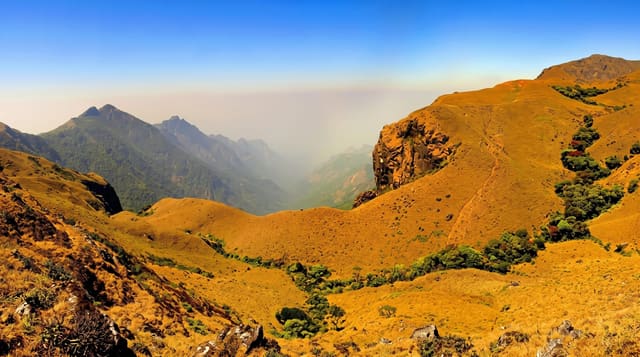
Munnar, set high in the Western Ghats of Kerala, is the best known of South India's hill stations, a place where the steep hills are combed into endless rolling plantations of tea, their bushes clipped into a continuous carpet of the brightest green, laced with silver-oak shade trees and threaded by winding roads and streams. Developed by British planters, it retains cool, misty air that is a relief from the tropical heat of the plains, and the landscape of tea-covered ridges, with women picking the leaves and mist drifting through, is its great draw. Beyond the tea, the surrounding hills hold the Eravikulam National Park, home to the endangered Nilgiri tahr, a wild mountain goat, and to a rare mass flowering of the neelakurinji, a blue-purple flower that blooms only once every twelve years and turns whole slopes violet. Viewpoints, waterfalls, spice gardens and a tea museum fill out a gentle few days.
History
The name means "three rivers", for the meeting of the Muthirapuzha, Nallathanni and Kundali, and the hills have long been home to the Malayarayan and Muthuvan peoples. Tradition says Colonel Arthur Wellesley, later Duke of Wellington, was the first Briton to pass this way; by 1894 there were 26 estates in the hills, a ropeway was built in 1900, a new railway opened in 1909, and by 1911 around 6,500 hectares were under cultivation (Wikipedia, Munnar).
What's there
- The tea plantations - the emerald hills carpeted in clipped tea bushes.
- Eravikulam National Park - home of the endangered Nilgiri tahr.
- The viewpoints and waterfalls - the outlooks over the tea hills and the cascades among them.
- The tea museum - the story and processing of the region's tea.
When to go
September to March is the cool, drier and clearest season; the monsoon greens everything but brings heavy rain and leeches, and mist can hide the views. Mornings are freshest and least misty for the tea-hill vistas. The neelakurinji bloom, when it comes, is a once-in-twelve-years event worth planning around.
Good to know
Munnar has grown popular and its centre and main road can be congested and a little untidy, with traffic and unplanned building jarring against the beautiful plantations, so it pays to stay out among the tea rather than in the town. The winding drive up is long and can be slow. Mist and monsoon rain can obscure the views for days. The tea landscape is the real reward; the town itself is a means to it.
Nearby
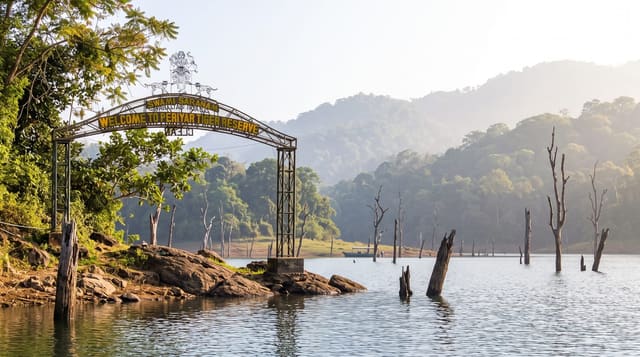
The spice hills of Thekkady and the Periyar wildlife reserve are within reach; Kochi and the coast are a few hours down.
What to pack for Munnar
Chosen from what this place is for. Tap a kit for the full checklist.
- Broken-in walking shoes or boots - Grip and ankle support matter more than looks; never hike in brand-new boots. Find on Amazon
- Binoculars - The single best wildlife tool - even a compact pair transforms a sighting. Find on Amazon
- Spare batteries + cards - Cold and long shoots drain power; never run out at the good light. Find on Amazon
- Strong insect repellent - DEET or picaridin; the jungle is where bites and disease risk are highest. Find on Amazon
Some links on this page are Amazon affiliate links - if you buy through them we may earn a small commission at no extra cost to you.
All packing kitsPlan your trip
Where to start if Munnar is going on the list.
Booking links on this page are affiliate links - if you book through them we may earn a small commission at no extra cost to you. It never changes what we write about a place.
Opening times, ticket prices and seasonal closures change - check the official source before you go: official site.