Lonar Crater Lake
A meteorite crater in basalt, holding a lake that is both salty and alkaline, and turned pink in 2020.
Updated 19 October 2026
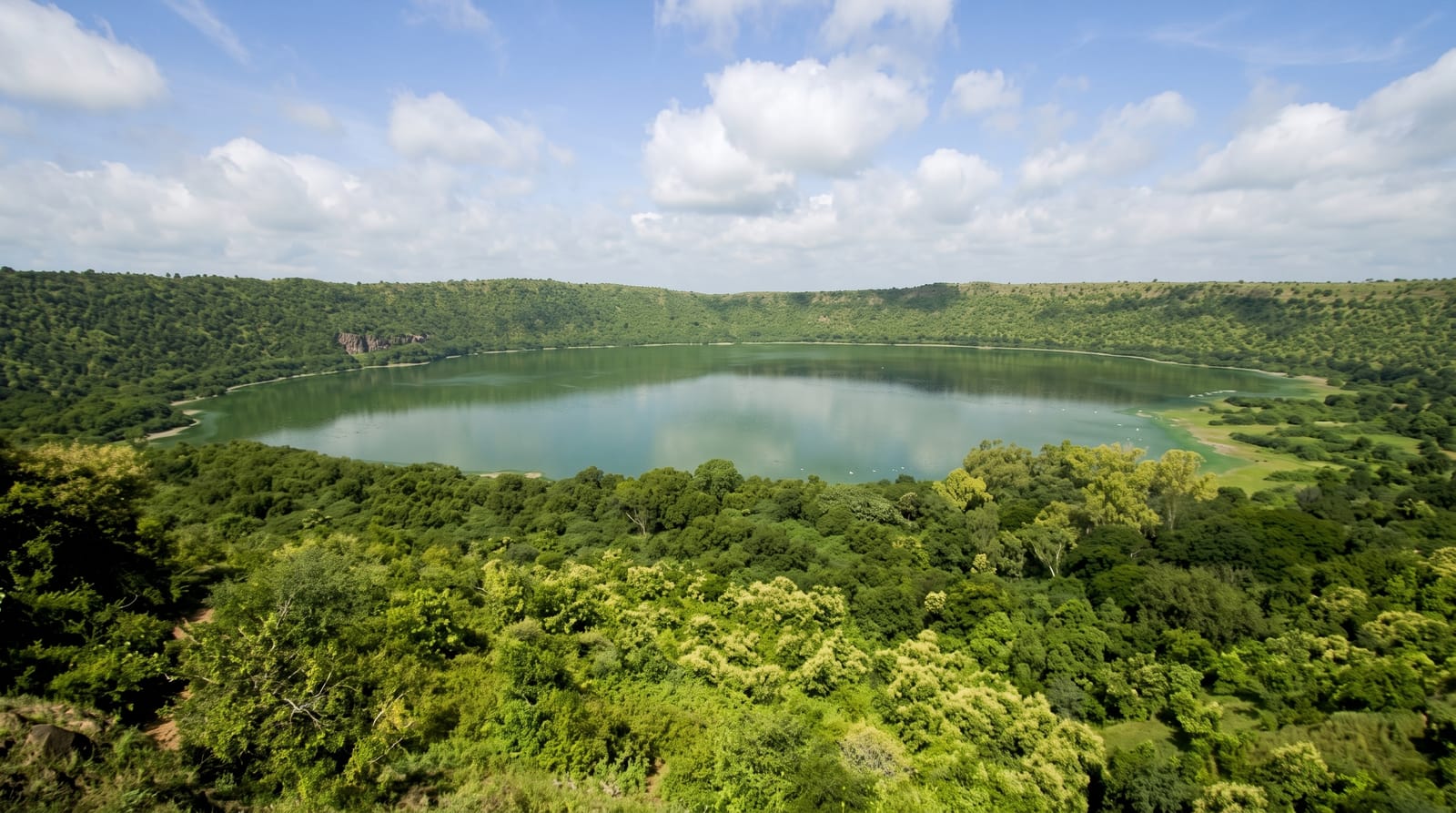
AI illustration
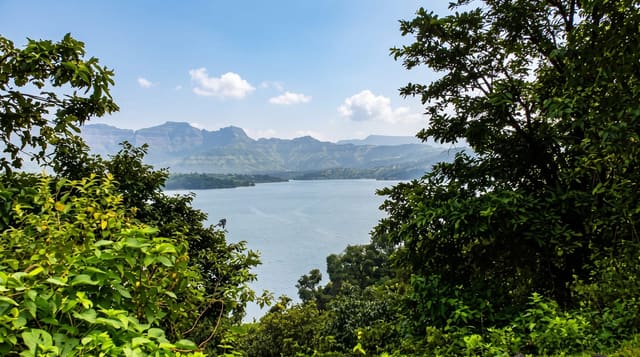
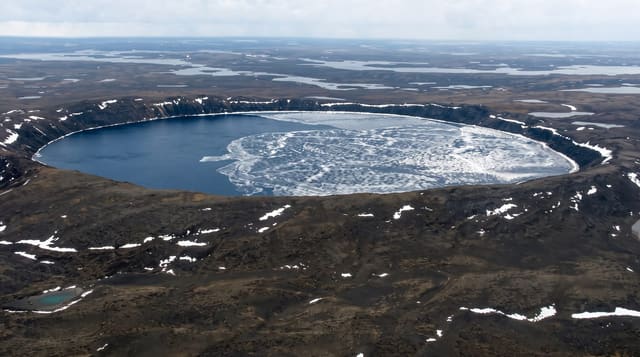
Lonar is a hypervelocity impact crater about 1.8 kilometres across and 150 metres deep, in Deccan basalt, dated by earlier studies to about 52,000 years ago and by a later, disputed argon method to some 570,000 years, which makes it unusual: most terrestrial craters are in sedimentary rock, and this one is studied as an analogue for craters on the Moon and Mars. The lake at the bottom is both saline and alkaline at once, an uncommon combination, and in June 2020 it turned pink over a few days as salt-tolerant algae bloomed in unusually low water. Temples from the Chalukya period stand around and inside the rim, and the crater walls are forested with a path descending to the shore.
History
The crater was formed by a hypervelocity meteorite impact; earlier studies dated it to 52 ± 6 thousand years ago, while a later argon-argon date of 570 ± 47 thousand years is disputed. Descriptions in the Skanda Purana and the Ain-i-Akbari have been linked to the lake, though not conclusively, and temples in the Chalukya and Hemadpanti styles stand around it, among them the partly submerged Shankar Ganesha temple (Wikipedia, Lonar Lake).
The landscape
- The crater - a basalt impact bowl 1.8 kilometres across.
- The lake - saline and alkaline water at the bottom.
- The rim temples - Chalukya-period shrines around and inside the crater.
- The descent path - a walk through forest down to the shore.
When to go
October to March; the crater is hot and exposed in summer. Mornings are best for the descent. The lake level and colour vary with rainfall and evaporation.
Practical notes
The descent and climb back are steep and hot with limited shade. Facilities at the site are minimal. The pink colour of 2020 was exceptional, not typical, and should not be expected.
Nearby
Aurangabad lies west; Ajanta is northwest.
Key facts
Source: Wikidata, item Q2572189, read on 18 October 2026.
What to pack for Lonar Crater Lake
Chosen from what this place is for. Tap a kit for the full checklist.
- Broken-in walking shoes or boots - Grip and ankle support matter more than looks; never hike in brand-new boots. Find on Amazon
- Modest clothing - Shoulders and knees covered - the single most common requirement. Find on Amazon
- Layers + a waterproof shell - Mountain weather turns fast; a packable rain jacket saves the day. Find on Amazon
- A scarf or shawl - To cover the head or shoulders on entry; women especially at mosques. Find on Amazon
Some links on this page are Amazon affiliate links - if you buy through them we may earn a small commission at no extra cost to you.
All packing kitsPlan your trip
Where to start if Lonar Crater Lake is going on the list.
Booking links on this page are affiliate links - if you book through them we may earn a small commission at no extra cost to you. It never changes what we write about a place.
Opening times, ticket prices and seasonal closures change - check the official source before you go: official site.