Keoladeo National Park
A man-made duck shoot turned world heritage wetland, where more than 370 bird species are recorded.
Updated 18 October 2026
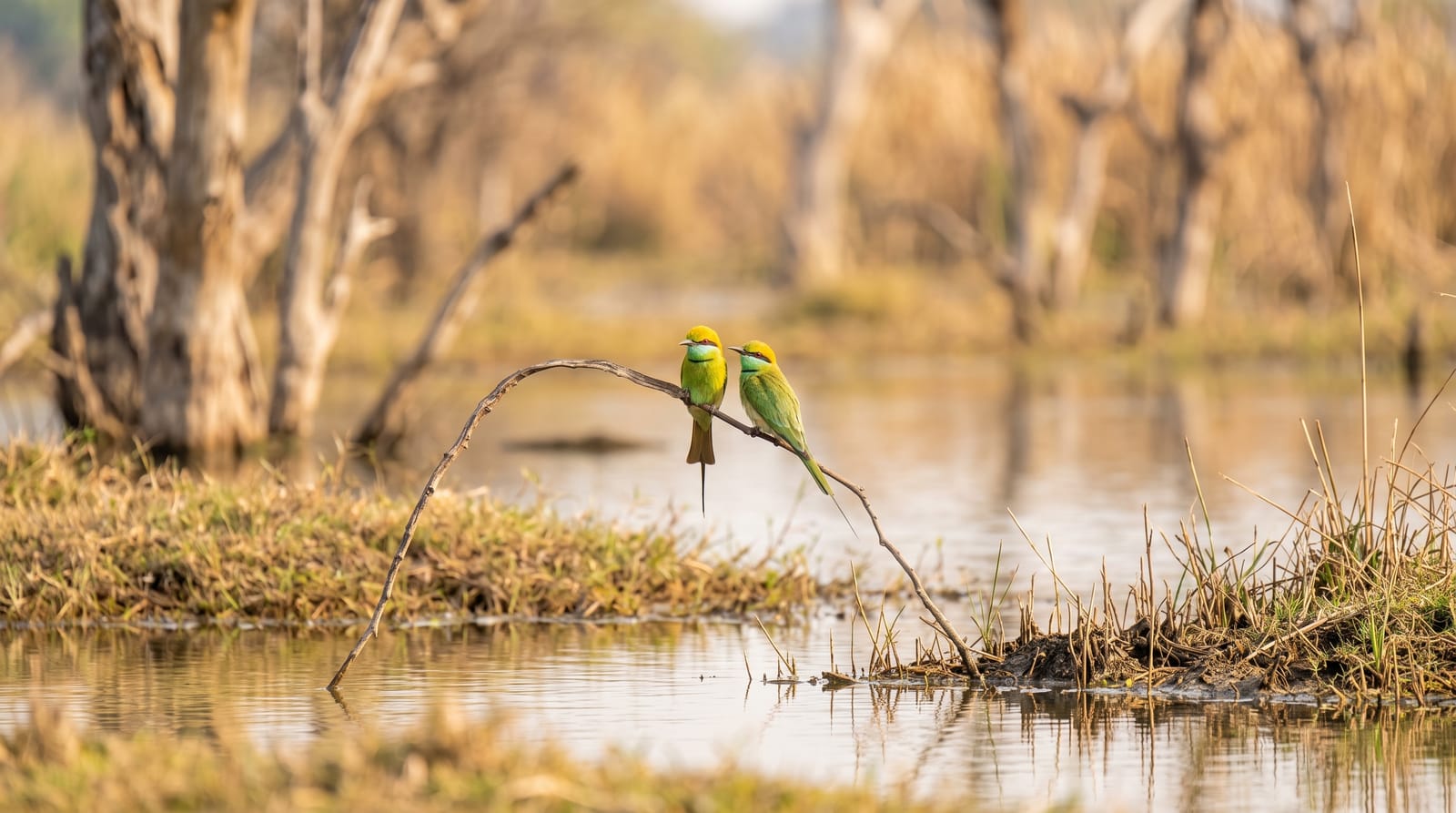
AI illustration
UNESCO World Heritage
The wetland at Bharatpur was engineered in the nineteenth century by flooding a depression to create a duck shoot for the maharaja and his guests, and the bags recorded on stone tablets ran into thousands of birds a day. Shooting gave way to a bird sanctuary, the site became a national park in 1982 and a UNESCO world heritage site in 1985, and it is now among the best-known birding sites in Asia, with more than 370 species recorded: painted storks nesting in colonies, herons, spoonbills, cranes, raptors and large numbers of wintering waterfowl. Cycle rickshaw drivers double as trained bird guides.
History
The wetland was a private duck shooting preserve of the Maharaja of Bharatpur, from the 1850s by one account and from 1899 by another, when the state's administrator developed it as a shooting reserve. Through the efforts of the ornithologist Salim Ali it became the Bharatpur Bird Sanctuary in 1956; the sources give 1971 and 1976 for its later protection as a sanctuary, and it became a Ramsar site in October 1981 and a national park on 10 March 1982. In 1985 it was made a World Heritage Site as a wetland of international importance for migratory waterfowl and the wintering ground of the rare Siberian crane, but the last recorded Siberian cranes arrived in the winter of 2001-02. More than 370 bird species have been recorded here (Wikipedia, Keoladeo National Park).
The landscape
- The nesting colonies - painted storks and herons breeding in the flooded trees.
- The wintering flocks - ducks, geese and waders through the cold months.
- The rickshaw guides - drivers trained to find and name the birds.
- The shooting tablets - stone records of the historic bag counts.
When to go
October to March for wintering birds, with the nesting season running from around July into the autumn depending on rain. Water supply has been unreliable in dry years, affecting numbers.
Good to know
The park depends on water released from a canal, and in dry years it has been badly depleted with few birds. Vehicles are not allowed inside; movement is on foot, cycle or rickshaw. Summer is very hot.
Nearby
Agra lies northeast; Fatehpur Sikri is between.
Key facts
Source: Wikidata, item Q235878, read on 18 October 2026.
What to pack for Keoladeo National Park
Chosen from what this place is for. Tap a kit for the full checklist.
- Broken-in walking shoes or boots - Grip and ankle support matter more than looks; never hike in brand-new boots. Find on Amazon
- Layers + a waterproof shell - Mountain weather turns fast; a packable rain jacket saves the day. Find on Amazon
- Daypack with rain cover - 20-30 litres holds water, snacks, layers and a first-aid kit. Find on Amazon
- Offline maps + a power bank - Download the trail before you lose signal; carry backup charge. Find on Amazon
Some links on this page are Amazon affiliate links - if you buy through them we may earn a small commission at no extra cost to you.
All packing kitsPlan your trip
Where to start if Keoladeo National Park is going on the list.
Booking links on this page are affiliate links - if you book through them we may earn a small commission at no extra cost to you. It never changes what we write about a place.
Opening times, ticket prices and seasonal closures change - check the official source before you go: official site.


