Jaldapara National Park
Tall grassland along the Torsa holding the second largest one-horned rhino population in India.
Updated 19 October 2026
AI illustration
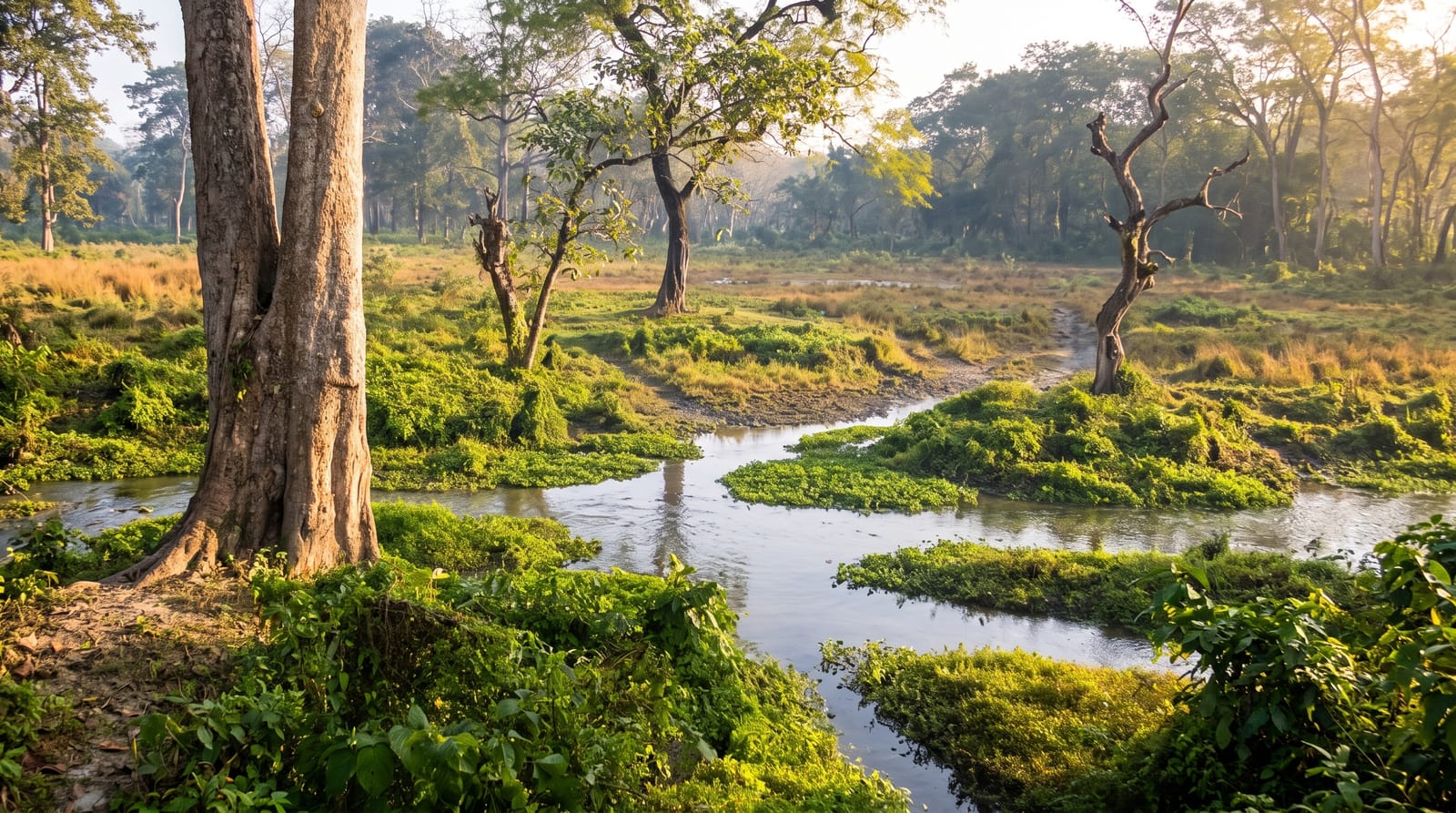
Jaldapara covers around two hundred and sixteen square kilometres of riverine grassland and forest along the Torsa in the Dooars, the belt of plain below the eastern Himalaya, and its grassland holds the largest one-horned rhinoceros population in West Bengal and the second largest in India after Kaziranga. Elephants, gaur, sambar, hog deer and leopard live here, and the bird list includes the Bengal florican. Because the grass grows well above head height, viewing is done from vehicles on set routes and from elephant back on early morning rides, which are limited in number and allotted by draw.
History
The Toto and Mech, or Bodo, peoples lived in the area before 1800, when it was known as Totopara. Jaldapara Wildlife Sanctuary was established in 1941, chiefly to protect the Indian rhinoceros, and in May 2014 it became a national park (Wikipedia, Jaldapara National Park).
What you'll find
- The one-horned rhinos - India's second largest population after Kaziranga.
- The tall grassland - Torsa riverine grass well above head height.
- The elephant safaris - early morning rides, limited and allotted by draw.
- The Bengal florican - a rare grassland bird recorded in the park.
When to go
October to April; the park closes for the monsoon from mid-June to mid-September. Elephant safari slots are few and must be booked well ahead. Winter mornings are cold and misty.
Before you go
Elephant safaris are heavily oversubscribed and allotted by lottery, often unavailable. Grass height limits visibility for much of the season. Accommodation near Madarihat is basic.
Nearby
Buxa reserve lies east; Bhutan is north.
Key facts
Source: Wikidata, item Q3350362, read on 18 October 2026.
What to pack for Jaldapara National Park
Chosen from what this place is for. Tap a kit for the full checklist.
- Broken-in walking shoes or boots - Grip and ankle support matter more than looks; never hike in brand-new boots. Find on Amazon
- Binoculars - The single best wildlife tool - even a compact pair transforms a sighting. Find on Amazon
- Strong insect repellent - DEET or picaridin; the jungle is where bites and disease risk are highest. Find on Amazon
- Layers + a waterproof shell - Mountain weather turns fast; a packable rain jacket saves the day. Find on Amazon
Some links on this page are Amazon affiliate links - if you buy through them we may earn a small commission at no extra cost to you.
All packing kitsPlan your trip
Where to start if Jaldapara National Park is going on the list.
Booking links on this page are affiliate links - if you book through them we may earn a small commission at no extra cost to you. It never changes what we write about a place.
Opening times, ticket prices and seasonal closures change - check the official source before you go: official site.