Dudhwa National Park
Terai grassland and sal forest holding tigers, and a rhino population reintroduced after a century's absence.
Updated 19 October 2026
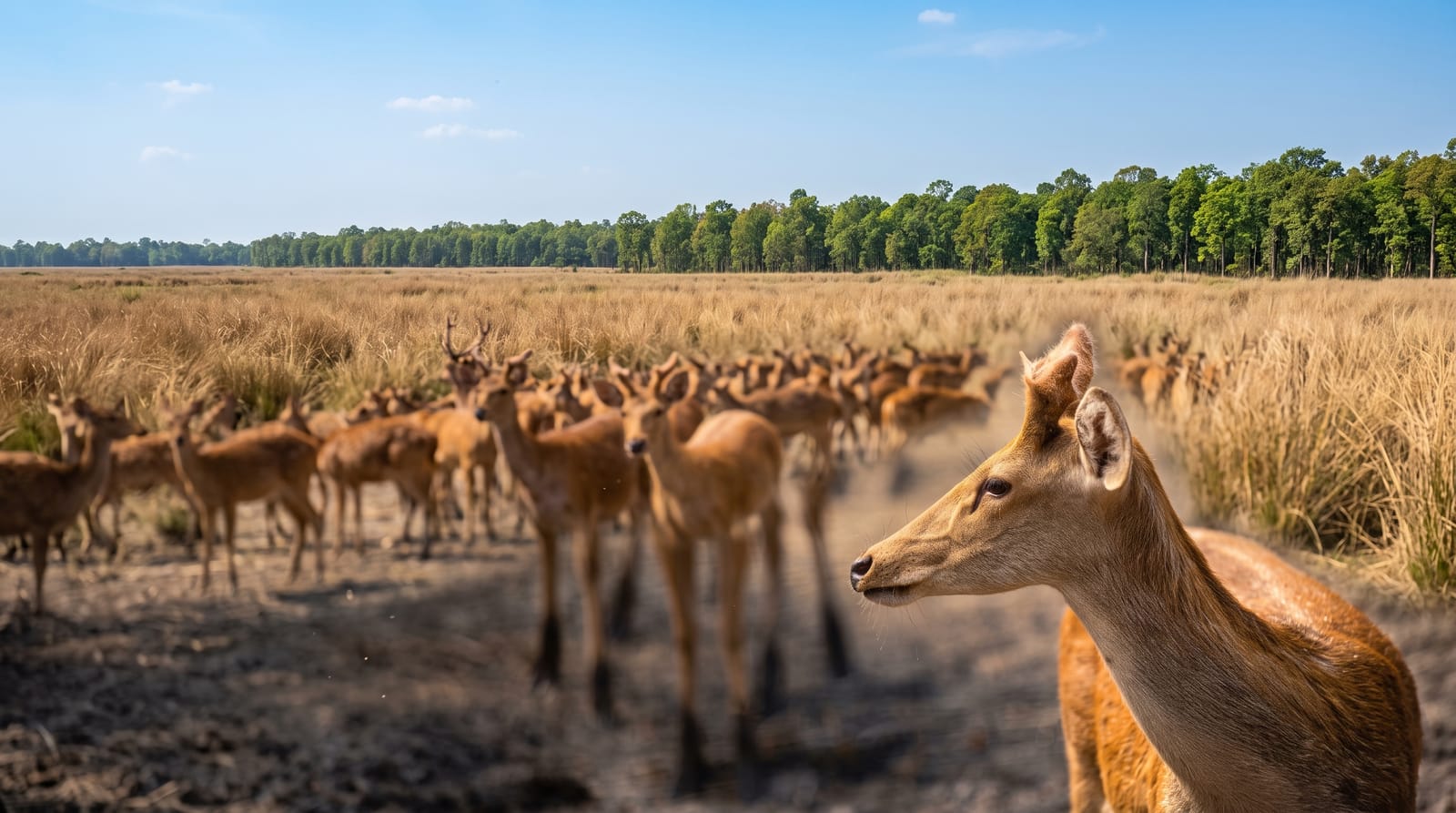
AI illustration
Dudhwa protects one of the last large stretches of Terai habitat in India, the belt of tall grassland, swamp and sal forest along the foot of the Himalaya, and its grasses grow high enough to hide an elephant. Tigers, leopards, sloth bears and swamp deer live here, the last in one of their most important populations. Greater one-horned rhinoceros were shot out of the region by the early twentieth century and reintroduced from Assam and Nepal in 1984, and the herd has grown since within a fenced area. Birdlife is exceptional, with hornbills, storks, fish owls and the Bengal florican among a long list.
History
The area of today's park was set up in 1958 as a sanctuary for swamp deer and became a national park in January 1977, thanks largely to the efforts of the conservationist Billy Arjan Singh. In 1987 Dudhwa, together with the Kishanpur and Katarniaghat sanctuaries, was declared the Dudhwa Tiger Reserve (Wikipedia, Dudhwa National Park).
Highlights
- The tall grassland - Terai grasses high enough to conceal large animals.
- The rhinos - a reintroduced population in the fenced rehabilitation area.
- The swamp deer - one of the key barasingha populations in India.
- The birdlife - hornbills, storks, owls and grassland specialists.
When to go
November to April; the park closes during the monsoon from mid-June to mid-November. February to April gives the best sightings as grass is burnt back and water concentrates.
Before you go
Tiger sightings are far less reliable than in the central Indian parks because the grass is so tall. Accommodation is limited and basic. Access involves long road journeys.
Nearby
The Nepal border lies north; Lucknow is south.
Key facts
Source: Wikidata, item Q253455, read on 18 October 2026.
What to pack for Dudhwa National Park
Chosen from what this place is for. Tap a kit for the full checklist.
- Broken-in walking shoes or boots - Grip and ankle support matter more than looks; never hike in brand-new boots. Find on Amazon
- Binoculars - The single best wildlife tool - even a compact pair transforms a sighting. Find on Amazon
- Strong insect repellent - DEET or picaridin; the jungle is where bites and disease risk are highest. Find on Amazon
- Layers + a waterproof shell - Mountain weather turns fast; a packable rain jacket saves the day. Find on Amazon
Some links on this page are Amazon affiliate links - if you buy through them we may earn a small commission at no extra cost to you.
All packing kitsPlan your trip
Where to start if Dudhwa National Park is going on the list.
Booking links on this page are affiliate links - if you book through them we may earn a small commission at no extra cost to you. It never changes what we write about a place.
Opening times, ticket prices and seasonal closures change - check the official source before you go: official site.